Subtotal ₹0.00






Email :33
Short & Quick Read
India’s furniture scene has entered a phase where product quality is being defined by engineering decisions as much as design. As consumer expectations continue to grow alongside advancements in manufacturing, the industry is being encouraged to adopt a category-led approach while selecting materials that shape the performance, longevity as well as visual appeal of furniture.
Read More…
Material selection has traditionally centred around appearance, availability and cost. Today’s furniture applications demand a broader perspective. Every component contributes to the finished product’s performance-right from decorative surfaces, hardware, panel substrates or edgebands. Selecting materials according to their intended application enables manufacturers to deliver furniture that performs consistently through years of everyday use.
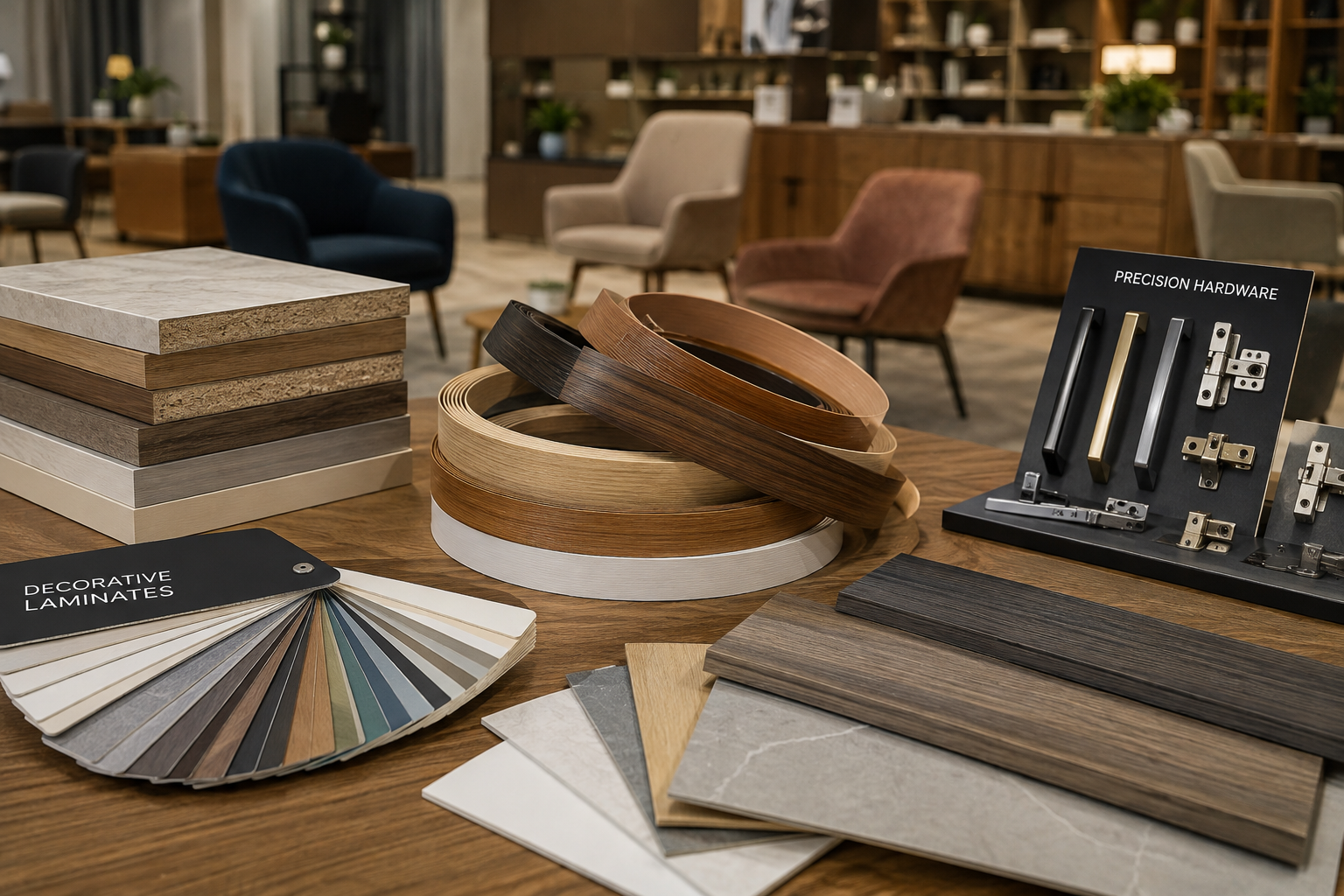
Across the furniture ecosystem, material categories have steadily grown. Decorative laminates have progressed into specialised surface solutions. Hardware has moved towards precision-engineered systems. Similarly, edgebands have developed from basic finishing materials into engineered furniture components designed to enhance durability, dimensional stability, bond reliability as well as design continuity. Modern high-performance edgebands are also engineered with homogeneous polymer compositions that preserve colour consistency even after machining, advanced bonding layers that strengthen adhesion over the furniture’s lifecycle, precision profile engineering that enables cleaner edge transitions with minimal glue-line visibility, alongside material formulations developed to support healthier indoor environments. Advanced multi-stage printing technologies further deliver richer décor definition and long-term colour stability, ensuring the edge continues to complement the surface over years of use.
A category-led approach allows furniture manufacturers, architects as well as designers to evaluate solutions based on application-specific performance instead of viewing every material through a single lens. Residential furniture, premium kitchens, healthcare spaces, hospitality projects along with commercial interiors each demand different levels of durability, environmental resistance as well as finishing precision. Material decisions aligned with these requirements contribute to better lifecycle value, higher customer satisfaction along with improved manufacturing consistency. The approach also supports greater transparency across the furniture value chain. Defining clear performance categories enables manufacturers to specify materials with greater confidence while helping architects and designers recommend solutions that align with the intended use of a project.
The furniture industry has always imbibed innovation, from manufacturing technologies, design capabilities or material science. The next stage of this evolution calls for greater clarity in how materials are evaluated. Every furniture application deserves a solution engineered for its intended purpose. Category-led thinking brings greater structure to material selection, enabling manufacturers, architects as well as designers to make informed decisions based on long-term performance rather than short-term considerations. Right from superior colour continuity besides stronger bond integrity along with refined edge precision, safer material formulations or lasting visual consistency – every engineering decision contributes to furniture that performs better throughout its lifecycle. As India’s furniture sector continues raising global benchmarks, this approach will play an important role in shaping the next generation of quality furniture with long-term value. – Tushar Verma, EVP, REHAU India & Subcon