Subtotal ₹0.00






Email :141
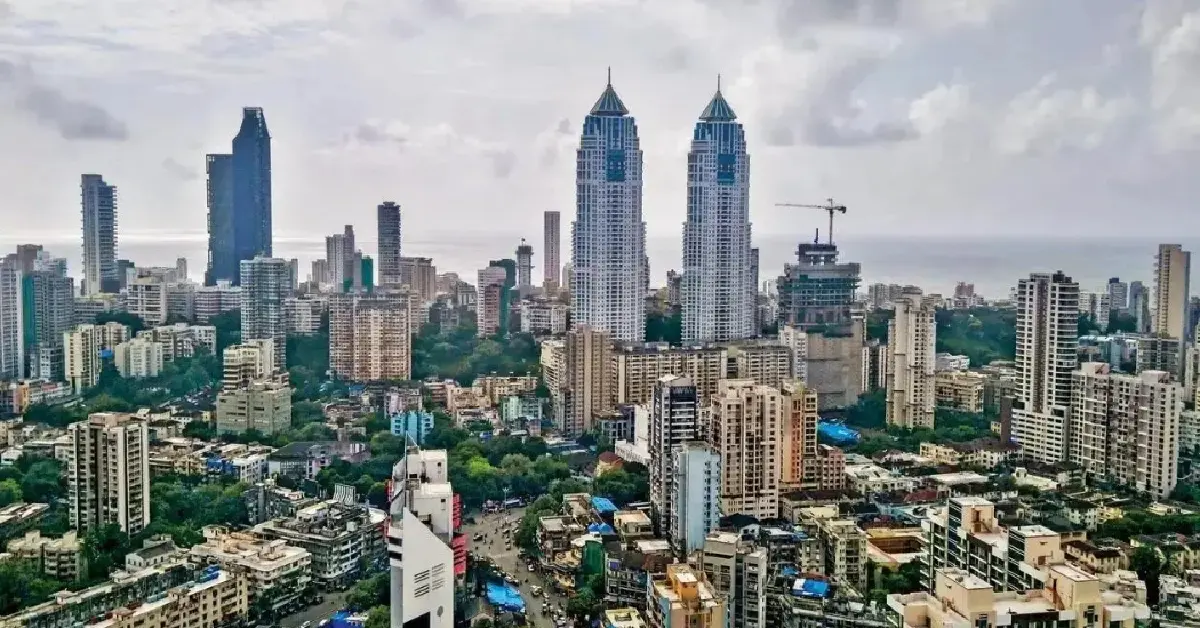
A $1 million budget is buying progressively less luxury residential space across India’s top cities, as property price appreciation outpaces currency movements, according to the latest Wealth Report 2026 by Knight Frank. In 2025, $1 million could purchase 96 sq m in Mumbai, 205 sq m in Delhi and 357 sq m in Bengaluru—down from last year—highlighting sustained demand and rising wealth driving India’s prime housing market.
Monaco retains its position as the world’s most expensive prime residential city in 2025, where with USD 1 mn can buy just 16 square meters (sq m) of prime residential space, followed by Hong Kong (23 sq m) and Geneva (28 sq m). In comparison to that, in Mumbai USD 1 would be sufficient to purchase 96 sq m of prime residential real estate in 2025, dearer by 3% YoY from 99 sq m in 2024. In Delhi, one can purchase 205 sq m, also registering an increase in prices of 1.4% YoY from 208 sq m in 2024. Prime residential purchase in Bengaluru has risen the highest in this context by approximately 3.5% YoY from 370 sq m in 2024 to 357 sq m in 2025.
The rupee depreciated ~5.4%, amounting to more Rupees per USD however prime property price per square foot (sq ft)in all three cities rose faster (Mumbai ~8.7%, Delhi ~6.9% and Bengaluru ~9.4%) than that the foreign exchange gain, so the net sq m purchasable for USD 1 mn still fell as price appreciation of these cities outpaced the currency tailwind.
Global rankings of Mumbai, Delhi and Bengaluru rise on Knight Frank’s PIRI 100
The Wealth Report 2026 revealed the findings of Knight Frank’s Prime International Residential Index (PIRI 100) which covers price performance across 100 global luxury housing markets. It reported an average rise of 3.2% YoY in prime residential prices in 2025, outperforming mainstream housing markets for the second consecutive year.
Bengaluru recorded a standout performance, climbing 32 places from 40th in 2024 to 8th fastest growing market in 2025, supported by a robust 9.4% YoY increase in luxury residential prices. Mumbai’s prime residential prices surged by strong 8.7% YoY in 2025 on strong prime and super-prime demand, with record new-build sales above USD 2 mn. The city marked an upward movement in its ranking on PIRI from 21st in 2024 to 10th in 2025. Price appreciation of prime residential market of Delhi recorded 6.9% YoY increase in its prime residential market in 2025, improving its ranking by one place from 18th in 2024 to 17th in 2025.
Of the 100 markets tracked by PIRI, 73 recorded price growth while 24 registered declines, underscoring a highly uneven performance landscape. Average figures mask sharp divergences, with top-tier new-build apartments in Tokyo surging by 58.5%, while major Chinese cities such as Guangzhou saw prices fall by 12.2%. Regionally, the Middle East led with an average increase of 9.4%, driven largely by Dubai’s 25.1% rise. Latin America and the Caribbean followed with 4.7% growth, while Asia-Pacific (3.6%) and Europe (3.3%) posted comparable gains. In contrast, North America was the only region in negative territory, declining by an average of 0.9%, reflecting continued weakness in Canadian housing markets.
Shishir Baijal, International Partner, Chairman & Managing Director, Knight Frank India, said, “India’s rise in the Prime International Residential Index (PIRI) highlights the growing strength of the luxury housing market, with Bengaluru, Mumbai and Delhi gaining prominence on the back of rising wealth and strong demand. The unabated growth in India’s economy has been instrumental in this growth in prime residential demand as the number of HNWIs and UHNWIs record steady rise. Globally, markets such as Tokyo and Dubai reflect how luxury real estate continues to be driven by capital flows and evolving lifestyle preferences. India remains well-positioned within this landscape, offering strong long-term growth potential.”
Liam Bailey, global head of research at Knight Frank said, “In many markets, prime residential property has pulled away from the broader housing sector, underpinned by the strength of wealth creation. While mainstream markets remain exposed to wider economic pressures, the pace at which wealth is being generated is helping to keep demand for luxury property more resilient, even against recent volatility in debt costs. UHNWIs are increasingly organising their lives across multiple jurisdictions, with family offices actively managing tax, lifestyle and political risk. As a result, established hubs such as London are shifting towards a ‘dip-in, dip-out’ model: places to spend time for business, culture and connectivity rather than permanent residence.”