Subtotal ₹0.00






Email :128
The Uttarakhand High Court has once again raised alarm over unchecked construction in the fragile foothills between Dehradun and Mussoorie, directing the state government to respond to concerns of escalating ecological damage.
Despite multiple interventions—from halting illegal tree felling to flagging missing forest boundary markers—the hill station continues to witness rampant real estate activity, underscoring a widening gap between environmental regulations and their enforcement, according to a report by Hindustan Times.
The Uttarakhand High Court has directed the state government to respond to an application flagging a serious threat to the fragile ecology of the foothills between Dehradun and Mussoorie due to unchecked illegal construction. The petition alleged rampant building activity in violation of regulations and flagged that despite building bylaws being amended in 2015 to regulate construction in fragile hill belts, its implementation was “virtually non-existent”.
This isn’t the first time the court has intervened to regulate a problem that is now endangering the very survival of the Queen of the Hills.
Three weeks ago, the high court halted the felling of trees in Mussoorie’s Hussain Gunj forest till valid permission was obtained from the competent authority. It was hearing a public interest litigation (PIL) alleging illegal cutting of trees during road widening work by the Mussoorie Nagar Palika Parishad in a notified forest zone. Many old oak trees were felled without obtaining mandatory permission from the forest department by the time the court intervened.
On December 24 last year, the Uttarakhand high court issued notices to the Central Bureau of Investigation and the Union and Uttarakhand governments over 7,000 missing forest boundary pillars in Mussoorie Forest Division. Advocate Gaurav Kumar Bansal, appearing for the petitioner Naresh Chaudhary, said the systematic obliteration of these crucial demarcation markers had opened the floodgates for rampant encroachment, illegal construction, and ecological plunder in one of India’s most fragile and critical forest ecosystems. “The petition contends that this disaster is not accidental but the result of a deeply entrenched and malevolent nexus between complicit forest officials, powerful political interests, and land mafias.”
And in July 2023, a committee set up by the National Green Tribunal submitted its report on Mussoorie, recommending avoiding the expansion of construction activities. The 281-page report listed recommendations and remedial measures for preventing environmental damage to the hill station.
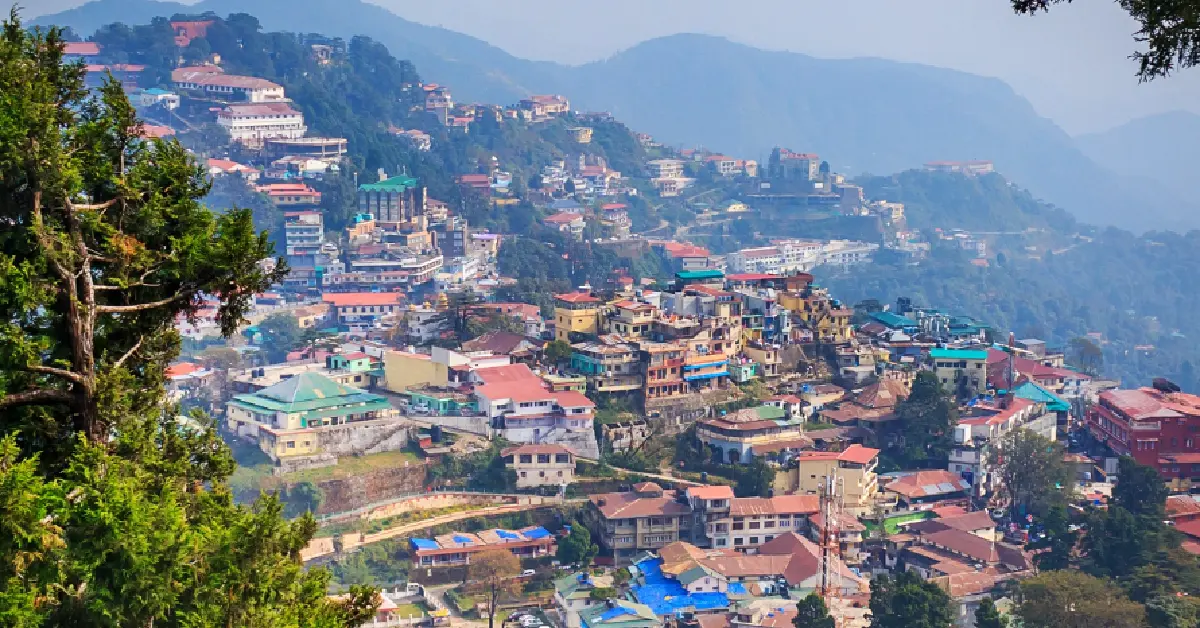
Unfortunately, many of these recommendations appear to exist only on paper. On a recent visit to Mussoorie, HT’s reporters found construction activity on in full swing—roads, multi-storeyed hotels, cottages, all being carved out of the fragile hills.
Mussoorie’s problems are best explained in a century-old quote popularised by the real estate and hospitality business—location, location, location .
Aptly, many of the problems plaguing the Queen of the Hills, nestled at an altitude of around 2,000m in the foothills of the Garhwal Himalayas, have to do with real estate and hospitality.