Subtotal ₹0.00







India’s residential real estate market continues to demonstrate resilience, with housing demand remaining steady despite pockets of inventory build-up across select cities. Employment growth, rising property values and sustained end-user interest are underpinning sales, keeping the overall market balanced rather than pointing to a nationwide oversupply, according to Puravankara.
While markets such as Hyderabad and Delhi-NCR are witnessing some supply pressure, strong absorption in cities such as Chennai and Bengaluru reflects the underlying strength of housing demand.
Speaking to the media on the sidelines of the launch of Purva Cityspire in Kochi recently, Mallanna Sasalu, CEO-South, Puravankara, said the market was not witnessing a nationwide oversupply, although certain cities and micro-markets had begun to show signs of inventory pressure.
“There are some cities, maybe there is a little bit of overhang in Hyderabad. Chennai is doing extremely well in terms of sales. Across the country, we see that it is a very balanced market,” Sasalu said.
Residential property prices across India have increased by around 8 per cent annually, although appreciation has varied across locations. Some micro-markets have recorded price growth of 25-30 per cent, while others have seen increases of 3-4 per cent, according to Sasalu.
The commercial office market is also supporting the residential property outlook. Office absorption across the country is approaching 100 million square feet annually, while rentals have increased by around 5-10 per cent in several markets, Sasalu said.
He attributed the trend partly to employment generation through global capability centres (GCCs) and the expansion of specialised and management roles in Indian cities. The growth in these segments is creating demand for office space and supporting housing requirements, despite concerns over the impact of artificial intelligence on employment.
“Artificial intelligence and the GCCs are generating more jobs across the country,” Sasalu said, pointing to the changing nature of work undertaken by global companies in India.
Inventory Varies Across Cities
Housing inventory conditions differ across markets. Hyderabad and Delhi-NCR are witnessing some supply overhang, while Chennai continues to record strong sales. Mumbai is absorbing fresh supply, whereas Pune may have moved slightly ahead in launches, although sales remain strong, Sasalu said.
Bengaluru absorbs around 65,000-70,000 residential units annually, against current inventory of approximately 8,000-10,000 units, he said. Developers launched around 65,000 units in the city last year and sold a similar number, although sales included inventory from earlier launch cycles.
Puravankara is selling around 100 units a month in its Bengaluru development and approximately 60 units monthly in a Chennai project comprising around 3,500 units. Its Northern Lights project in Bengaluru, with approximately 2,700 units, recorded sales of around 1,000 units on the launch day, Sasalu said.
“I don’t see an oversupply having happened yet,” he said, while acknowledging that some micro-markets would continue to experience inventory pressure. The current market, he added, was balanced, although it lacked the momentum seen during 2020-22.
NRI Demand Remains Resilient
South Indian residential markets continue to be largely driven by end-users rather than bulk investors purchasing entire residential towers for resale. Local buyers, NRIs and individuals purchasing additional homes for rental income remain important segments of demand, Sasalu said.
“It is going to continue to be the end-user’s market,” he said, adding that different buyer categories were likely to coexist rather than one segment replacing another.
NRIs are expected to remain an important source of housing demand, supported by their long-term ties with India and interest in property as a wealth-building asset. “NRIs will continue to invest in India because they’re not going away, their roots are here and they want to invest,” Sasalu said.
For the company’s latest project, the estimated buyer profile comprises around 40 per cent NRIs, 40 per cent local residents and 20 per cent buyers from other parts of Kerala and cities such as Bengaluru and Mumbai.
Geopolitical tensions in the Middle East could affect remittances, salaries and the financial position of some overseas workers. However, Sasalu said the impact on housing demand would need to be viewed in the context of long-term purchase decisions.
“Home buying is a long-term investment,” he said, adding that some overseas Indians could also consider investing their savings in Indian property amid uncertainty in their host markets.
Puravankara’s Project Investment
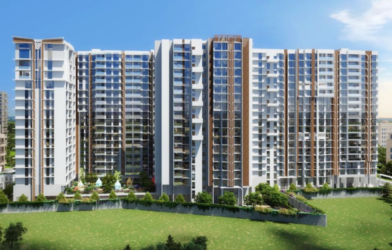
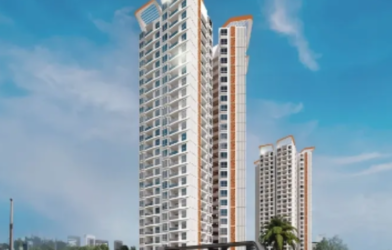
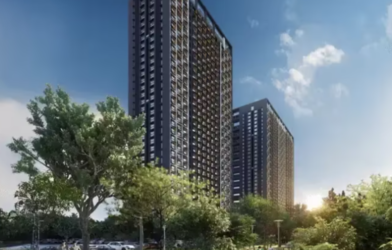
Puravankara’s latest launch, Purva Cityspire, is a residential township in Edappally with an estimated gross development value of Rs 2,000 crore. The project will comprise six residential towers of up to 33 floors, offering two- and three-bedroom apartments.
The company plans to invest more than Rs 1,500 crore at the location across development phases. The current phase covers around 1.6 million square feet, with an estimated construction cost of approximately Rs 800 crore. Another 1 million square feet is planned in the next phase, Sasalu said.
The front two acres of the development are earmarked for commercial offices and retail, including department stores, grocery outlets, food and beverage outlets and clothing retailers. The project will also have around 50 per cent open space, two clubhouses spanning more than 42,700 square feet and over 40 amenities.
Puravankara reported revenue of Rs 1,051 crore in Q2 FY27, up 59 per cent year-on-year from Rs 663 crore. Profit after tax stood at Rs 82 crore, compared with a loss of Rs 42 crore in the corresponding quarter last year, while quarterly pre-sales rose 109 per cent to Rs 2,762 crore.