Subtotal ₹0.00



Sanjeev Sinha
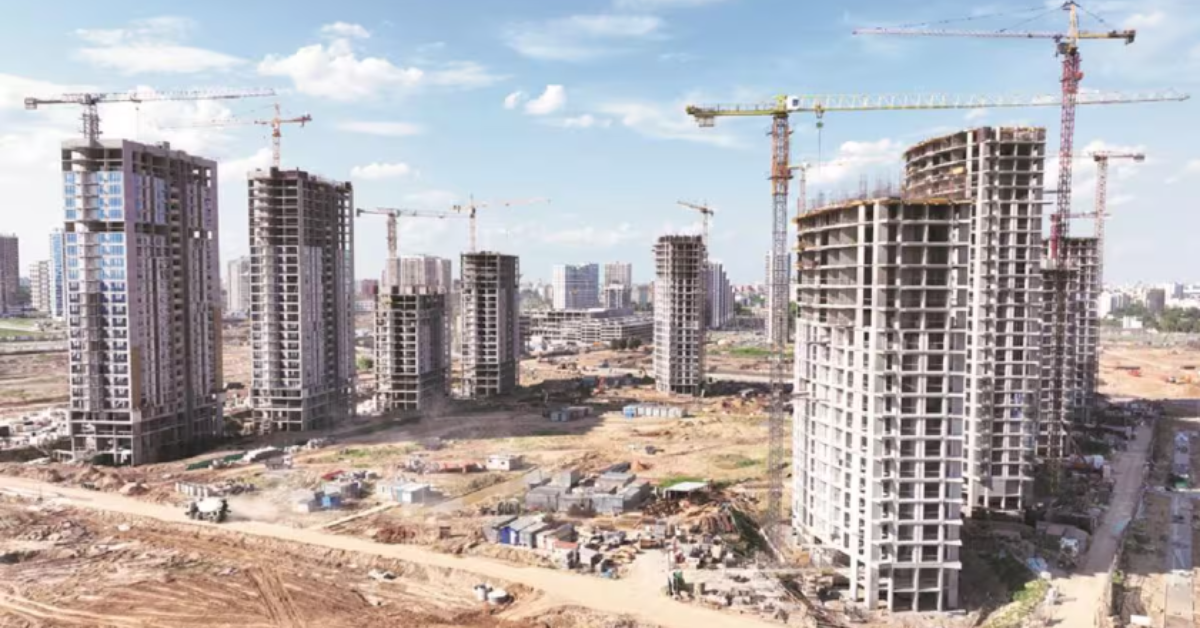
Real estate developers in Gurugram could see higher construction costs and pressure on project cash flows as curbs on dust-emitting activities kick in from November 5 to November 20. But the financial impact could be more than just the 16 days, particularly for projects where the interrupted activities are key to hitting construction and delivery milestones.
The problem for builders right now is controlling costs that don’t go away when building slows. Machinery rentals, contractor payments, labour retention, site maintenance, and financing obligations may remain constant, even with restrictions on some activities.
The bigger issue is whether developers are able to afford these extra costs and make up for lost time without altering committed possession dates.
These curbs mean uncertainty in spending, but the industry has not yet quantified the overall impact on Gurugram’s realty sector. The impact is likely to differ based on the stage of construction, contractor arrangements, granularity of scheduling derails, and delays already built into the project.
How much could construction costs increase?
The Commission for Air Quality Management (CAQM) has prohibited specified dust generating outdoor construction and demolition activities in Delhi-NCR from November 5 to 20.
Restrictions are applicable to excavation and earthmoving, demolition and some road, flyover, pipeline and power-transmission works. But major infrastructure projects like railroads, metros, airports, hospitals, water supply and sanitation stand exempt if they meet environmental norms. The developers may have to foot bills for standstill of machines, existing contracts with contractors, site-maintenance and restarting work after restrictions are lifted.
Take, for instance, the cost of tower-crane rentals that can go up to as much as Rs 18,000 per shift to Rs 25,000 per day, depending on the equipment specifications and contractual terms. Actual standby charges will differ.
Take a work package of construction with normal daily expenditure of Rs 1.5 lakh. When there is disruption in work for 12 days and the compulsory (unavoidable) standby cost is taken at 40 per cent of normal expenditure, the standby cost is Rs 7.2 lakh.
This hypothetical expenditure goes up to Rs 15.2 lakh with Rs 5 lakh for demobilisation and restarting work and Rs 3 lakh for recovery of schedules. The above is mere theory and not a real loss recorded by any developer. It would depend on your equipment commitments, labour plans, recoverability costs, etc.
Importantly, money that is not spent during a temporary disruption is not necessarily lost. Developers need to differentiate between deferred construction expenditure and extra costs specifically incurred on account of the restrictions.
Could project cash flows and margins come under pressure?
In addition to operating expenses, interruptions could affect developers’ cash-flow cycles. In the case of residential projects with money tied to the progress in construction, reaching a milestone may be delayed.
Meanwhile, developers will have to pay lender and staff, contractors and site working costs. Such discrepancy between outgoings and inflows can result in liquidity pressure, especially on projects with thin financial headroom.
Delays in construction could extend the overall project schedule, thus raising the financing costs as the developer keeps on carrying the borrowings for a longer period.
All of these may affect labour remobilization, extended shifts, and scheduling-recovery measures that can also erode project margins. However, such effects are not automatic. It is dependent on whether the interruption actually extends the project, delays collections, or involves extra spending.
Which projects could face the greatest disruption?
The effect will depend very much on what stage of construction it is in. Digging, building foundations or building structures could bring more problems because there would be many things to do before the next one can start.
Projects that are near completion also could struggle if not getting to external roads or utility connections or other key infrastructure interferes with final approvals and the ability to hand over the works. Simpler projects concentrating on actions such as completing permitted interior finishing, electrical installations, plumbing, procurement and documentation may find it simpler to just keep working.
The deciding factor is whether the disrupted work activity is on the critical path for the project, i.e., the sequence of activities that determines the earliest achievable completion date for the project. If developers have sufficient schedule slack, they may be able to reshuffle activities and recover lost time without affecting their committed delivery dates.
Others may need to bring in additional workers, increase overtime, or reschedule contractors to speed up construction once restrictions are removed. Thus, a 16-day limit doesn’t necessarily mean 16 extra days to complete work or give access to the owner.
Environmental compliance creates additional risks
Apart from the restrictions, stricter rules are also being enforced at construction sites in Gurugram.
“225 construction sites in Gurugram North have been served closure notices for not checking dust enough and keeping vigil,” Hindustan Times quoted officials of Haryana State Pollution Control Board (HSPCB) as saying.
In total, 10 sites were ordered to shut down for such deficiencies. While these are far from the efforts in enforcement from back in November and do fall short of closing all 225 sites, these actions do not bode well.
Avneesh Sood, Director of Eros Group said, “The 16-day construction ban may have a varying impact on different parts of Gurugram, particularly projects in a very early stage of construction. However, the benefit of cleaner air is substantial, but disruption can put pressure on delivery timelines and project costs. Seasonal restrictions are a common issue for the construction industry and should be expected rather than surprise. More clarity on what is allowed, timely regulatory guidance and improved coordination with regulators can all help developers to mitigate the impact. The focus should remain on meeting environmental standards without disrupting project timelines, budgets and homeseller confidence.”
What could this mean for homebuyers?
If developers stick to the possession dates they promise, a disruption may not be entirely bad for homebuyers in the short-term financially. If construction delays become serious and compound the problems or make it difficult for developers to keep promises, problems could arise.
They may have to continue paying the home loan EMI and rent for their homes while waiting for possession of keys. For example, if a buyer is earning a monthly rent of Rs 30,000 and paying Rs 45,000 as home loan, then the buyer will have to cough up Rs 75,000 per month for waiting for the keys.
But not all of that would be wasted, because the owner too would have added to the loan payment. Buyers should request updated construction schedules, the impact on milestones, recovery plans and new estimates for when they can take possession. They should also keep a watch on the Haryana Real Estate Regulatory Authority portal.
Can developers seek relief for construction delays?
In some earlier decisions, HARERA has held in that one cannot always extend the time of possession only because for some time there was a stoppage of construction in a season.
In Complaint No. 430 of 2024, and Complaint No. 1806, the Gurugram authority rejected the reliance on short periods of environmental restrictions to explain inordinate delays.
The decisions underscore the need to consider expected disruptions in preparing construction schedules.
However, the legal status of individual delays depends on the decisions of regulators, the situation of the project and contractual obligations.
If the possession is delayed beyond the contracted period, then the eligible buyers have the options available under Section 18 of the RERA Act.
What will determine the eventual impact?
Changes in milestones, construction status, contractor costs and project level disclosures will help in understanding the real financial impact.
Developers with some flexibility in construction schedules and cash flows and the operational know-how to report and replan may have more capacity to absorb disruption at the expense of their commitments to buyers.
For homebuyers, the most telling signs will be the ability of developers to promptly communicate any potential delays, the ability to maintain realistic recovery plans, and the change in construction milestones.
In the end, the restrictions will cost money, and the ability to restart work that was interrupted and get the project wrapped up on time will be more important than how long construction was interrupted.