Subtotal ₹0.00






Email :61
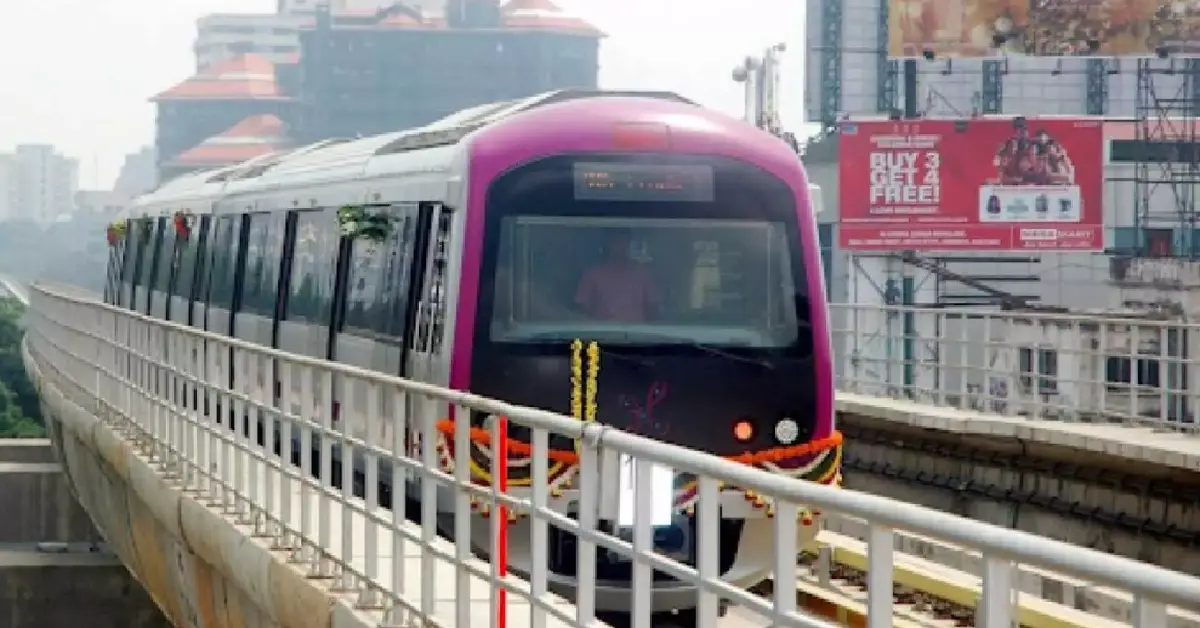
Housing demand in Bengaluru’s metro-linked neighbourhoods is significantly outpacing the rest of the city, with buyer interest rising 8–19% and both prices and rents seeing sharp appreciation, according to data from NoBroker.
Established residential hubs such as Rajajinagar and Jayanagar posted double-digit price growth, while rental values near metro stations climbed as much as 18%, underscoring the premium homebuyers and tenants are placing on connectivity as the city’s metro network expands, according to a report by The Hindustan Times.
The data shows that metro connectivity continued to be a key differentiator for residential markets in 2025, driving higher buyer interest, stronger price appreciation, and sharper rental growth than in non-metro-linked localities.
The strongest surge in demand was seen along the Purple Line towards the eastern IT corridor, with Whitefield registering a 14% rise, K.R. Puram 18%, and Vijayanagar 9%. On the Green Line, which connects north-south corridors, Jayanagar saw a 13% increase in demand, while Rajajinagar recorded a 9% increase. The Yellow Line in the south also supported demand momentum, with Electronic City seeing a 12% rise and Bommanahalli 8%.
“In terms of prices, Rajajinagar and Jayanagar posted double-digit growth of 13% and 11%, respectively, reflecting sustained end-user interest. K.R. Puram recorded a 9% increase in capital values, while premium micro-markets such as Indiranagar and Malleswaram saw relatively moderate but steady growth of 5–6%, indicating price stability in already high-value locations,” Saurabh Garg, chief business officer of NoBroker, said.
Rental markets near metro stations also saw strong traction. Malleswaram led with a 19% rent increase, followed by Jayanagar at 18% and Indiranagar at 13%. In the IT belt, key metro-linked hubs such as Whitefield, K.R. Puram and Electronic City saw rental growth of over 10%, driven by steady office attendance and improved commute times, according to data from NoBroker.
Properties located closer to metro stations and main arterial roads commanded a rental premium of 15–20% over homes in the inner parts of the same localities, highlighting the value tenants place on last-mile connectivity, Garg pointed out.
Even areas not yet directly connected by the metro saw prices and demand rise as upcoming infrastructure was priced in. Localities such as Bellandur recorded an 18% price increase, while Bommanahalli saw a 13% increase, reflecting expectations of future metro access. Peripheral markets like Begur and Attibele also witnessed notable appreciation as expanding transit networks gradually improved accessibility to Bengaluru’s southern corridors.
Metro expansion in Bengaluru has historically shaped where homebuyers and tenants choose to live, particularly among tech professionals seeking shorter commutes, relief from traffic congestion and better affordability, experts said. When the Karnataka cabinet approved the Red Line connecting Sarjapur to Hebbal in December 2024, real estate brokers said they noticed a rise in housing queries not just along the corridor but also in areas beyond its immediate catchment.
“The line connects key parts of central Bengaluru and Koramangala, which could trigger a migration of techies away from Sarjapur Road, where property prices are already elevated,” said Manoj Agarwal, director of sales and leasing at Agarwal Estates. “At the same time, improved connectivity may draw residents from other parts of the city towards southeastern Bengaluru.”