Subtotal ₹0.00






Email :13
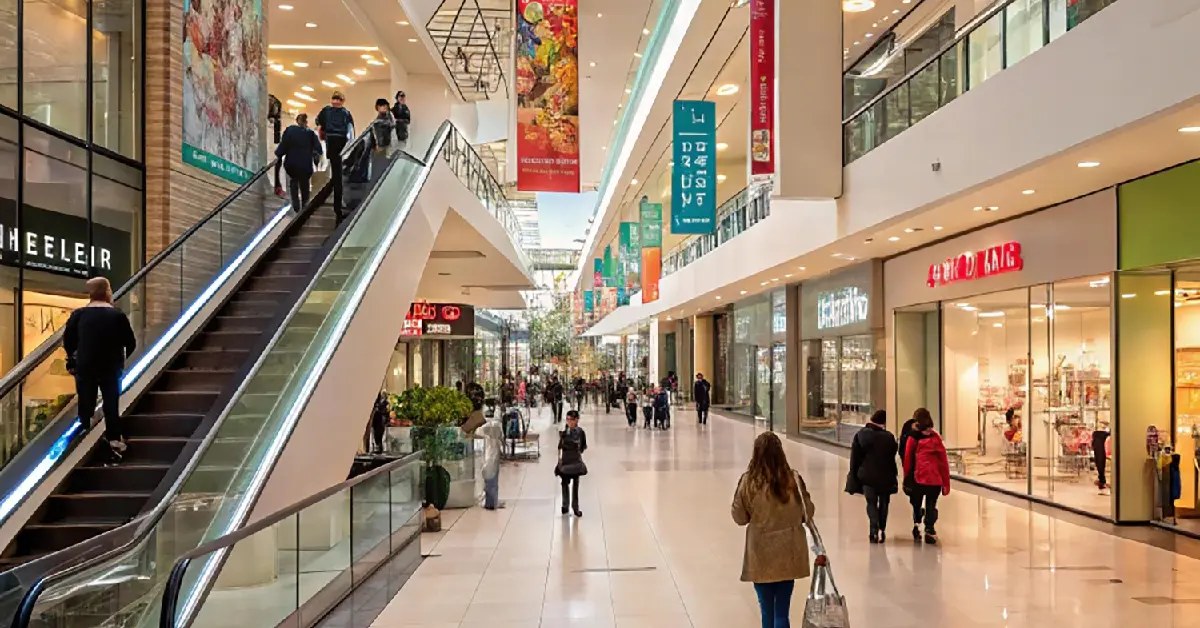
Despite supply constraints, the retail sector continues to witness steady demand in the first quarter of 2026, with NCR, Hyderabad and Mumbai having a dominant 65% leasing share.
According to a latest Cushman & wakefield Report, leasing stood at 1.95 million square feet (MSF) during the January- March quarter. Leasing activity moderated by 28% quarter‑on‑quarter (QoQ) and 10% year‑on‑year (YoY), largely due to the absence of new mall supply during the quarter. This moderation follows a strong 2025, which recorded 9.21 MSF of leasing -the highest annual performance in the post-COVID period, indicating that occupier interest remains intact despite near term supply constraints.
Despite the absence of new supply, mall leasing strengthened during the quarter, accounting for 47% of total leasing activity, up from 33% a year ago. These underscores growing retailer preference for organized, experience‑oriented retail formats. Main streets, meanwhile, continued to anchor overall leasing volumes, maintaining their dominant share at 53%, supported by sustained demand for high‑visibility, consumption‑led locations. This is slightly lower than the 67% share recorded in Q1 last year.
Delhi- NCR led leasing activity with a 30% share (0.59 MSF), supported by sustained demand across both malls and main streets, followed by Hyderabad with a 22% share (0.43 MSF) and Mumbai with a 13% share (0.25 MSF). Together, the top three cities accounted for 65% of total leasing in Q1 2026, reinforcing their position as key demand anchors during the quarter.
City-wise leasing (MSF)
| City | Q1 2025 | Q1 2026 | Share | YoY change |
| Delhi NCR | 0.41 | 0.59 | 30% | 45% |
| Hyderabad | 0.57 | 0.43 | 22% | -26% |
| Mumbai | 0.58 | 0.25 | 13% | -57% |
| Bengaluru | 0.19 | 0.21 | 11% | 13% |
| Pune | 0.17 | 0.18 | 9% | 8% |
| Chennai | 0.17 | 0.14 | 7% | -19% |
| Ahmedabad | 0.05 | 0.08 | 4% | 67% |
| Kolkata | 0.04 | 0.06 | 3% | 69% |
| Total | 2.17 | 1.95 | 100% | -10% |
Domestic retailers continued to dominate leasing activity, accounting for 87% of total absorption, while also increasing their presence in malls, with mall share increasing to 43% from 26% in Q1 2025. International retailers recorded a 21% YoY increase in leasing volumes, with nearly 78% of their activity concentrated in malls, reflecting a clear preference for high‑quality, institutionally managed retail assets.
This sustained demand for organized retail translated into further tightening of vacancies and firming of rentals across premium retail assets. Grade A mall vacancy declined further to 5.7% in Q1 2026, while Grade A+ assets remained particularly tight at 2.6%, reflecting sustained occupier preference for well‑located, institutionally managed retail destinations. Prime high‑street rentals also recorded average growth of 1.4% QoQ and 4.5% YoY, with appreciation remaining selective and location‑specific, driven by increasing preference for prominent, high‑visibility locations.
India’s retail real estate market, according to Gautam Saraf, Executive Managing Director-Mumbai & New Business , Cushman & Wakefield, is currently operating in a demand‑led environment, where occupier interest continues to outpace the availability of high‑quality retail space. “This is being driven by sustained expansion from domestic retailers, increased participation from international brands, and a clear shift towards organized, professionally managed retail formats. While leasing volumes in Q1 2026 appear lower on a sequential basis, this largely reflects the limited availability of suitable supply.. As new supply begins to enter the market from 2026 onwards, largely skewed towards premium developments, we expect this depth of demand to translate into more consistent leasing activity, while supporting the continued institutionalization of India’s retail real estate landscape.”
Citywise Insights :
- Bengaluru’s retail real estate market remained largely stable with leasing of around 0.21 MSF, while posting a healthy 13% YoY increase. Main streets continued to drive leasing activity, accounting for 57% of total volumes, with absorption across key high streets reaching 0.12 MSF, while malls contributed the remaining 43%.
- Chennai recorded retail leasing of ~0.14 MSF, marking a 19% YoY decline. Main streets continued to dominate demand, accounting for 89% of total leasing, while malls accounted for the remaining 11%.
- Delhi NCR’s retail leasing in reached 0.6 MSF, registering a 45% YoY increase. Gurugram led leasing activity with a 54% share, followed by Delhi (26%) and Noida (20%). Malls continued to dominate leasing, accounting for 64% of total volumes, while main streets contributed the remaining 36%.
- Hyderabad saw retail leasing volumes of 0.43 MSF, witnessing a 26% YoY moderation against a high base in Q1 2025. Main streets accounted for 64% of total leasing activity, while malls contributed the remaining 36%.
- Ahmedabad’s retail leasing activity witnessed strong growth with total leasing activity reaching 0.08 MSF, reflecting a 67% YoY increase. Main streets continued to dominate the market share, accounting for over 95% of total leasing activity, while malls contributed the remaining share, indicating a recovery from muted activity in the previous quarter.
- Kolkata recorded strong growth in the quarter with ~0.06 MSF leased, reflecting a 69% YoY increase. Main streets continued to lead leasing activity with a 52% share, despite mall leasing seeing a sharp uptick, contributing 48% of total volumes, up from 17% in the previous quarter.
- Mumbai witnessed retail leasing of 0.25 MSF, a decline of 57% YoY primarily due to limited availability of quality space in malls and subdued activity across high streets. Malls continued to dominate leasing with a 72% share, while main streets accounted for the remaining 28%.
- Pune’s retail leasing stood at 0.18 MSF, registering an 8% YoY increase. High streets drove leasing momentum during the quarter, accounting for nearly 50% of total volumes at 0.09 MSF, witnessing a sharp 126% QoQ and 64% YoY growth, supported by demand coming from concentrated mall supply and preference for high visibility locations.
Looking ahead, the retail sector is expected to see easing of supply with about 5.88 MSF of new supply entering the market in 2026 with the broader 2026-2028 pipeline standing at 14.94 MSF. This is expected to improve availability , support leasing momentum and further drive the premiumisation and institutionalisation of retail real estate landscape.