Subtotal ₹0.00






Email :25
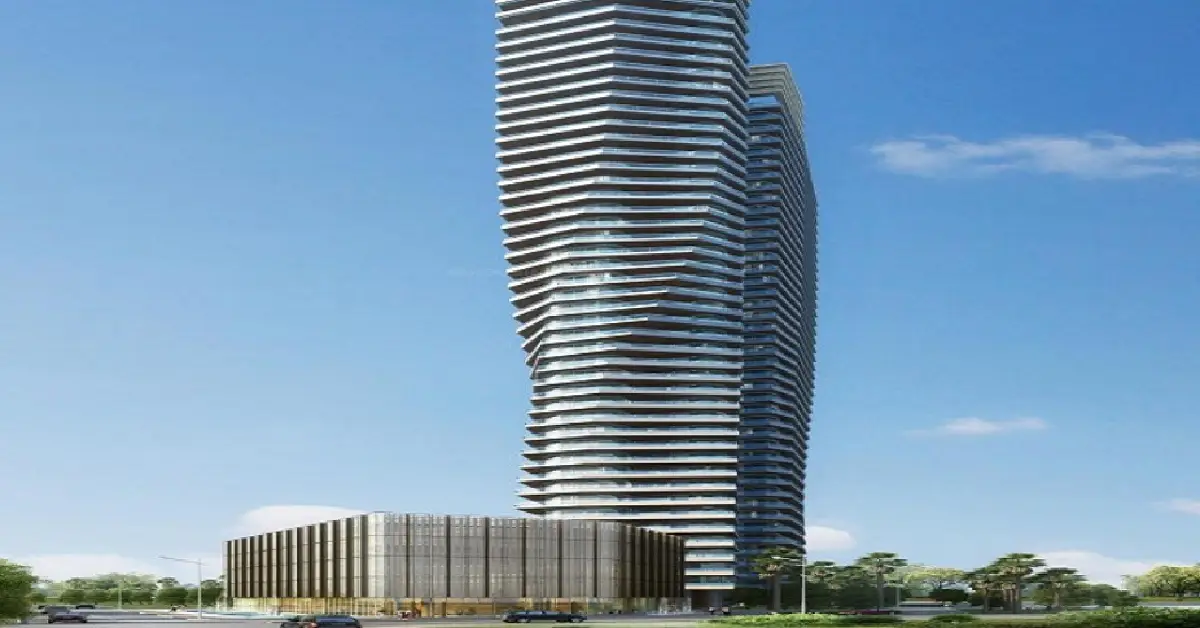
As Indian cities expand upward, the definition of safety in real estate is undergoing a fundamental transformation. No longer limited to strong foundations and regulatory compliance, safety today means engineering buildings that can intelligently respond to dynamic forces such as earthquakes and high winds. This evolution is particularly significant in regions like Delhi-NCR, much of which falls under Seismic Zone IV — a high-risk category where structural resilience is not optional but essential.
Earthquake risk is not limited to a few pockets of the country. Nearly 59% of India’s land area is vulnerable to earthquakes, and the Bureau of Indian Standards (BIS) has divided the country into four seismic zones based on risk levels. This makes seismic safety a national concern, not just a regional one. In fast-growing urban clusters like NCR, where population density and building heights are increasing rapidly, this risk becomes even more critical, according to a report by news18.com.
Delhi-NCR lies close to several active and semi-active fault systems such as the Delhi-Haridwar Ridge, the Mahendragarh-Dehradun Fault, and the Sohna Fault. In the last year alone, multiple earthquakes have been recorded across Gurugram, New Delhi, and surrounding areas. Most of these were moderate in magnitude, but they clearly show that seismic activity in this region is frequent and cannot be ignored.
High-rise buildings are especially sensitive to such forces. Unlike low-rise structures, tall buildings are more flexible and tend to sway under wind and earthquake loads. One of the biggest risks is structural resonance, which occurs when the frequency of wind or seismic motion matches the natural frequency of the building. When this happens, vibrations increase rapidly, leading to excessive movement, discomfort for occupants, and higher stress on structural elements. Over time, this can reduce the building’s usable life even if there is no visible damage.
To manage this challenge, modern engineering now focuses not only on strength but also on controlling movement. One of the most effective technologies used worldwide for this purpose is the High-Performance Tuned Mass Damper (HTMD).
HTMD is an advanced vibration control system installed within a building. It consists of a heavy mass connected through springs and damping systems, carefully tuned to the building’s natural frequency. When the building moves due to wind or an earthquake, the HTMD moves in the opposite direction. This opposite motion absorbs and dissipates vibrational energy, reducing the overall sway of the structure.
The advantage of HTMD technology is that it works silently and continuously. It does not block forces but manages them in a controlled way. This helps protect the structure, improves occupant comfort, and reduces damage during extreme events.
Globally, such systems are already a standard solution for important and tall structures. A well-known Indian example is the Statue of Unity in Gujarat, one of the tallest statues in the world. Due to its height and exposure to strong winds, the structure uses a pendulum-type tuned mass damper to control wind-induced vibrations and improve stability. This shows that vibration control is not limited to buildings alone but is essential for any tall structure exposed to dynamic forces.
Internationally, buildings like Taipei 101 in Taiwan and Shanghai Tower in China also use tuned mass damping systems to manage wind and earthquake movements. These projects demonstrate that such technology is reliable, proven, and critical for safety in tall structures.