Subtotal ₹0.00







Email :134
India’s retail real estate market entered 2026 in fairly good shape. The organised retail footprint keeps expanding in the metros as well as tier 2 and 3 cities, and many leading brands plan their store network expansions around emerging markets. Superior malls remain the primary weekend destination for urban India even as high streets retain strong relevance among premium shoppers.
The new India-EU trade deal will gradually make it cheaper for many fashion, lifestyle, and food brands to trade between the two countries. This will bring more international labels into Indian malls, particularly benefiting Indian exporters. That said, it also introduces competitive pressures for domestic retail incumbents in cosmetics, spirits, and premium food categories.
“Lower tariffs on items such as foreign liquor, cosmetics, and various luxury goods and apparel products can potentially erode margins and market share for domestic brands. Indian producers of textiles, leather and consumer goods will have to now contend with tougher rivals that will offer global products at lower costs,” says Anuj Kejriwal, CEO – Retail Leasing and Industrial & Logistics, ANAROCK Group.
Also, these trade agreements entail compliance requirements around quality, labelling, REACH regulations, fire safety, sustainability, and ethical sourcing. These can drive up costs for Indian exporters seeking to gain from preferential tariff access.
Finally, the rules of origin certification and related logistics complexities will bring their own administrative burden for small retailers and MSMEs. Trade diversion and the threat of carbon tariffs in partner markets going forward can further squeeze carbon-intensive retail supply chains.
“In this context, the retail sector certainly hopes that Union Budget 2026 will help create a more equitable playing field. While it cannot be a panacea to cure all woes, it can tune taxes, duties, incentives, and public spending. It looks forward to a Budget that makes doing business easier, nudges consumption higher, and supports expansion into smaller cities without blowing up the fiscal math,” says Kejriwal.
Where The Market Stands
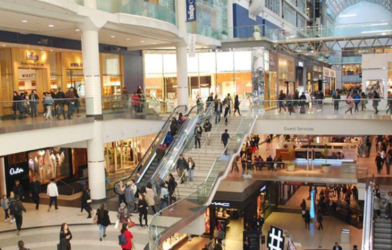
The Indian retail real estate sector today is clearly one of winners and laggards. The best-located, best-managed malls with strong brands, good F&B, entertainment, and clean, safe environments are doing well and often have retailers queueing up on waiting lists. Older or poorly designed centres, especially those with access and parking issues, are losing out as consumers trade up to better destinations or shop online.
Another clear shift is the rise of smaller cities. Many new customers come from beyond the metro cities, and retailers pursue them with a mix of physical stores, franchise formats, and dark stores to support online delivery. This has given rise to major changes in what gets built. The retail formats of the current and future times now focus on mid-sized shopping centres, retail-cum-warehouse hubs and projects linked to transport nodes.
The trade agreements loom over this landscape, on the one hand promising cheaper imports and export opportunities and on the other hand putting pressures on local retailers.
Taxes – What Indian Retailers Can Reasonably Expect
Most retailers would welcome lower taxes and less taxation complexities. The Budget can make some practical changes:
Small rate tweaks for mass-consumption items: Bringing down GST slightly on affordable apparel, footwear and everyday consumption goods would help organised retail compete with the informal sector and support demand in smaller cities, without collapsing tax revenues.
Clearer rules on input tax credit (ITC): Developers and mall owners often face confusion about whether they can claim GST credits on fit-outs, common areas and professional services. Cleaner rules here would reduce costs for quality retail projects and encourage more investment in safety, digital systems, and sustainability.
Reasonable income-tax relief for consumers: Given recent relief in the 2025 budget, modest calibrated adjustments, for instance in the form of expanded deduction thresholds or targeted relief for discretionary spending, can further encourage consumer appetite for fashion, electronics, and F&B. Even incremental relief will go a long way.
Infrastructure Spending
Retail follows people and connectivity. The Budget can obviously not dictate exactly where every mall or high street should be developed and prosper; however, it can keep money flowing into projects that directly and indirectly benefit the retail sector:
Continuing metro, rail, highway, and airport expansion: Good public transport and roads make it easier for people to reach malls and high streets, and they create new locations where retail can thrive around stations and interchanges.
Boosting sustainable retail developments: The Budget can link tax benefits and/or faster approvals to demonstrable energy-saving and water management targets in malls, thus encouraging more efficient, future-ready retail assets without large new subsidies.
Strengthening digital and logistics infrastructure: Faster Internet speeds, wider 5G deployment, particularly in tier 2 and tier 3 cities and towns, will significantly assist retailers adopt genuine omnichannel models wherein stores, warehouses and online operations collaborate instead of competing.
Supporting Brands, MSMEs And Supply Chains
A mall is only as strong as the brands and small manufacturers that fill its stores. The Budget can realistically:
Extend reasonable incentives to labour-intensive sectors: Production-linked or similar schemes for apparel, footwear, leather goods, and lifestyle products can boost jobs and exports, while also giving malls a stronger local brand base.
Hike credit access for MSME suppliers: Many small manufacturers selling to big chains face long payment cycles. Targeted credit-guarantee and interest-support schemes for those with proven links to organised retail can ease working-capital pain without distorting lending.
Streamline export from retail hubs: Simple, digital, single-window systems and export-oriented facilities in major retail clusters would help Indian brands use malls and high streets as showrooms for global buyers, especially under the new trade deals.
It can also:
Offer more benefits to efficiency rather than to size: Support will most benefit projects and retailers that can convert better tax treatment, clearer rules, and marginally increased consumption into higher sales per square foot. It is already clear that weaker assets will need to upgrade, reposition, or exit.
Make more investments into transport, digital networks, and logistics: Along with focused benefits for MSMEs, these will help organised retail grow in Tier-2 and Tier-3 cities – not speculatively, but on the foundation of real catchments and mobility corridors.
Post the EU-India trade deal, Indian retail real estate is on the cusp of a far more global perspective than ever before, even as it must remain firmly rooted in Indian realities. As the latest trade deal – and more to come – throw open the global floodgates, the most successful malls will combine solid fundamentals such as location, accessibility, safety, and superior shopping experience with a well-thought-out medley of global and domestic brands.
The finance ministry’s demonstrated long-term vision for all of India’s leading industries is beyond dispute. The Indian retail sector now looks to Union Budget 2026 to give serious retailers a more predictable and even playing field on which good assets and good operators can steadily pull ahead.