Subtotal ₹0.00






Email :107
For much of the past two decades, luxury in Indian residential real estate was defined by the tangible: premium locations, imported materials, expansive floor plates, and striking façades. The benchmark was largely architectural pivoted only to how grand a development looked and how large its homes were. This paradigm, while aspirational, was ultimately transactional. It told buyers what they were getting in terms of bricks and mortar but said little about the experience they were about to indulge into.
That calculus is fast evolving. Driven by a new generation of high-net-worth individuals (HNIs) with international exposure and discerning tastes, India’s ultra-luxury residential segment is changing dynamically. Scale and spectacle are no longer sufficient markers of exclusivity. Affluent homeowners now lean more towards intangibles like privacy, seamlessness, and an environment where daily living mirrors the experience of a world-class resort, where every detail is anticipated and every need is addressed before it is expressed.
“India’s ultra-luxury residential landscape is undergoing a decisive shift from scale-driven developments to experience-led living. Today’s discerning homebuyers seek more than just expansive homes—they value privacy, seamless services, and curated lifestyles that mirror global hospitality standards. From wellness ecosystems and personalised concierge services to mobility-led infrastructure like helipads, amenities are becoming deeply integrated into the fabric of everyday living. These offerings are no longer indulgences but essential expressions of individuality and aspiration. In this evolving paradigm, residences are transforming into holistic lifestyle destinations, where the address itself becomes a true reflection of the homeowner’s personality and global outlook,” said Ankush Kaul, President – Sales & Marketing and Customer Experience at Central Park.
The National Capital Region (NCR), and particularly Gurugram, sits at the forefront of this shift. As one of India’s most dynamic corridors for global business, Gurugram has emerged as the testing ground for a new typology of luxury living – one that blurs the boundary between premium residential development and high-end hospitality-led living.
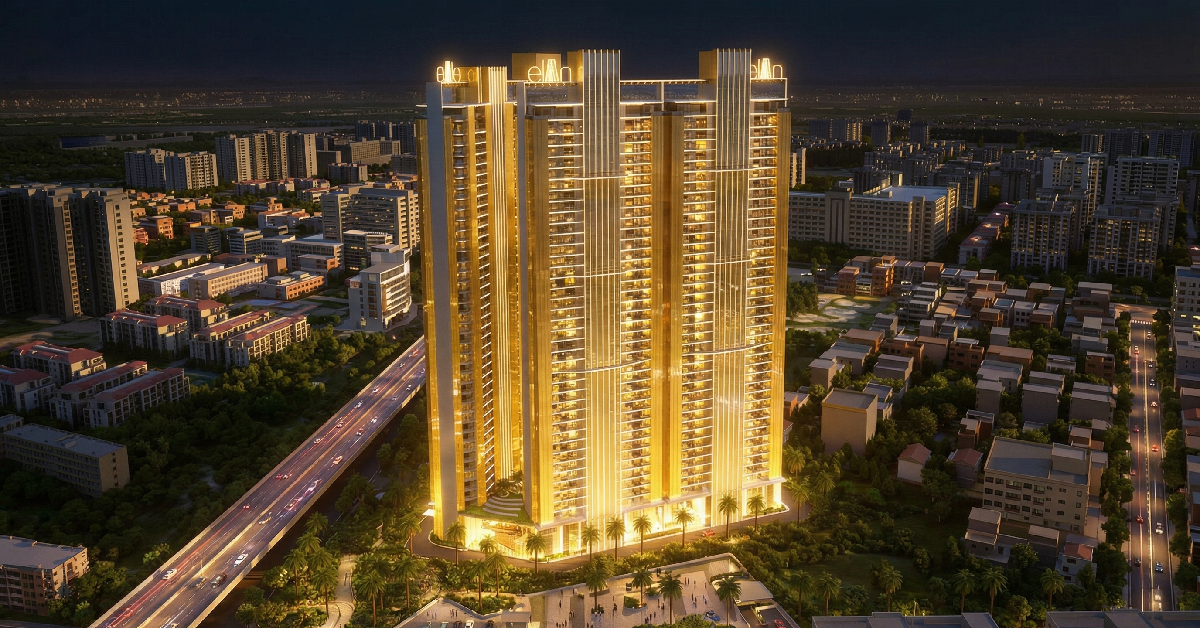
“Luxury real estate in Delhi NCR is undergoing a constructive reset, with branded residences setting a new benchmark for experience-first living. Today’s affluent buyers are looking beyond standalone luxury along with seeking fully integrated ecosystems where design, hospitality, wellness and retail converge. According to Anarock, luxury and ultra-luxury housing comprised nearly 59% of all new launches in NCR in Q1 2025, signalling a decisive shift in market preferences. Branded residences are outperforming the market with accelerated absorption, higher occupancy and annual rental yields of 8-9%, compared to the 2.5-3.5% norm. Elan Group exemplifies this new paradigm. This convergence of real estate and hospitality isn’t just redefining luxury, it’s reshaping how India lives and invests,” said Sumit Chaudhary, Chief Business & Hotel Development Officer, Elan Group.
Hospitality-Led Living Takes Centre stage
The concept of hospitality-led residential living is not entirely new. Branded residences affiliated with international hotel chains have existed globally for decades. What is new in the Indian context, however, is the ambition with which standalone residential developers are now internalising and operationalising a hospitality philosophy.
Rather than treating services as optional add-ons, the more progressive ultra-luxury developments are embedding them into the operational fabric of the community itself. Large professional service teams manage housekeeping, concierge, curated dining, and wellness programmes as core offerings and not premium upgrades. The result is a residential experience where the boundary between home and resort begins to dissolve.
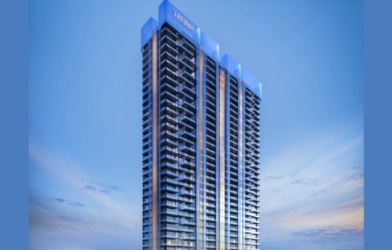
This shift is also visible in architectural and planning decisions. Developers are increasingly designing residential towers as ‘vertical estates’ which are limited edition, larger in individual scale, and configured to emphasise privacy and exclusivity. Private lift lobbies, dual elevator access, and sweeping balconies overlooking curated landscapes are becoming standard design vocabulary in this segment. These are not apartments in the conventional sense; they are private estates that happen to exist within a tower.
Experiential Amenities as a Way of Life
Perhaps the most visible dimension of this transformation is the rapid expansion and sophistication of amenity programming in ultra-luxury residential ventures. Where once a well-appointed clubhouse and a rooftop pool sufficed, today’s buyers in this segment expect a layered ecosystem of leisure, wellness, culture, culinary and social experiences.
Wellness infrastructure has undergone a particularly dramatic evolution. Leading developments now offer cryotherapy chambers, salt rooms for respiratory and skin therapy, red light therapy suites, and advanced sleep-health monitoring – facilities previously associated only with elite medical spas or performance-oriented hospitality brands. On-site nutritionists, personalised yoga therapy, and in-home health consultations by qualified medical professionals reflect a shift from reactive wellness to preventive health ecosystems integrated into the fabric of daily residential life.
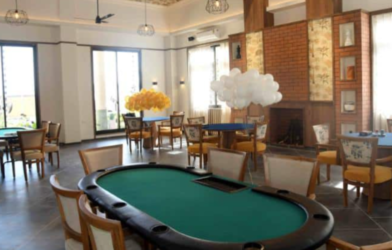
Cultural and social programming is similarly elevated. Private cinemas, themed entertainment lounges, golf simulators, curated library spaces, and members-only dining venues are increasingly common in top-tier developments. Security, too, has evolved from a feature to a foundational design principle, with privacy-focused systems, private floor access, and bespoke 24-hour solutions being built in from inception rather than retrofitted.
Helipads as a Differentiator that Signals Agility of Intent
Among the most striking infrastructure additions now appearing in select ultra-luxury residential ventures is the private helipad. Historically associated with luxury hotels, corporate campuses, and private estates, helipads within residential developments remain exceptionally rare in NCR, and that rarity is precisely what makes their emergence startlingly significant.
For the globally mobile individuals who occupy the uppermost tier of India’s luxury housing market like entrepreneurs, senior executives, and international business leaders, time has become the ultimate luxury. The ability to move directly between a residential development and an airport, or between urban and peri-urban destinations, via aerial transport represents a meaningful quality-of-life advantage in a region where road congestion remains one of the most persistent friction points of daily life.
The emergence of helipads in residential settings is therefore not merely a statement of opulence; it is a practical response to the time-sensitive lifestyles of a specific, growing demographic. It reflects a broader movement toward aviation-grade and mobility-focused infrastructure in the luxury housing sector: one that treats speed and seamless connectivity as genuine residential amenities, not theatrical flourishes.
Sudeep Bhatt, Director Strategy, Whiteland Corporation, says, “India’s residential market has shown remarkable growth, firmly securing its position among the top global performers. This growth isn’t just about rising numbers; it reflects a maturing market where demand remains resilient despite global volatility. Notably, the premium residential segment continues to lead the cycle, with homes priced above ₹1 crore now accounting for the majority of housing sales. This trend is further amplified by the surge in branded residences, where the convergence of global hospitality standards and homeownership is setting new benchmarks for premium living. Sustained infrastructure push by the government particularly in Gurugram through large-scale connectivity and urban development projects such as the Dwarka Expressway has accelerated the city’s evolution as an organic growth destination. In 2025, premium residential segments witnessed strong momentum, driven by the advent of branded residences, high-end apartments and gated communities, reinforcing Gurugram’s position as one of India’s most resilient and future-ready real estate markets.”
Symbolically too, the helipad carries hedonistic weight. Its presence in a residential development signals an aspiration to align the venture with the standards typically associated with ultra-luxury hospitality and private aviation environments where convenience, exclusivity, and efficiency converge as a matter of fact.
Clearly the gamut of amenities that are integrated in the very design of high-end ultra-luxury residential ventures for the HNIs are standing out as the real differentiator to qualify the personality extension of the discerning address holders and this phenomenon is truly epicurean.