Subtotal ₹0.00






Email :111
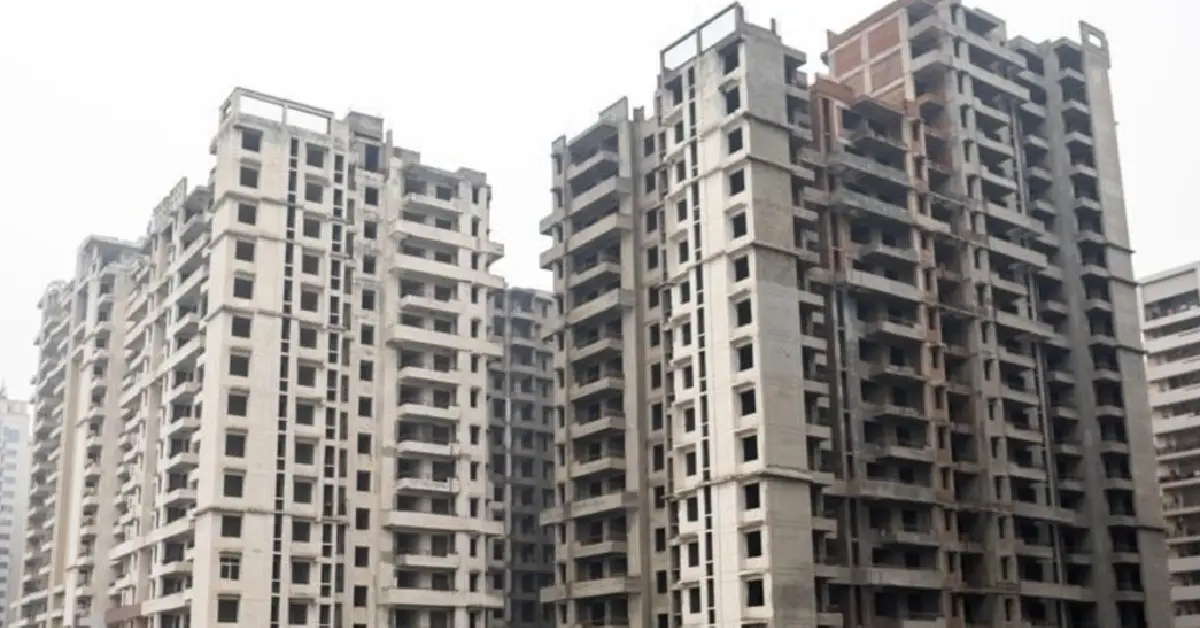
Thousands of real estate projects across major cities in India remained stalled for years due to financial distress, mounting debt, weak sales, and prolonged legal disputes. While the introduction of the Real Estate (Regulation and Development) Act (RERA) brought some fundamental and executional discipline, many real estate projects still remain stalled, additionally, due to legacy issues. It is only in the past one to two years that a meaningful revival has taken shape, backed by a combination of government-supported funding and private capital combined with rising housing demand and innovative revival models.
SWAMIH as Life Saver
Launched in 2019, the SWAMIH (Special Window for Affordable and Mid-Income Housing) Fund has played a pivotal role in reviving stressed housing projects. Managed by SBI Capital, the fund focuses on completing construction of stalled projects in the affordable and mid-income segments.
So far, approximately 61,000 housing units across 145 projects have been completed, unlocking nearly Rs. 37,000 Cr. of stuck capital and reintroducing it into the economy. Building on this success, SWAMIH Fund 2.0 has been announced with a proposed corpus of Rs. 15,000 Cr., aiming to facilitate the completion of an additional 1 lakh housing units.
Citing the example of KVD Wind Park in Greater Noida West, Geetanjali Khanna, Managing Director of ReaRCo Pvt. Ltd., says, “We secured SWAMIH fund based on a strong execution plan and disciplined financial management. Before achieving funds, we acquired the project from insolvency proceedings and, now, our focus is on delivering timely possession with enhanced construction quality.”
Funding as the Missing Link
Dinesh Gupta, President of CREDAI Western UP, emphasizes that access to funding remains the most crucial factor in reviving stalled projects. “When construction halts due to cash flow constraints, buyer confidence erodes significantly. Timely funding is essential not just for project completion but also for restoring trust in the sector.”
Private funds, The Connecting Dots
In parallel with government initiatives, private investment- particularly through Alternative Investment Funds (AIFs) – is emerging as a strong catalyst. These funds are actively evaluating and investing in stressed projects after thorough due diligence, including land title verification, legal clearance, and market viability.
The SGRE Fund, for instance, has invested approximately ₹125 crore in NCR-based projects. Suresh Garg, Lead Promoter of SGRE Fund & CMD of Nirala World notes, “Projects with clear land ownership, sound economics, and minimal legal complications are viable options for funding. We are also open to supporting developers in the early stages to help them qualify for larger institutional funding like SWAMIH.”
Echoing a similar sentiment, Shailendra Sharma, Chairman of Renox Group, adds, “Reviving stalled projects requires clearing legacy dues—whether to authorities, banks, or homebuyers. The availability of alternative channels of funding are the core baseline to drive the sector towards a renewed direction.”
Insolvency and New Emerging Models
Although, few in numbers yet stalled projects are also witnessing resolution through the National Company Law Tribunal (NCLT). Rising demand has enabled many projects to move forward under the supervision of Insolvency Resolution Professionals (IRPs).
Himanshu Garg, Director of RG Group, highlights the role of reverse insolvency: “Through NCLT-led reverse insolvency, work at RG Luxury Homes has resumed under IRP supervision, and we are in the process of delivering over 1,900 units with registration.”
At the same time, innovative models such as “refurbishment and renovation” are gaining traction. Under this approach, incomplete or distressed projects are transferred to new developers who undertake structural upgrades and complete construction.
Atul Vikram Singh, Director of Vision Business Park, explains, “Long-stalled towers are now being refurbished and repositioned in the market. This not only increases supply but also brings greater stability to the sector.”
A Sector Regaining Momentum
The convergence of government support, private investment, legal resolutions, and evolving development models is accelerating the revival of stalled real estate projects across India. More importantly, it is restoring buyer confidence, arguably the most critical ingredient for sustained growth.
As execution improves and funding pipelines strengthen, the sector appears poised to turn a long-standing challenge into a significant opportunity, unlocking value for developers, investors, and homebuyers alike.