Subtotal ₹0.00






Email :110
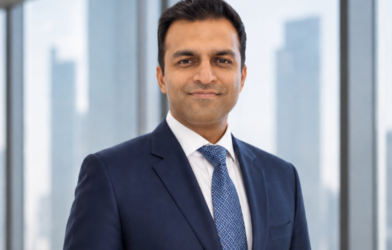
With sustainability moving from boardroom conversation to buyer’s expectations, there is an emerging shift in how real estate value is being defined with design at the centre of it. Green World Design, a sustainability-led architecture and interior design firm is working at the intersection of environmental responsibility and commercial viability. In this insightful interaction with Torbit Realty, Rohana Sarah, Founder & CEO, Green World Design, talks about growing consciousness among developers and occupiers about sustainable design for improvement in cognitive comfort and sustained productivity with a clear business proposition and competitive differentiation across real estate assets. Excerpts.
Vinod Behl
Sustainability is increasingly linked with wellness and healthy buildings. Do you think today clients have become more conscious about healthier interiors? How can design contribute to wellbeing and productivity?
Our clients globally are evaluating spaces differently today. Across commercial, corporate, and residential projects, the focus has shifted from aesthetics to how spaces support comfort, wellbeing and everyday usability. Sustainability focused design plays a key role in this. It comes down to strategic decisions around heat and natural light exposure, air movement, greenery and how the built environment interacts with its surroundings. In workplaces, this improves cognitive comfort and sustained productivity. In homes, it directly impacts everyday comfort and wellbeing.
For developers and occupiers, this translates into higher utilisation, stronger retention, and more consistent long-term asset performance.
Which sectors- residential, commercial, retail or hospitality are leading in demand for sustainable design? In the luxury housing, is adaptability faster compared to the affordable category?[PP1]
Demand for sustainable design is strongest in commercial real estate, hospitality, and premium residential segment. Across our client conversations in these sectors, there is a shift toward integrating sustainable design early. In offices, ESG commitments and tenant expectations are driving this, particularly in large campuses and premium office assets. In hospitality, guest experience is increasingly tied to landscape, microclimate, and nature-integrated environments. Within residential, adoption is faster in the luxury segment. These projects allow early integration of terraces, sky gardens, shaded courtyards, and water-sensitive landscapes. Affordable housing remains more cost-driven, limiting early-stage integration.
We are starting to see this move downstream. As buyer awareness increases, mid-segment projects are adopting climate-responsive strategies, though commercial, hospitality, and luxury residential still lead in execution.
Is there a clear business case and ROI for sustainable architecture today? Are developers and homeowners more willing to invest in green design and how corporates, with their ESG commitments, are influencing sustainable office design?
There is a clear business case for sustainable architecture today, but it is not evaluated as a single ROI metric. It reflects in how buildings perform with lower energy consumption, reduced cooling loads, and more stable operating costs over time.
Developers and homeowners are increasingly willing to invest in green design when these outcomes are visible. In residential projects, climate-responsive planning including ventilation, shading, and landscape drives faster absorption and stronger buyer preference. In commercial real estate, ESG commitments are directly shaping sustainable office design. Corporates are prioritising workplaces with better daylight, ventilation, and environmental quality, which influences leasing, retention, and how developers position premium office assets.
How favourable is the current urban planning and regulatory landscape to promote sustainable construction by accelerating the adoption of net-zero and low-carbon buildings?
The regulatory landscape in India is evolving, but it is still more effective at driving compliance than accelerating adoption of net-zero and low-carbon buildings. Frameworks around green buildings and ESG disclosures are becoming more structured, but they focus largely on certification rather than how assets reduce energy use and carbon over time. As a result, net-zero strategies are often layered in late through add-ons like renewables or offsets, rather than being embedded into planning.In mature markets, low-carbon thinking is integrated much earlier. Site planning, building orientation, landscape, and water systems are aligned from the outset to reduce energy demand.
For adoption to accelerate in India, regulations need to move toward performance-linked metrics like energy intensity, water efficiency, and site-level environmental performance, and embed these into early planning decisions.
What are the key sustainability challenges in the environment? How has the role of architects and interior designers evolved in addressing climate related challenges?
Climate challenges today are structural with urban heat island intensification, water stress, and inefficient land use. In India, this shows up in higher surface temperatures, poor stormwater management, and outdoor spaces that remain underutilised.
The role of architects and landscape designers is shifting, with sustainability integrated into core planning. In the US, there is a strong emphasis on water-sensitive planning and long-term landscape performance. In the UAE, the focus is on extreme heat mitigation—shaded circulation, high-canopy planting, and materials to reduce heat. In India, sustainable interventions like Integrating tree cover, permeable surfaces, bioswales, and haded movement networks early in planning are becoming critical. The role is becoming more systems-driven, focused on how the site performs under climate stress.
How does climate-sensitivity impact asset valuation and investor confidence? Do such buildings command premium and have faster absorption?
Climate sensitivity is increasingly influencing how assets are valued in India, particularly in commercial and luxury residential real estate. Buildings that stay cooler, manage water efficiently, and provide usable outdoor environments, tend to hold performance more consistently over time.
In residential projects, this translates into stronger buyer preference and faster absorption. In commercial assets, tenants are more likely to lease and renew in spaces with better daylight, ventilation, and access to well-designed outdoor areas. We see a similar pattern in the US, where climate-responsive design is closely linked to asset stability and investor confidence. In our conversations with institutional investors and developers, there is a clear shift toward evaluating how assets perform over time, not just how they are specified at handover. The premium reflects in occupancy stability, lower operating risk, and more predictable lifecycle performance.
Is sustainable design becoming a competitive differentiator? How do you see the sustainable design market evolving over the next few years?
Sustainable design is emerging as a competitive differentiator across real estate assets, but the gap is still in execution. In India, stakeholders prioritise sustainability, but rarely embed it into early planning. Delayed foresight limits how assets perform once operational. In the US, sustainable and biophilic systems are integrated from the outset, directly shaping long-term operational efficiency.
Over the next five years, three shifts will define the market. First, performance will replace positioning. Assets will be evaluated on long term energy efficiency, resource optimisation, and operational stability. Second, buyer and tenant expectations will reset quickly. Sustainable and biophilic design will become baseline requirements, not premium features. Third, capital and occupiers will start measuring environmental performance, pushing sustainable design into core strategy, financial underwriting and long-term asset valuation.