Subtotal ₹0.00






Email :44
Shishir Baijal, International Partner, Chairman and Managing Director, Knight Frank India
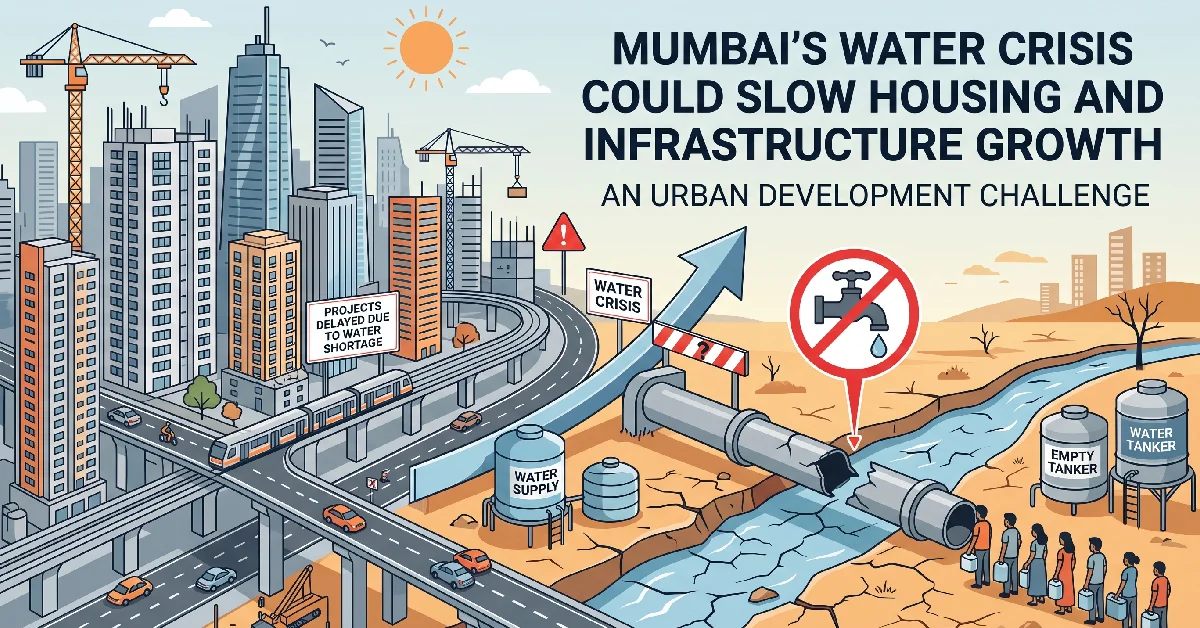
Mumbai’s growing water scarcity is emerging as a significant challenge for the real estate sector, adding to an already difficult operating environment marked by rising construction costs and execution pressures.
The city’s housing and infrastructure ecosystem is heavily dependent on a reliable water supply, and any prolonged stress on water availability can have a direct impact on project timelines, construction costs, and overall project viability. Activities such as concreting, curing, masonry, and finishing works require substantial quantities of water, and in the absence of adequate municipal supply, developers will increasingly have to depend on alternative sources such as private tankers, treated wastewater, or other arrangements, all of which can lead to cost overruns and delays.
While prioritizing drinking water and essential civic needs is both necessary and understandable, it is important to recognize that construction remains a critical contributor to Mumbai’s economy, supporting housing delivery, infrastructure development, employment generation, and a vast supply-chain network. The severity of water-related disruptions will naturally vary across cities due to differing monsoon patterns and local water availability. While regions such as Gurgaon receive limited and often unpredictable rainfall, Mumbai is particularly vulnerable because its water security is largely dependent on monsoon-fed reservoirs. Bengaluru’s experience with severe water stress in recent years has already demonstrated how quickly urban centres can face supply challenges, highlighting that water availability is no longer a seasonal issue but a broader urban infrastructure concern.
For Mumbai, any sustained pressure on water resources could have far-reaching implications for the city’s development pipeline, affecting project execution, costs, and housing delivery. The industry must therefore adopt a more sustainable and resilient approach to water management through greater use of treated sewage water, rainwater harvesting, on-site recycling and reuse systems, and long-term solutions such as desalination. A collaborative framework involving government authorities, civic bodies, and developers will be essential to balance water conservation priorities with the need to ensure the timely delivery of housing and infrastructure projects, while building greater resilience against future water shortages.