Subtotal ₹0.00






Email :43
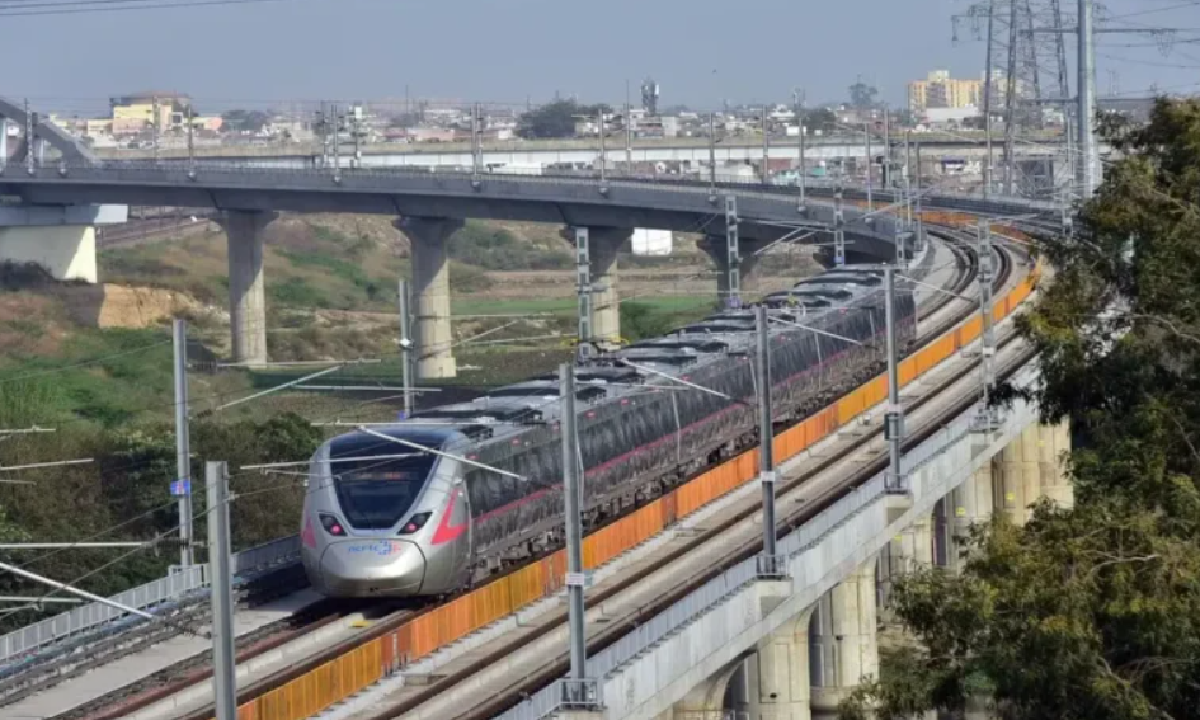
In a significant development for the Delhi-NCR public transport network, the detailed project report (DPR) for the 64-km Namo Bharat corridor connecting Noida International Airport at Jewar with Gurugram and Faridabad has been approved by a committee headed by the Meerut Divisional Commissioner.
The report has now been forwarded to the Uttar Pradesh Government. It will subsequently be sent to the Centre for final approval.
The project, estimated to cost Rs 19,390 crore, will have 51 km of the corridor in Haryana and the remaining 13 km in Uttar Pradesh. The proposed route will have seven Namo Bharat stations and 15 Metro stations.
In Haryana, the corridor will run from Surajpur through Noida Sector 168/142 and Faridabad’s Sector 87/88 and Bata Chowk before entering Gurugram through Gwal Pahari, Sector 58/61 and terminating at IFFCO Chowk.
The Uttar Pradesh stretch will begin at Siddharth Vihar in Ghaziabad and pass through Surajpur, Greater Noida and Dankaur before connecting directly with Noida International Airport.
Surajpur in Greater Noida is expected to emerge as a key interchange hub, where the Ghaziabad-Noida Airport route will connect with the Gurugram-Faridabad corridor.
Officials liken the proposed network to a city’s ring road. Instead of easing vehicular movement, the Namo Bharat network will provide circular rail connectivity linking Ghaziabad, Noida, Faridabad and Gurugram, potentially easing the traffic burden in the NCR once operational. For Gurugram and Faridabad, the 51-km Haryana stretch — nearly 80 per cent of the total corridor — makes the state the project’s largest beneficiary. The alignment through Gwal Pahari, Sector 58/61 and IFFCO Chowk will provide South Haryana’s residential and commercial clusters with a direct, high-speed link to Jewar airport.
Beyond commuter convenience, the corridor is expected to create new opportunities for trade and employment. Improved access to industrial hubs and Jewar airport could particularly benefit youth in Ghaziabad, Noida and Faridabad. Officials said the improved connectivity could also accelerate business activity along the corridor.
With the divisional-level committee clearing the DPR, the proposal will next require the approval of the Uttar Pradesh Government before being routed to the Centre. The final decision will determine the project’s timeline.