Subtotal ₹0.00


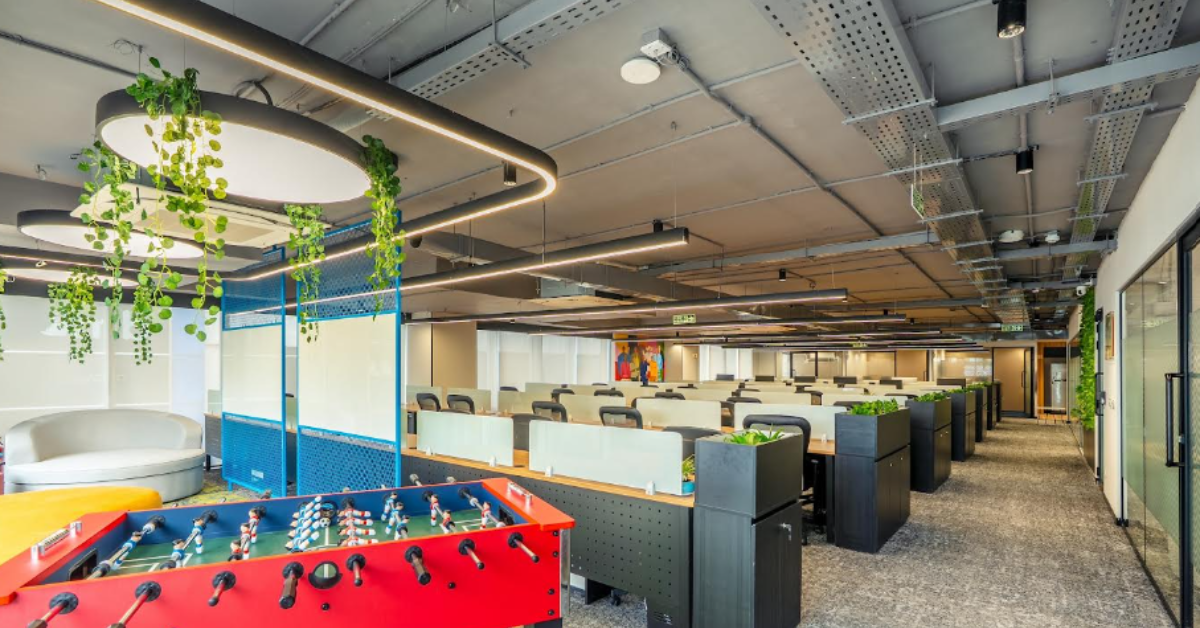

The flexible office market has reached a tipping point driven by the evolving priorities and workplace strategies. While flexibility has long been its defining feature, attention is now shifting to how these spaces are being integrated into long-term corporate real estate planning. This demand is increasingly driven by enterprises and Global Capability Centres (GCCs) that are using flexible formats not only to support hybrid work, but also to manage expansion risk, access talent across geographies, and navigate economic and workforce uncertainty. This marks a meaningful shift, with coworking moving from a tactical solution to a structural element of how organisations plan and deploy office space.
As per a recent report, flex stock across India’s top 7 office markets is likely to touch around 170-180 million sq ft by 2030. Moreover, with surging enterprise adoption, flex spaces are projected to occupy 20-25% of occupiers’ real estate portfolio in the next 3-4 years, reinforcing their growing role as a core component of modern workplace strategy. Moving ahead, this trend is bound to accelerate as occupiers start focusing more on technology integration, sustainability, and employee experiences.
Enterprise Adoption Formalises the flexible workspace Model
One of the most significant trends shaping the sector is the formalisation of flexible workspaces as a mainstream real estate asset. Large corporations, multinational firms, and GCCs now account for a substantial share of demand, fundamentally reshaping the business model. Enterprise occupiers dominate India’s flex market, accounting for nearly 70 per cent of total flex seat demand. This acceleration underscores how flexible workspace has become embedded within corporate expansion and consolidation strategies. In response, operators have moved beyond transactional leasing to offer managed offices, built-to-suit solutions, and scalable environments aligned with enterprise standards.
GCCs Emerge as a Key Demand Driver
Another key emerging trend is the rising role of GCCs in the flex space market. With India positioning itself strongly in the global technology, engineering, and business services map, GCCs are spreading across cities and processes. Flexible workspaces enable these centres to optimise capital expenditure, diversify geographic risk, and scale operations efficiently. In recent times, GCCs accounted for significant flex seat uptake, a share expected to rise further as they expand into higher-value functions such as engineering, analytics, R&D, and AI-led capabilities. To meet this demand, operators are increasingly offering compliance-ready infrastructure and fully managed services, reinforcing flex space as a preferred format for GCC-led growth. Sectoral demand patterns further reflect the enterprise tilt of the market. Technology and BFSI firms together account for more than half of enterprise flex demand, driven by their preference for scalable, capital-efficient, and technology-enabled workspace solutions.
Technology Becomes Core to Workspace Delivery
Technology plays an integral role in the development of flexible workspaces. From connectivity to AI-powered facilities management, IoT energy optimisation, secure environments, and data-driven space analytics solutions, technology has become an integral part of flex offices. These capabilities help organisations improve utilisation, enhance employee experience, and manage multi-location portfolios more efficiently. For operators, technology integration has shifted from a differentiator to a baseline requirement.
Sustainability and Wellbeing Move to the Forefront
Sustainability and employee wellbeing are also emerging as critical considerations in workspace decision-making. With ESG priorities high on the agenda, there is an increased demand for workspaces incorporating green interiors, energy-efficient systems, natural light optimisation, and wellness-orientated design. Inclusion of EV charging infrastructure to sustainable materials demonstrates a wider commitment to responsible development, supporting productivity and employee engagement.
The Next Phase of Growth: Scaling with Structure and Intent
Looking ahead, India’s flexible workspace segment remains strongly positive. Growth is driven by three key trends: enterprise-led expansion through customised, long-term flex solutions; deeper integration of AI, automation, and smart building technologies; and wellness- and sustainability-led design becoming standard expectations rather than differentiators. Importantly, this growth will extend beyond Tier I cities. Demand is rising rapidly in Tier II and Tier III cities, where companies can access emerging talent pools and benefit from lower operating costs.
As organisations adapt to hybrid models, decentralised talent strategies, and changing employee expectations, flexible workspaces are emerging as a permanent, strategic part of commercial real estate portfolios.
(The author is Founder, 315Work Avenue. Views are personal)\