Subtotal ₹0.00





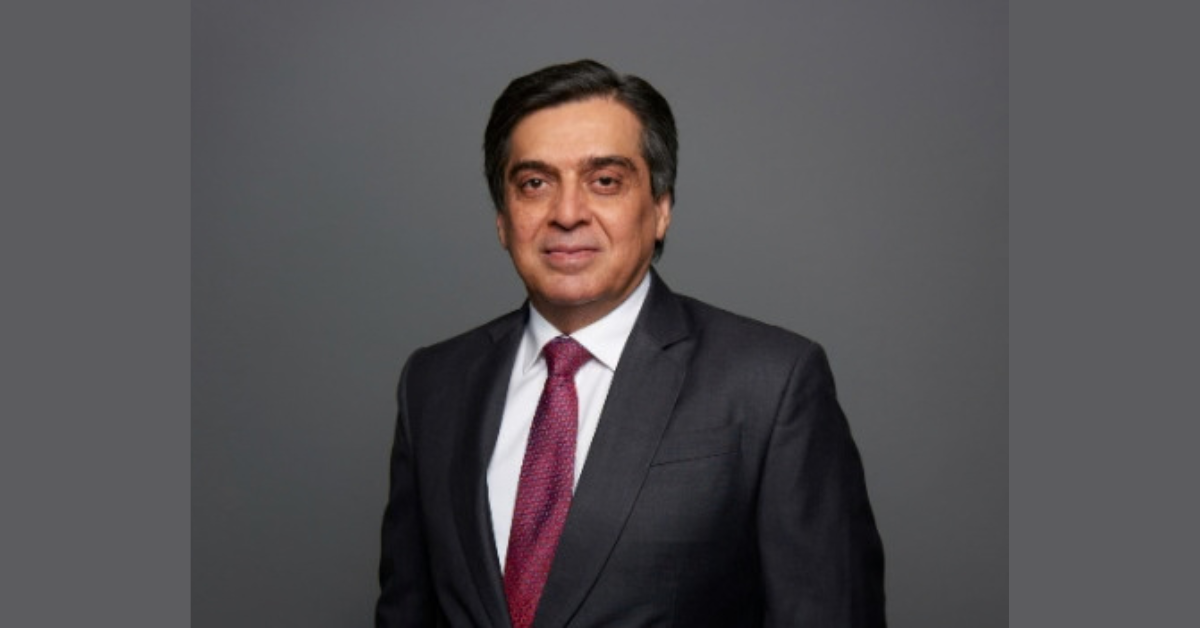

As India’s real estate growth story expands beyond its traditional metropolitan centres, driven by improving infrastructure and connectivity , growing regional economy, expanding business ecosystems and rising aspirations for quality homes and offices, Tier-2 cities are emerging as important new engines of demand, investment and urban transformation. In its latest report on Tier-2 cities, Knight Frank India highlights the evolving real estate landscape and the opportunities emerging across these markets. In this backdrop, Shishir Baijal, International Partner, Chairman and Managing Director, Knight Frank India shares his perspective with Torbit Realty .
Vinod Behl
The Knight Frank report identifies Tier-2 cities as India’s next real estate growth engines. What has fundamentally changed in the economic and demographic profile of these cities to make them investment destinations rather than merely affordable alternatives to metros?
The fundamental change is that demographic growth is now being matched by deepening local economies and improving connectivity and infrastructure. Around eight in ten urban Indians already live in Tier-2 and Tier-3 cities. Moreover, India has a young population, with a median age of 29 years, adding to the workforce and consumer base of these cities. At the same time, investment in airports, expressways, rail links and industrial corridors is widening their access to jobs, markets and capital. These cities are attracting skilled workers and supporting more organised businesses, services and MSMEs, creating demand for offices, retail and a wider range of housing. They are increasingly attractive because they are becoming regional centres of employment and consumption, with demand rooted in their own economies rather than relying solely on lower prices than the top metros.
Are we seeing the emergence of a new urbanisation model in India, with employment, consumption and real estate growth increasingly decentralising from the major metros? What could this mean for India’s overall real estate geography over the next decade?
We are seeing the beginnings of a more distributed model, although the transition is uneven. Businesses are finding talent and customers in a wider set of locations, and real estate is beginning to follow. Residential demand and warehousing activity are spreading first, supported by manufacturing, MSMEs and logistics; retail is following consumption, while office demand is emerging more selectively around service sector-led employment clusters. While the top metros will remain central to India’s economy and property market, India’s growth can no longer be viewed only through its eight largest cities. The next decade should give us a more varied map of growth, with different cities playing different economic roles.
Which real estate segments beyond residential-office, retail, warehousing, logistics, hospitality and data centres-are likely to see the strongest growth in Tier-2 cities?
Growth across real estate segments will vary based on each city’s economic drivers. For instance, a logistics hub, a regional capital and a tourism destination will each support a different mix of real estate. Our market insights indicate that organised retail and warehousing have the clearest evidence of growth, while office, hospitality and data centres offer more selective opportunities. Retail is gaining depth as select Tier-2 cities now have 36 million sq. ft. of organised shopping-centre stock, and 61% of it is Grade A. Key Tier-2 warehousing markets recorded 11.2 million sq. ft. of lease transactions in 2025, driven by manufacturing, third-party logistics and the need to serve regional consumers.
Office growth will be more selective: it will follow employment and talent clusters, including GCCs and expanding local businesses. Hospitality has strong prospects in tourism, pilgrimage and business destinations, and major hotel brands are entering these markets to serve that growing demand. Data centres are also beginning to follow a more decentralised model. While large facilities remain concentrated in the metros, the need to serve users closer to where they are located is creating a role for smaller edge facilities in select locations with reliable power, fibre connectivity and suitable land.
Organised retail is expanding rapidly in Tier-2 markets. What is driving the growing appetite of national and international brands for these markets?
For key national and international brands, Tier-2 expansion is increasingly a way to reach an established customer base. Digital channels have made upwardly mobile consumers in Tier-2 cities familiar with national and international products, and many now expect access to the same brands and store experience available in the metros.
For brands, what has also changed is the supply of suitable space. In 2025, 24 key Tier-2 cities had 36 million sq. ft. of organised shopping-centre stock, 61% of which was Grade A, compared with 46% in top-8 cities. Since 2020, Tier-2 cities have added 5.9 million sq. ft. of Grade A retail space, more than three times the 1.9 million sq. ft. added in top-8 cities. That gives retailers the location, store quality and neighbouring brands needed to draw customers consistently. The result is visible: those 24 cities now have more than 1,720 stores operated by 255 international brands.
Institutional capital is still largely concentrated in the major metros. What needs to change for Tier-2 cities to attract substantially larger volumes of institutional and private-equity investment?
Tier-2 cities need to offer investors a deeper pipeline of assets that can generate reliable income. Public investment is helping create the conditions: infrastructure’s share of total government capital expenditure rose from 39% in FY15 to 55% in FY26, and the three-year PPP pipeline comprises 852 projects worth more than INR 17 lakh crore. That improves access and creates opportunities for private participation.
For institutional capital to move into real estate at scale, investors need confidence that assets can be built, leased and operated to a consistent standard. That requires credible developers, clear approvals, strong tenants and dependable rental income. We can already see institutional participation in retail: Nexus Select Trust’s REIT portfolio includes assets in cities such as Chandigarh, Ludhiana, Indore and Mysuru. Going forward, a larger pipeline of well-planned projects and proven operating assets will give different types of institutional investors more opportunities to deploy capital in Tier-2 cities at scale.
How sustainable is price growth in Tier-2 markets? Do you think amid appreciating prices, they could gradually lose their affordability advantage?
Price growth naturally accompanies urban expansion, and many Tier-2 markets are growing from a lower base as their housing markets mature. Across the next real estate markets, residential prices rose 63% between 2021 and 2026, compared with 42% in the top eight cities. Over this period, Goa, Bhubaneswar, Indore and Chandigarh Tricity recorded the strongest growth among the cities covered.Going forward, price growth will not be even. Leading locations are likely to continue commanding a premium as their economic base and infrastructure improve, while other areas continue to serve entry-level and mid-market buyers. Each city’s economic strengths will influence both the pace of price growth and the housing segments it supports.
Finally, is India moving from a metro-centric real estate market to a multi-city growth model? Could Tier-2 India become the biggest structural story of the decade?
Yes, India is moving towards a multi-city real estate model. The metros will remain the country’s largest and most established property markets, but they will not be the only engines of growth. Tier-2 and Tier-3 cities have long been part of India’s urban economy, but they have gained greater momentum since the pandemic, supported by expanding connectivity and improving infrastructure. We are already seeing real estate activity spread beyond the metros across asset classes, with selected cities developing deeper markets.
Today, cities outside the top eight account for around 15% of India’s real estate output, or approximately USD 92 billion. Given the current growth momentum, we estimate that these cities could account for 25-30% of a projected USD 5.8 trillion national real estate market by 2047, representing USD 1.4–1.7 trillion and underscoring their central role in the Viksit Bharat 2047 ambition. This outcome depends on infrastructure translating into enterprises, jobs, household incomes and investible property assets. The cities that make that transition will give India’s real estate market its next layer of depth.