Subtotal ₹0.00






Matching Execution to Reform Ambitions is the Key to Unlock the Potential of Bengal Realty
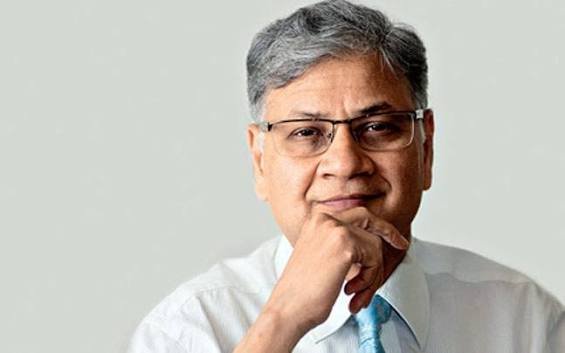
With infra expansion, investment initiatives and urban development push under the new government, West Bengal’s real estate sector stands at the threshold of a new growth cycle. Kolkata along with emerging urban centres and growth corridors is poised to witness new opportunity in residential, commercial and alternative real estate. In this exclusive interview with Torbit Realty, Sushil Mehta, President, Credai, Bengal
shares insights into Bengal’s evolving realty landscape, investment prospects, key driving trends and the policy interventions needed to unlock its full potential. Excerpts
-Vinod Behl
West Bengal appears to be entering a new phase of infrastructure development, investment and urban transformation. How do you assess the opportunity this creates for the state’s real estate sector, particularly Kolkata., both in residential and commercial real estate?
West Bengal, and Kolkata in particular, is at an inflection point. The state has strong fundamentals a large consumption base, a skilled workforce, strategic connectivity to the North East and the neighbouring countries, and an under-leveraged real estate market compared to other metros. As infrastructure investment accelerates, we’re seeing this translate into genuine demand-side momentum. In residential segment, buyers are moving toward larger, better-planned homes with lifestyle amenities; in commercial real estate, Kolkata is emerging as a credible alternative for IT/ITeS and GCC operations looking to de-risk from saturated Tier-1 markets. The opportunity is significant, but it has to be backed by policy that matches the ambition faster approvals, clearer land titles, and a genuinely investor-friendly regulatory environment.
How significant will be the improved road, metro, rail, airport and other connectivity infrastructure, in opening up new real estate growth corridors? Which locations do you see emerging as the next major hotspots?
Connectivity is the single biggest driver of new real estate geography. Metro expansion (New Garia–Airport, Howrah -Salt Lake, Joka–Esplanade), the improvement of the EM Bypass and peripheral road network, and airport upgrades are already redrawing the map. Corridors like Rajarhat–New Town, the EM Bypass extension towards the airport, and the Diamond Harbour Road axis are emerging as the next growth hotspots, offering land parcels and connectivity that established micro-markets no longer have. As industrial and logistics infrastructure improves along NH corridors, we’ll also see satellite townships develop around Kolkata’s periphery, similar to what we’ve seen play out in other metros a decade ago. Kalyani Barrackpur Barasat and Belgharia areas which are north of Kolkata city, will grow once the new airport work at Kalyani starts. Kolkata and surrounding areas are very much deprived of infrastructure development and very few new roads have come up. The existing road networks needs to be improved and widened. In many areas, new road network is required. The economy of the state may transform fast just by building good road network and connectivity.
What will it take to attract greater domestic investment and increasing participation of REITs, private equity, soverign and pension funds, besides other institutional capital? Which sectors offer the greatest potential?
Institutional capital goes where there is transparency, infrastructure, scale, and exit certainty. For Bengal to attract greater participation of REITs, private equity and pension funds, three things matter most- clean RERA-compliant title and documentation at scale, grade-A commercial and warehousing stock that meets institutional underwriting standards; and predictable policy. Investors price in policy risk more than almost anything else. Commercial office and IT/ITeS parks, organised warehousing and logistics, and rental housing are the sectors having greatest near-term potential for institutional capital in Bengal, provided the state continues to simplify approval and conversion processes.
Most important is to carry out reforms in present legal system related to real estate industry, change of archaic laws related to land, township development rules, introduction of new township laws, change in Theeka control laws, repeal of urban land ceiling etc to create a proper ecosystem for development and building confidence of investors.
What are the major shifts you are witnessing in Kolkata’s residential market in Tier-1 and Tier-2 cities in terms of ticket sizes, consumer preferences, premiumisation, branded developers, plotted development and lifestyle housing? How do you look at the affordable housing challenge?
The Kolkata buyer has changed. Ticket sizes are moving up as end-users trade up from starter homes to larger, premium configurations. Branded developers are gaining share because buyers are now paying as much attention to developer’s credibility and delivery track record as to price. Plotted development is seeing a strong revival, particularly in the peripheral corridors, driven by buyers who want land ownership and the flexibility to build later. Lifestyle housing — with integrated clubs, green spaces and wellness amenities, has moved from a differentiator to an expectation in Tier-1 pockets.
On affordable housing front, the challenge is that construction costs, high GST, stamp duty-registration fee, approval charges, and land costs have risen faster than what the affordable price band can absorb. Without continued policy support, FAR incentives, faster approvals, and possibly land-cost rationalisation, that segment will keep shrinking rather than growing.
Which of the alternative/emerging asset classes out of data centres, logistics and warehousing, senior living, student housing, co-living and health realty could become important growth engines for Bengal? What multiplier effect could this have on housing, commercial property and urban development?
Data centres, logistics/warehousing, senior living, student housing, co-living and health realty are all underpenetrated in Bengal, relative to their potential. Organised retail, malls, warehousing and logistics stand out immediately, given Kolkata’s port and NH connectivity. This is a natural strength we haven’t fully monetised yet. Data centres are a longer-term high-value opportunity, contingent on power availability and open-access policy reform. Senior living and health realty will grow as Kolkata has ageing demography and NRI-Bengali families look to invest in care infrastructure for their parents. The multiplier effect is real- each of these asset classes pulls in ancillary residential, retail and commercial demand around it, effectively creating new growth nodes rather than just standalone projects.
Land availability, land records conversion, acquisition and approval processes set the pace of real estate development. What kind of investor-friendly policy interventions are needed for this and to unlock the potential of redevelopment, TOD and mixed-use development?
Presently this is the most challenging area I feel most strongly about, given our ongoing work with the state government. Land availability and approval timelines are still the biggest constraint on Bengal real estate. We need faster, digitised land record and mutation processes; simplified leasehold-to-freehold conversion; rationalisation of conversion and transfer fees; new township policy like Gujarat, land pooling system and a genuine single-window clearance system for land assembly and approvals. On redevelopment and TOD, the potential is enormous around metro corridors, but it needs enabling FAR and ground-coverage norms, and a policy framework that actively incentivises assembly of fragmented plots rather than leaving it to the market to solve on its own. We’ve been engaging directly with the state government on several of these fronts, and there’s genuine openness to reform the execution now needs to catch up with the intent.
As national developers are increasingly looking at emerging markets like Kolkata, traditionally dominated by regional players, how do you see the competitive landscape changing? How can government collaborate with developers to accelerate real estate urban development?
To attract investors from outside in real estate and other industries, the state government must ensure not only ease of doing business but also speed of doing business together with reducing the cost of doing business.
National developers entering Kolkata is a healthy sign it validates the market and raises the bar on quality, marketing and delivery standards across the board. Regional players like us have the advantage of deep local relationships, land access, and an understanding of the Bengali buyer that outsiders take years to build; the more sophisticated players will lean into that rather than compete purely on scale. For government, the opportunity is to use this heightened interest as leverage engaging both national and regional developers collaboratively on policy, land assembly and infrastructure planning, rather than treating real estate as a purely private-sector concern. Public-private partnership models, of the kind we’ve proposed for township development, are where this collaboration can be most productive.
Where do you see Kolkata and West Bengal’s real estate sector in 2030? What kind of transformative trends you foresee?
I hope soon urban land ceiling will be repealed in West Bengal, also many changes will happen in archaic laws related to land, urban development, and other real estate related laws. With the proposed changes, and new infrastructure boost, bsy 2030, I expect Kolkata to have a much more institutionalised real estate market larger, professionally managed commercial and warehousing stock, active REIT participation, and residential development that has moved decisively towards organised, branded, RERA-compliant supply. The growth corridors along the metro and EM Bypass extension will mature into genuine mixed-use, TOD-led micro-markets. Alternative assets like logistics, data centres, senior living would have moved from niche to mainstream. I can see few new townships to come up. The transformative shift I am most hopeful for, is a real estate ecosystem where policy, infrastructure and private capital move in step with each other, rather than each catching up to the other in sequence — that alone would unlock a multiple of the sector’s current potential.