Subtotal ₹0.00






Email :58
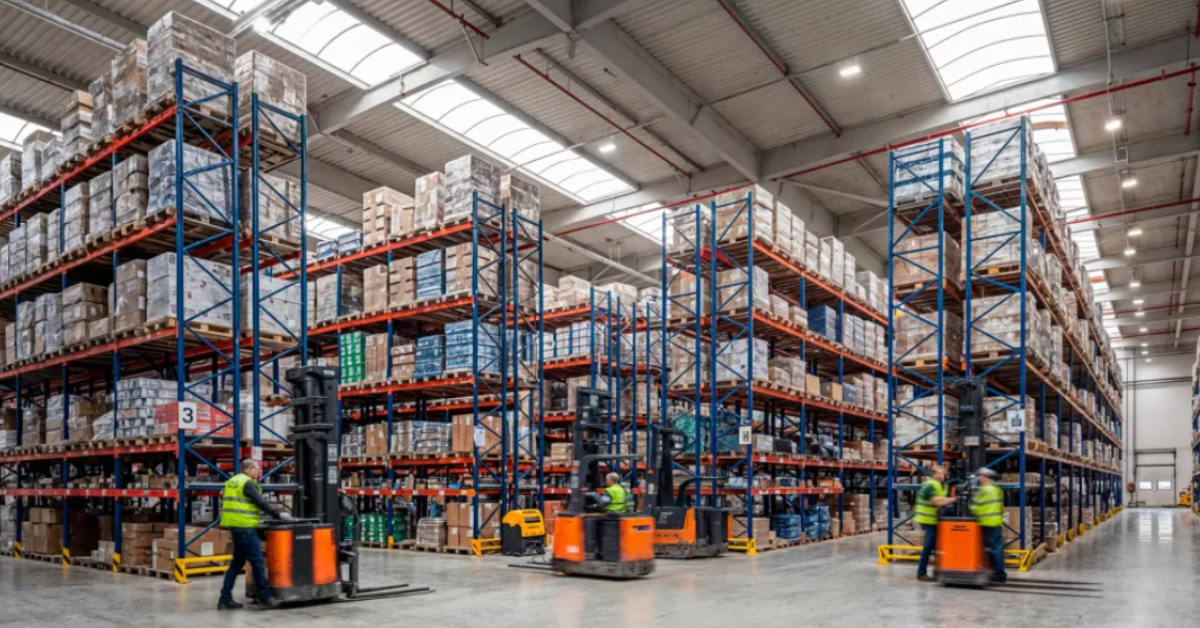
Delhi-NCR’s logistics and warehousing vacancy rate is forecast to remain below 15% through 2030 as infrastructure investment, e-commerce growth and rising third-party logistics demand support absorption, according to JLL.
The outlook comes despite vacancy rising to 20.4% in the first half of 2026 from 19.5% in 2025, as speculative supply outpaced demand. JLL said the increase is expected to be temporary, with demand for quality logistics facilities strengthening and existing vacant space expected to be absorbed in coming quarters.
The market recorded 3.7 million sq ft of net absorption in H1 2026, down 10% year-on-year amid global geopolitical uncertainty. JLL said the underlying demand remained resilient and expects the impact of geopolitical issues to be temporary.
Delhi-NH8 and Ghaziabad-Noida were the leading clusters for absorption, benefiting from their strategic positions along the Western and Eastern Dedicated Freight Corridors. By occupier segment, third-party logistics companies accounted for the largest share of take-up, followed by manufacturing and consumer-led sectors, JLL said.
Join Real Estate Asia community
New supply increased 18.4% year-on-year to 5.8 million sq ft in H1 2026. Delhi-NH8 led completions, supported by land availability, followed by Ghaziabad-Noida and Sonipat-Hassangarh. JLL said the new projects are strengthening NCR Delhi’s logistics infrastructure capacity.
Warehousing rents rose about 2% year-on-year to INR 23.2 per sq ft per month. With demand increasingly focused on higher-quality facilities and institutional investor interest growing, JLL expects rental growth of 4-5% in the coming quarters.
Land price appreciation also supported asset values. Capital values increased 3.1% year-on-year in H1 2026, while market yields compressed by 10 basis points to 7.7%, according to JLL. The brokerage said the movements point to strengthening asset valuations and investor confidence in the logistics sector.
Looking ahead, JLL projects NCR Delhi’s warehousing stock will exceed 120 million sq ft by the end of 2026, driven primarily by Grade A developments and institutional investment. Delhi-NH8 is expected to remain particularly active, supported by the Western Dedicated Freight Corridor.
JLL also highlighted the impact of major infrastructure initiatives including the Delhi-Mumbai Industrial Corridor, Western Dedicated Freight Corridor and Eastern Dedicated Freight Corridor. Improved connectivity to western and eastern India, combined with continued expansion in e-commerce and 3PL activity, is expected to underpin logistics demand and drive the vacancy rate below 15% through 2030.