Subtotal ₹0.00






Email :39
By C J Singh
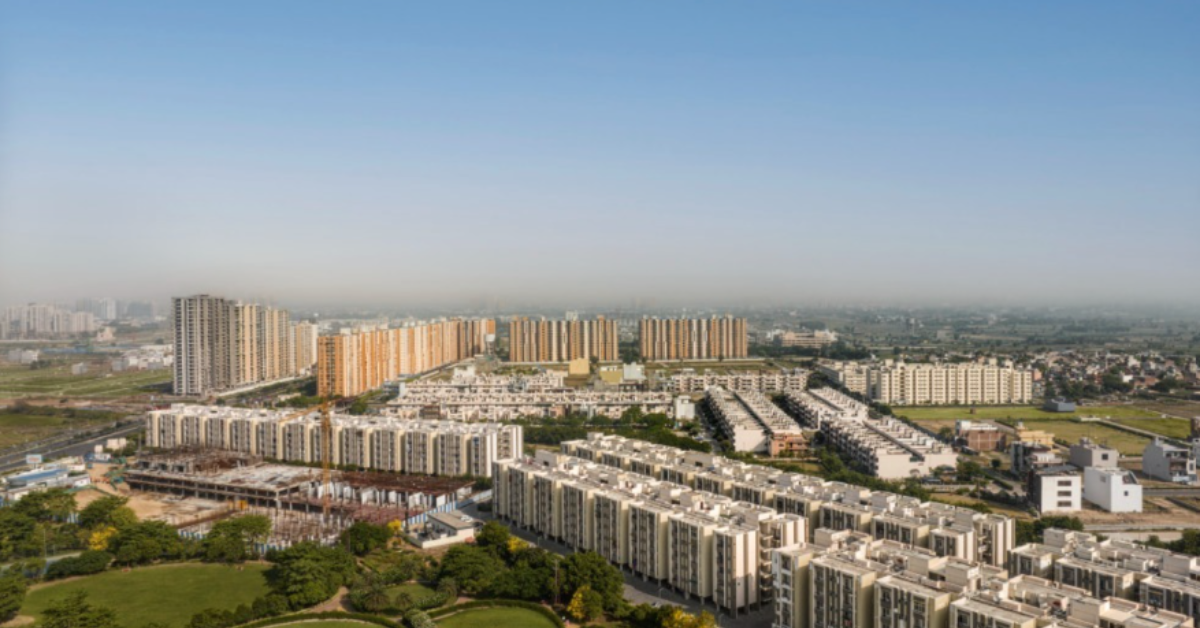
As Indian cities are expanding, homebuyers are increasingly looking for a functioning neighbourhood with connectivity, schools, healthcare, shopping, recreation, security, green spaces, and reliable infrastructure. In standalone housing projects, achieving this integration is nearly impossible, whereas in planned townships, housing and everyday urban infrastructure are seamlessly woven into a unified ecosystem.
A home is more than just an apartment; while a standalone residential project may deliver a well‑constructed building, its residents remain largely dependent on the surrounding city for most essential needs. An integrated township, by contrast, brings together multiple elements-ranging from retail outlets, offices, and schools to healthcare, recreation, parks, and community facilities-within a single planned environment. The development is also equipped with a network of internal roads, utilities, and security systems, making the township largely self‑sustaining for most, if not all, everyday needs.
In cities and towns that are already bursting at the seams, this becomes particularly valuable as a well-planned township can bring employment, education, shopping and recreation closer to where people live. The result is not merely convenience. It can translate into lower travel costs, more free time and a better quality of life. Moreover, a planned integrated township is better when it comes to roads, drainage, water supply, sewage treatment, electricity distribution, landscaping and waste management as they are incorporated before construction rather than retrofitted later.
Also, the residential market itself is changing. Buyers are increasingly looking for amenities, connectivity and quality eco-system even at a premium. Urban expansion in India is often fragmented, with housing colonies appearing first, followed by commercial development, schools and other facilities later. This often creates disconnected neighbourhoods in which residents depend heavily on private vehicles. Townships offer the possibility of more coordinated land use.
Integrated planning can also improve the long-term resilience of a neighbourhood. Infrastructure can be designed with future population growth, water stress, extreme weather events and changing mobility patterns in mind. Features such as water reuse, storm-water management, backup utilities, shaded public spaces and distributed community facilities can make a township better equipped to respond to changing urban conditions.
Community development is an advantage of integrated townships that is often underestimated. A township has the scale to support a wider range of common spaces and activities. Parks, sports facilities, cultural spaces, retail streets and community centres can create opportunities for interaction across age groups. This can be particularly valuable for families as children have access to play areas, older residents can find walking spaces and social facilities while working adults can access everyday services closer to home.
While the concept of an integrated township offers significant value proposition, certain precautions do need to be taken so that integration does not become isolation. Private internal amenities cannot substitute for public transport, hospitals, employment centres and civic infrastructure outside the township. In fact, a township can become an island if it is poorly connected to the wider city.
India is entering an important phase of urban development. With hundreds of millions more people expected to live in towns and cities in the coming decades, the country has a rare chance to build neighbourhoods differently. While they cannot solve every urban problem, thoughtfully planned integrated townships have a distinct structural advantage by bringing together many of the things that make urban life work.
The advantages of integrated townships is not simply the number of amenities they offer, but the ability to plan land use, infrastructure, mobility and community life together rather than as separate pieces. That coordination can produce efficiencies and a quality of urban experience that standalone housing projects often struggles to deliver. That is why integrated townships continue to command attention and as India builds for the next generation, integrated townships can play an increasingly important role in meeting future needs.
(The author is COO, Wave City. Views are personal)