Subtotal ₹0.00






Email :45
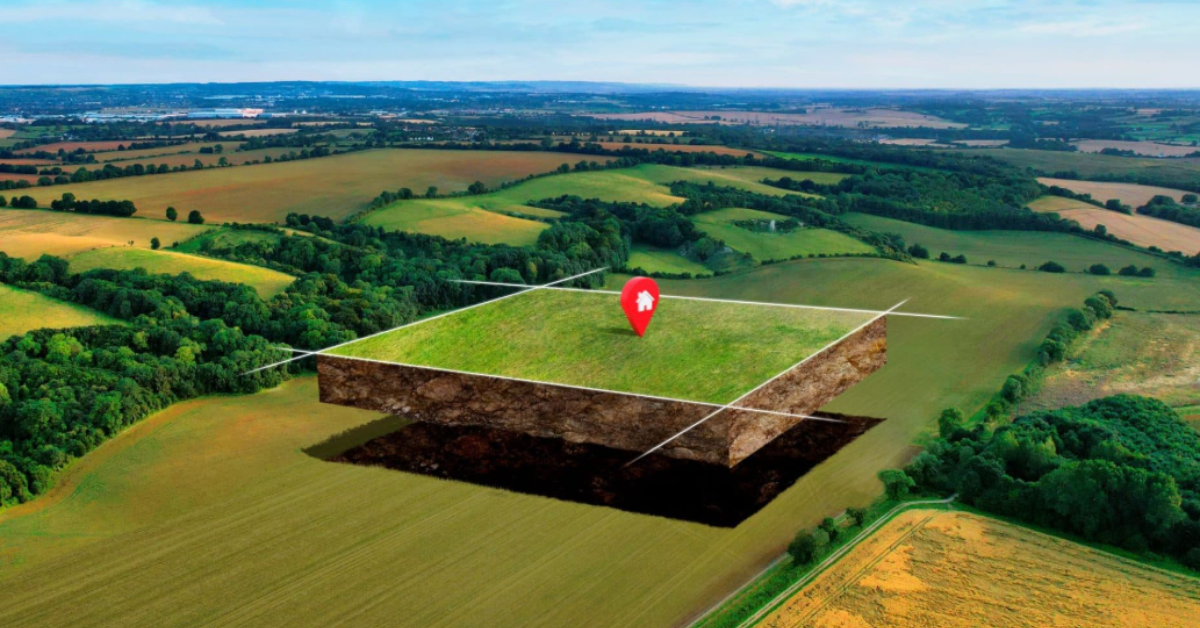
India’s land market has entered an unprecedented phase of activity, with 18,158 acres transacted across more than 880 deals in 33 cities between 2021 and Q1 2026, according to Cushman & Wakefield’s latest report, Building India: Land Markets Define the Next Development Frontier.
Annual transacted acreage consistently rose from 813 acres in 2021 to 6,181 acres in 2025, growing at a CAGR of approximately 66% over the period. Momentum remained strong in Q1 2026, with 1,194 acres transacted during merely a single quarter. Notably, transaction volumes in 2025 were 1.6 times higher than the previous peak recorded in 2024, reflecting growing developer and investor appetite for land acquisition.
This unprecedented scale of land activity comes amid sustained momentum across asset classes, including offices, residential, retail, logistics & industrial, and data centres-all of which have recorded strong leasing and investment traction in recent years.
Infrastructure-Led Corridors Drive Land Demand
Land transactions are increasingly concentrating along infrastructure-led growth corridors, with expressways, metro rail networks, industrial corridors and airport-linked developments emerging as key drivers of land demand. Reflecting this trend, the Western and Southern regions together accounted for nearly 70% of total transacted acreage between 2021 and Q1 2026.
This concentration closely mirrors infrastructure investments across these regions. Between FY21 and FY25, the industrialised states in the West (₹5.3 lakh crore) and technology-led states
in South (₹6.0 lakh crore) India deployed nearly ₹11.3 lakh crore towards infrastructure development, among the highest in the country, with significant investments directed towards metro rail projects, expressways and industrial corridors that have expanded development catchments and unlocked new land markets.
Geographic Shift Beyond Metros
While Tier-I cities retained a 71% share of acreage across 2021-Q1 2026, Tier-II activity accelerated from 16 acres in 2021 to 2,120 acres in 2025, raising its annual share from around 2% to 34%.
The shift is also visible in parcel sizes. Between 2021 and Q1 2026, average Tier-I deal size declined from 21 acres to 10 acres, while the Tier-II average rose from 8 acres to 53 acres. The greater availability of large, contiguous parcels is supporting integrated townships, industrial parks and other large-format projects beyond established urban cores.
Evolving Asset Class Mix
Land acquisition preferences have evolved over the last five years, shifting from a predominantly residential and mixed-use cycle in 2021-22 to a more diversified mix encompassing logistics & industrial (L&I), office, data centres and integrated developments.
While changes in asset-class shares appear incremental, the underlying scale of land acquisitions has expanded significantly. Residential remained the largest land-use category, accounting for 45% of total transacted acreage, supported by sustained housing demand, growing preference for premium, lifestyle-oriented housing, and rising interest in plotted developments.
Office-linked land transactions increased five-fold between 2021-22 and 2024-25, while industrial & logistics acquisitions expanded nearly 13-fold, driven by manufacturing growth, infrastructure-led development and evolving supply-chain requirements. Mixed-use land transactions grew 2.6 times over the same period, underscoring increasing preference for integrated, master-planned developments.
Meanwhile, data centre acquisitions expanded in absolute terms despite a moderation in overall share, reflecting sustained demand for digital infrastructure and continued land aggregation in locations offering power availability and connectivity.
Shift Toward Partnerships Reshapes Deal Structures
Land acquisition patterns have also evolved. Even as outright purchases continue to dominate the market with over 60% (10,910 acres) of total transacted acreage between 2021 and Q1 2026 across both Tier-I and Tier-II cities, partnership-led structures such as joint ventures (JVs) and joint developments (JDs) have gained significant traction, accounting for over 4,405 acres during the same period.
The number of JV/JD transactions increased from 11 deals in 2021 to 42 deals in 2025, with this trend expected to grow further in the coming years. The increasing adoption of these structures reflects a broader shift towards collaborative development models, allowing stakeholders to pool resources, share risks and unlock value from increasingly large and capital-intensive projects.
Meanwhile, long-lease and redevelopment transactions contributed nearly 2,520 acres and 323 acres, respectively, between 2021 and Q1 2026. While these structures were negligible in 2021, together they accounted for nearly half of all land deals in Q1 2026, highlighting a clear broadening of transaction structures beyond traditional outright acquisitions.
Future Supply and Revenue Potential of Land Deals
Based on prevailing planning norms and capital values, land transacted between 2021 and Q1 2026 represents nearly 1,400 million sq. ft. of potential built-up area. Residential projects account for the largest share of this potential at 559-768 MSF (55%), followed by industrial and logistics developments at 205-225 MSF (16%). Office developments could contribute 109-179 MSF (13%), while data centre and retail assets carry development potential of approximately 113-124 MSF and 8-26 MSF, respectively. The scale of this opportunity reflects the unprecedented development capacity created through land acquisitions over the last five years.
Building on the estimated plot potential across asset classes, this translates into an estimated USD 176 billion (₹16.67 lakh crore) of future revenue potential- nearly 22 times the revenue generated by India’s top ten listed real estate developers combined in FY26.
Anshul Jain, Chief Executive-India, SEA, MEA & APAC Office and Retail, Cushman & Wakefield, said, “With 18,158 acres transacted across 33 cities in just over five years, carrying the potential to create nearly 1.4 billion sq. ft. of future built-up stock, India’s next development cycle is already underwritten in the land being assembled today. Three shifts will define this cycle: corridors alongside cores, as infrastructure expands the geography of opportunity beyond established metros; scale over fragmentation, as larger, contiguous parcels enable integrated destinations; and partnership over ownership, as shared-risk models bring together land, capital and execution capability. Together, these shifts mark a structural upgrade in how India builds a more institutional, scalable and distributed model of urban growth. The land being assembled today is, in effect, a forward order book for the next decade of growth, and it reinforces our conviction that Indian real estate is entering its most durable and investable phase yet.”
Somy Thomas, Executive Managing Director – Capital Markets, Cushman & Wakefield, added, “The scale of activity in India’s land market over the last five years reflects growing confidence in the country’s long-term economic and urbanisation trajectory. More than 18,000 acres transacted across 880+ deals underscore the increasing strategic importance of land within India’s real estate ecosystem. The emergence of new growth corridors, supported by infrastructure investment and improved connectivity, is expanding the development footprint beyond traditional metropolitan markets. This is prompting developers and investors to secure land earlier in the value-creation cycle, particularly across emerging cities and peripheral growth locations.
“The market is also benefiting from greater transparency and evolving transaction structures. The growing adoption of partnership-led development structures is creating a more mature, efficient and investable land market. Alongside this, the post-pandemic preference for owning homes and land continues to shape buying decisions. At the same time, newer formats such as managed farmlands are gaining traction across several cities, reflecting how buyer interest is gradually expanding beyond traditional real estate options. With recent land acquisitions carrying the potential to create nearly 1.4 billion square feet of built-up stock, the scale of opportunity embedded in these transactions is substantial across residential, commercial, industrial and digital infrastructure.”