Subtotal ₹0.00






Email :46
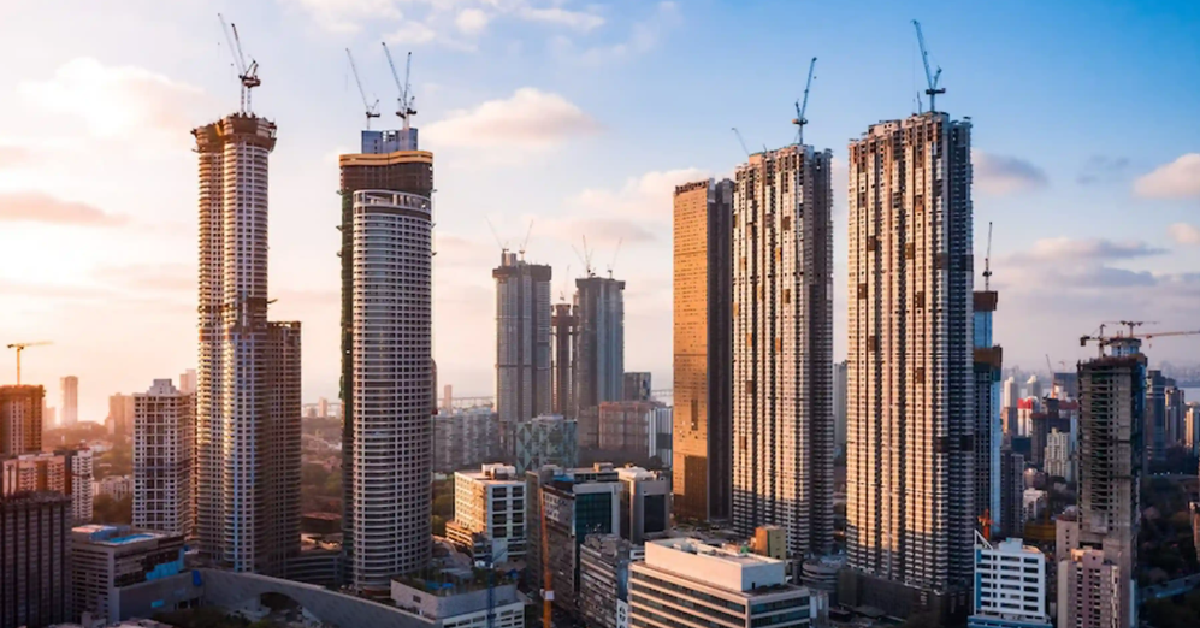
India’s real estate sector is entering a more mature phase of growth where the conversation is steadily shifting from expansion at any cost to the long-term quality of assets being created. For years, the industry measured success through launch volumes, inventory creation and the pace at which new projects entered the market. That metric is changing rapidly. Buyers, investors and occupiers are now placing greater value on execution quality, sustainability, design efficiency and operational reliability. The transition is unfolding alongside strong market expansion, according to a report by The Hindu.
India’s real estate market, estimated at nearly $585 billion in 2026, is projected to touch $926 billion by 2031, driven by stronger institutional participation, REIT-backed assets, rising corporate leasing and the continued growth of Global Capability Centres across major cities, according to a report published by Modor Intelligence, a market research company. Yet beneath that growth story lies a more structural transformation. The industry is increasingly prioritising substance over scale. The clearest sign of this shift is visible in the residential market.
Even though overall housing sales declined in 2025, premium housing continued to gain ground. Apartments priced above ₹1 crore expanded their share of total residential sales from 53% in 2024 to 63% in 2025, according to a news report. Buyers are no longer simply looking for larger homes or attractive launch prices. Construction quality, lower maintenance costs, better layouts and integrated community infrastructure are emerging as stronger differentiators.
The Indian real estate sector is moving away from a supply-driven model towards a far more end-user-centric and value-led approach. Earlier, the focus was largely on scale, inventory absorption, and rapid project launches. Today, developers are concentrating on product differentiation, construction quality, liveability, and long-term asset performance.
The shift is now visible at the planning level itself. Developers are focusing on lower-density developments, larger green zones, better façade engineering, and amenities that genuinely improve the resident experience instead of functioning merely as marketing tools.
Commercial real estate is witnessing a similar evolution. India has recorded a 65% increase in Grade A green-certified office stock across the top seven cities since 2019, according to a news report. Occupiers, especially multinational firms and GCCs, are demanding spaces that combine sustainability, operational efficiency and workplace design rather than merely large floor plates.
“The conversation has fundamentally shifted from ‘how much space’ to ‘what kind of space’,” says Suvrat Jain, co-founder and chief executive officer of Onward Workspaces, a workspace solution company in New Delhi. “Enterprises and GCCs are choosing custom-built, design-led environments over generic square footage, and developers who have not adapted are already feeling it in vacancy numbers.”
Jain says occupier expectations are reshaping the office market faster than regulation alone. “Global parent companies are pushing ESG mandates down to their India teams, making green certification a deal requirement and not just a preference,” he explains. “Buildings that demonstrate measurable sustainability performance are seeing stronger occupier interest and better long term positioning.”
Technology is also becoming central to this quality-driven transition. Earlier, quality checks often remained reactive, and problems surfaced late in the construction cycle. Developers and contractors are now increasingly using digital tools to monitor execution in real time.
“At a practical level, the shift comes down to visibility into what is actually happening on site,” says Iesh Dixit, Chief Executive Officer and Co-Founder of Powerplay, an end-to-end construction management software platform based in Bengaluru. “Quality is not a single checkpoint. It is the result of hundreds of daily on-site decisions. When teams can track delays, material usage, and defects, and rework while construction is underway, quality becomes measurable instead of abstract.”