Subtotal ₹0.00


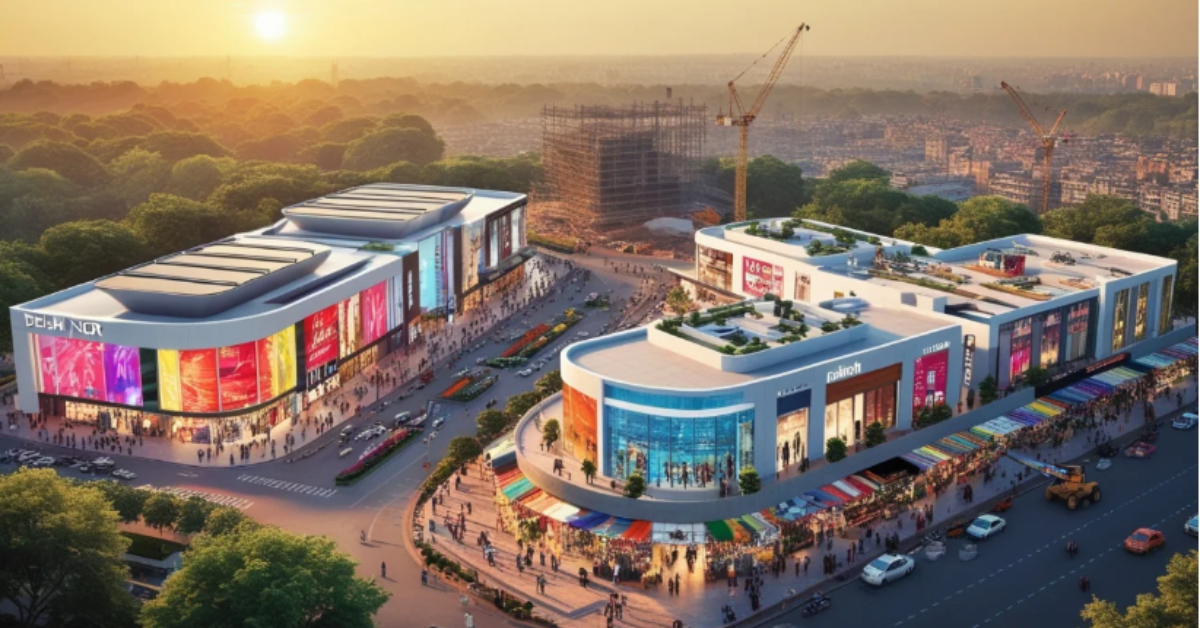

India’s retail leasing market demonstrated remarkable resilience during the nine months of January to September 2026 (9M 2026) on the back of favourable domestic economy and demographic factors, according to JLL. In nine months of 2026, both Delhi NCR and Mumbai witnessed growth in leasing volume in both absolute terms as well as percentage share of the expanding overall gross leasing pie. These cities garnered gross leasing total of 2.5 million sq. ft. and 2.3 million sq. ft. respectively. New mall completions in 2026 facilitated retailer expansion in these cities.
“India’s retail sector continues to demonstrate remarkable resilience, with gross leasing across the top seven cities touching 9.36 million sq. ft in nine months of 2026, the strongest nine-month leasing performance in four years. This growth is being driven by rising discretionary spending and a clear consumer shift toward premiumisation, which has kept retailers bullish on expansion despite headwinds like a 41.6% year-on-year decline in new mall supply and elevated retail inflation. What’s particularly telling is that demand hasn’t just held steady, it has strengthened, as retailers prioritise entry into new markets and a sustained preference for superior-quality assets. This underscores a maturing retail landscape where occupiers are willing to compete for the right space, even as supply remains constrained,” said Saket Amrit, Head of Retail Services, India, JLL.
On a quarterly basis, gross leasing in Q3 2026 reached 3.09 million sq. ft. While leasing volumes moderated marginally by 2.8% compared with Q2 2026 due to limited availability of new retail spaces. Transaction activity broadly indicated steady, yet calibrated demand. In Q3 2026, nearly 1.41 million sq. ft of retail space was delivered, taking the shopping mall stock total to 93.5 million sq. ft. This new supply was spread across Delhi NCR, Mumbai, and Chennai. Limited supply infusion, coupled with healthy retailer demand, continued to tighten vacancy levels across shopping malls. As a result, shopping mall vacancy declined by 13 bps from 11.20% at the end of Q2 2026 to 11.07% at the end of Q3 2026.
Due to lack of new supply in recent past, retailer expansion on high streets became predominant as brands started locking leases to fulfil immediate requirements. However, as new malls and other retail developments started becoming operational, demand has started shifting towards quality assets. On a nine-monthly comparison, malls captured 45.9% share of total gross leasing, compared to 44% in 9M 2025. During the same period, the share of high streets in total leasing moderated from 50.4% to 46.3% Similarly, the share of other retail developments in overall gross leasing increased from 5.6% to 7.8% in this period.
Delhi NCR, Mumbai and Bengaluru lead retail demand; Pune emerges as fastest-growing market with 80.6% y-o-y growth
During 9M 2026, with Delhi NCR (26%), Mumbai (25%), and Bengaluru (21%) emerging as the leading retail hubs for leasing activity across India, collectively accounting for ~ 72% share in total gross leasing volume. High concentration of leasing in these markets reflects continued retailer focus for new retail stores in established metropolitan centres with deep consumer catchments, and well-developed retail ecosystems. Hyderabad (10%), Kolkata (8%), Chennai (6%) and Pune (4%) comprised the remaining share of overall gross leasing pie.
Pune emerged as the fastest-growing city, recording an 80.6% y-o-y increase in leasing volume in 9M 2026, albeit on a relatively lower base. Kolkata also witnessed strong growth of 55.9%, supported by new retail completions during the year. Hyderabad and Bengaluru saw moderation in leasing volumes compared to the corresponding period last year.
A similar trend was observed across the top seven cities in Q3 2026. Delhi NCR emerged as the top retail market, accounting for 30% of gross leasing volume, followed by Bengaluru (18%) and Mumbai (16%). Hyderabad contributed 13% of leasing volume, while Kolkata & Chennai accounted for 9% each, with Pune capturing the remaining 5%.
In terms of retailer categories, Fashion & Apparel (31%) and Food & Beverage (18%) remained the largest contributors to gross leasing volume in 9M 2026, followed by Entertainment, which accounted for 15% of total leasing volume. In line with recent trends, the entertainment segment’s share in gross leasing rose from 11% in 9M 2025 to 15% in 9M 2026, supported by a 39.1% y-o-y increase in space take-up. Growth continued to be driven by the expansion of Family Entertainment Centres (FEC) as various domestic and international operators are reshaping the landscape with growing number of new openings, largely in shopping malls. Demand for experience-driven entertainment concepts in rising, and concepts such as competitive socializing, bowling alleys with bars and lounges, arcade gaming, golf driving ranges, escape rooms, VR experiences and mini golf are becoming popular in India.
In 9M 2026, Daily Needs & Grocery witnessed a substantial double-digit decline in leasing volume compared to 9M 2025 and garnered a limited share of 5% in gross leasing, reflecting the growing penetration of quick commerce and dark-store networks, alongside a strategic shift towards smaller-format brick and mortar stores and premium gourmet grocery concepts in place of traditional large-format outlets.
Domestic retailers remained the primary drivers of leasing activity, accounting for 79.2% of total gross leasing in 9M 2026, though their share declined from 84.1% in 9M 2025. During the same period, international brands increased their physical store presence in India. Leasing volume by international retailers rose 38.8% y-o-y, due to sustained expansion by well-established brands and continued entry of new retailers in India due to its consumption story and retail growth potential. From a 15.9% share in 9M 2025, international retailers’ share in leasing pie expanded to 20.8% in 9M 2026.
India has attracted significant attention from international retailers, who have steadily increased their efforts to establish a presence in the country over the past four years. Despite a slow start in the first half of 2026, new international brands intensified India entry plans in the third quarter, and many new retailers entered India during July to September period, with store openings in multiple cities. In 9M 2026, 24 new international brands opened their first store in India, representing 83% of 2025 total already. New international retailers were primarily concentrated in the Food & Beverage, Footwear, and Fashion & Apparel categories. In the light of global uncertainties, the steady influx of international retailers underscores the confidence these brands have in the long-term growth potential of India’s retail sector.
Strong supply pipeline and sustained brand demand set to push 2026 leasing past 2025 levels
Basis the current construction pipeline of upcoming retail developments, JLL India expects the top 7 Indian cities to witness the infusion of nearly 43.7 million sq. ft of new retail spaces by 2030. This bodes well for the continued growth of the retail sector due to optimism in India’s retail sector. Going forward, we expect gross leasing volume in 2026 to surpass the 2025 levels of 12.5 million sq. ft easily on the back of continued interest from international brands coupled with healthy space take up by domestic retailers.
Commenting on the report, Manish Periwal, Senior Vice President, Pioneer Urban, said, “India’s retail leasing touching 9.36 million sq. ft. in the first nine months of 2026, the strongest for any such period in four years, shows how firmly consumption – led growth is anchoring the sector. Rising disposable incomes, the steady expansion of domestic and international brands, and the shift toward experience-led retail are driving demand for quality, well-located spaces. We expect this momentum to continue as occupiers look to secure prime retail footprints. With a deep consumption base, affluent catchments, strong connectivity, and a steady pipeline of well-planned retail destinations, Gurugram continues to be the first choice for brands seeking to expand in North India.”
Manik Malik, President & CEO, BPTP, said, “The record-high retail leasing of 9.36 million sq. ft. during January–September 2026 reflects the underlying strength of India’s consumption economy and the continued expansion of organised retail across key urban markets. This momentum is indicative of a maturing retail real estate sector, where demand is increasingly being shaped by evolving consumer aspirations, rising discretionary spending and the expansion of domestic as well as international brands.”
An important trend is the changing geography of retail demand. Markets such as Delhi-NCR, Mumbai and Bengaluru continue to account for a significant share of leasing activity, supported by their expanding economic base, infrastructure development and growing residential catchments. Within NCR, retail growth is no longer confined to established commercial centres.
“Sustained residential development and improving connectivity are creating new consumption corridors, bringing retail, dining and leisure opportunities closer to emerging residential communities. This is also influencing how developers approach retail planning, with greater emphasis on location, accessibility, catchment potential and the overall quality of the development. Going forward, the sector’s growth will depend not just on the addition of retail space but on the ability to create well-planned developments that are aligned with the needs of their surrounding catchments. A considered approach to location, tenant mix, design and accessibility will be important in building sustainable retail destinations and supporting the next phase of India’s organised retail growth,” he added.