Subtotal ₹0.00






Email :88
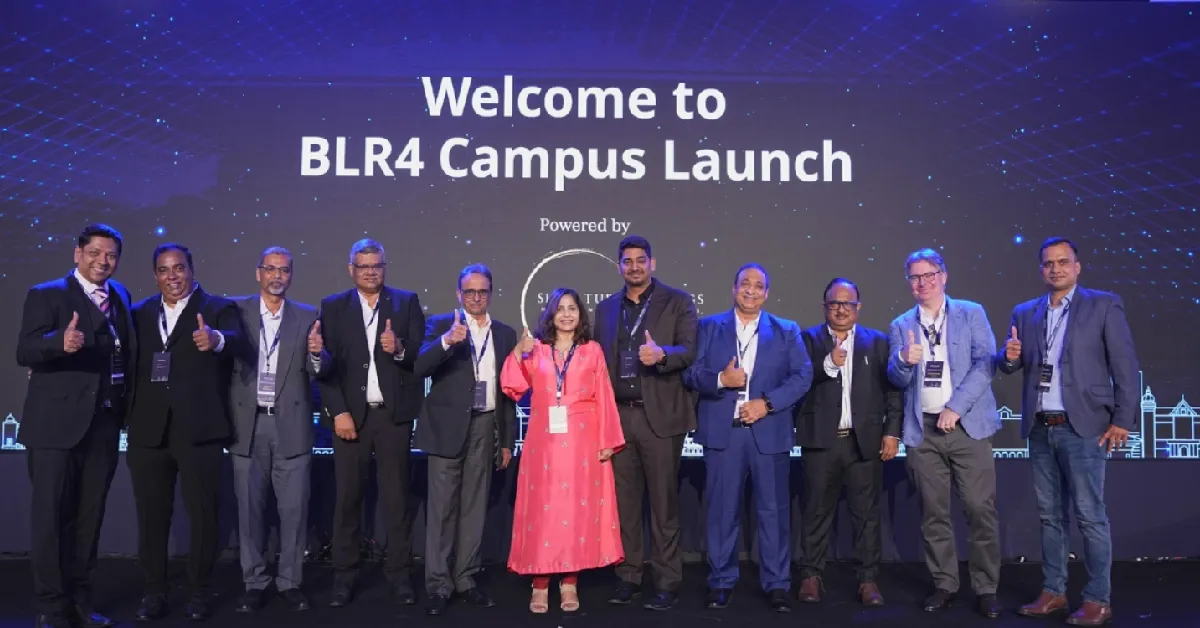
NTT DATA, a global leader in AI, digital business, and technology services, has announced the official opening of the Bengaluru 4 Data Center Campus (BLR4) of its Global Data Centers business division, a major expansion of the company’s India footprint and a significant addition to its global platform of hyperscale-ready facilities.
Located near Kempegowda International Airport in the heart of India’s innovation corridor, the new campus is designed to meet accelerating demand for secure, scalable, and energy-efficient digital infrastructure. BLR4 strengthens the region’s ability to support cloud adoption, AI development, high-density compute, and data-intensive enterprise workloads.
The Bengaluru 4 campus incorporates advanced cooling technologies, extensive physical and network security, and carrier-neutral connectivity, delivering the performance, resilience, and efficiency required by global enterprises and hyperscalers.
Campus Specifications
• 100 MW total facility load when fully built out
• 67.2 MW critical IT load across three data centers: BLR4A, BLR4B, and BLR4C
• Phase 1 now live: BLR4A delivering 22.4 MW of IT load capacity
• Dedicated 220 kV GIS substation for high-availability, high-stability power
• IGBC Platinum Rating, reflecting adherence to green building and sustainability standards
“India is entering a new era of digital acceleration, and the Bengaluru 4 Campus is built to meet the scale, speed, and sustainability expectations of our clients,” said Vimal Kaw, Country Managing Director, India, NTT Global Data Centers. “This launch reflects our long-term commitment to building world-class digital infrastructure that empowers enterprises and strengthens India’s position in the global digital economy.”
Aligned with NTT Global Data Centers’ global environmental commitments, the BLR4 Campus integrates high-efficiency cooling systems, optimized power usage, and renewable-ready infrastructure. The campus’ IGBC Platinum certification underscores NTT GDC’s focus on responsible, sustainable growth while maintaining the reliability and scalability required for mission-critical operations.