Subtotal ₹0.00






Email :265
The Great Divide: Luxury Soars, Affordability Sucks, Commercial Holds Good
The year 2025 will go down as the year of contrasting growth for the real estate sector as the luxury housing saw a phenomenal rise at the cost of affordable housing which slumped to new lows. While the commercial realty stood ground, favourable factors like healthy economy, falling interest rates and infrastructure boom amidst landmark reforms ensured stability in the property market, laying a firm ground for a promising path ahead in 2026.
Vinod Behl
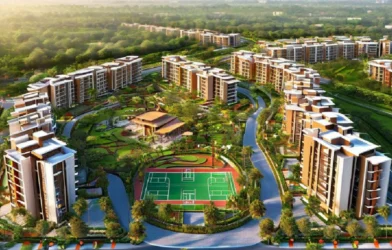
Significantly, because of the continuous decline in affordable housing, the overall housing sales fell 12% YoY in the first nine months of the year. Anarock estimates that during the whole year, housing sales are expected to decline by 15%. During the year affordable housing lost a significant share of supply and sales. Affordable housing below INR 40 lakhs, saw its share falling to 18% from 38% in 2019. Its supply share dipped to 12% of new launches in H1 2025, down from 40% in 2019. On the contrary, luxury housing sales surged 85% YoY in the first half of 2025 while the supply of luxury homes during this period rose 30%.
Clearly, the year 2025 was marked by premiumisation of the real estate market, amid changing preferences and rising aspirations of homebuyers for quality lifestyle and investors stepping up their property play to acquire luxury and super-luxury properties. Statistics point out that the luxury housing ecosystem has expanded substantially since 2021. According to Magicbricks, luxury homes now form 27% of overall supply, up from 16% as developers are inclined towards spacious layouts, premium specifications and integrated lifestyle amenities. Luxury demand has also gone up from 14% to about 18% of the total demand share, driven by buyers who are increasingly seeking superior design and future-ready lifestyle homes.
Several micro-markets saw the share of luxury housing going up. Noida Expressway saw its share going up from 10% in 2021 to 47% in 2025, as per Magicbricks data. The share in Devanahalli, Bangalore jumped from 9-40 percent, Ballygunge in Kolkata from 12-50%, Porvorim , Goa from 19-47%., aided by infrastructure boost, and enhanced connectivity. The connectivity boost also helped in the rise of Tier-2 and Tier-3 Cities, with the luxury housing segment expanding into new geographies beyond traditional metro centres.
On the price front, emerging locations have seen their luxury property index rising sharply from 1.0 to 1.44 between 2021 and 2025., supported by 27% increase in luxury demand and 86% rise in supply. Median luxury prices further underscore this depth, with Mumbai at INR 9.66 crore, Gurugram at INR 5.46 crore, Bangalore at INR 2.91 crore, Hyderabad at 2.20 crore, Chennai at INR 2 crore, Pune at INR 1.97 crore and Kolkata at INR 1.50 crore, indicating the increasing ability of multiple cities to command significant premium value.
This year, the housing sector also witnessed a substantial boost to affordability amid high prices, with the RBI resorting to cumulative rate cuts of 125 bps. The key reforms of GST rationalization and income tax relief provided by the government also boosted disposable income and affordability. All this in turn contributed to enhance real estate sentiment. A CREDAI-CRE Matrix survey points out that nearly two-thirds of developers across India hold a positive sentiment for the residential segment and expect demand to grow by more than 5% in CY2026 with an expected launch pipeline of 1 million sq ft next year. Amid moderating cost pressures, developers expect 10% rise in property prices.
Investments in India’s real estate sector, according to Colliers, have demonstrated remarkable resilience, underscoring the depth of the market and growing investor confidence. Annual investments for 2025 and 2026 are expected to the tune of USD 5-7 billion each, driven by a balanced interplay of foreign and domestic investors. Alternate investments including AIFs, REITs and InvIs are further fuelling the investment in real estate sector. AS per JLL, REITs are poised for 10.8 trillion growth opportunity by 2029. Aligning with India’s long-term growth story, investment momentum will gain further momentum.
Commercial office sector continues to attract the highest share of investments among all real estate asset classes, driven by strong occupier demand and confidence from both domestic and international investors. Office assets have accounted for nearly 35% of the total investments so far in 2025. Key metropolitan cities of Bangalore, Delhi-NCR, Mumbai, Pune and Hyderabad remain the primary reci pients of these investments. Global Capability Centres (GCCS) have turned out to be primary engines of growth for office sector., expected to account for 35-40% of the total office space absorption in 2025. Domestic corporations, particularly in technology, BFSI and manufacturing are also significantly expanding their footprint. On account of this, the first half of 2025 saw a record breaking 39.45 million sq ft of office space leasing across major Indian cities, indicating robust demand. This demand is expected to continue as developers and investors are prioritizing high quality, Grade A and green-certified buildings with modern amenities as occupiers increasingly demand sustainable and tec-enabled workspaces. The industrial, warehousing and data centre segments are also showing a great momentum with policy push.
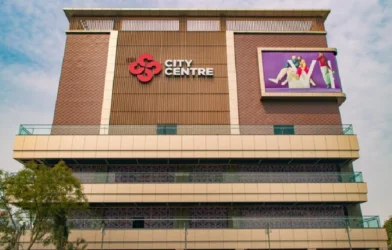
The mall segment has also performed well in 2025. According to Crisil, mall revenues are set to rise 12-14% this year, with expected double-digit gain in FY 2027. As per Anarock, shopping malls are poised to attract about USD 3.5 billion in investments over the next three years as global capital increasingly shift towards India’s retail sector. The growth of shopping malls will be driven by a mix of greenfield developments and acquisitions and upgrade of operational malls, particularly those that are distressed or underperforming. Developers including Nexus Malls, Phoenix Mills, DLF, Pacific Group, Raheja Lakeshore and Prestige Estates, together have a robust pipeline. Anarock estimates that these players are developing over 42.5 million sq ft of prime retail space with a pipeline of over 45 malls in the next 3-5 years.
Going forward, building on the momentum of 2025, with continued high demand for premium lifestyle housing amid strong economic fundamentals, rising affordability of home loans, sustained infra connectivity boost and favourable investment scenario, the year 2026 looks promising for the sector. The pace of the growth will however depend upon a few other factors including rationalization of prices, further lowering of interest rates and how developers step up the supply pipeline in the high demand price bracket of INR 1-2 crore to boost end-user demand for long-term stability, inclusive growth and value creation in real estate.