Subtotal ₹0.00







Email :27
Short Quick Read
Buying property is one of the biggest financial decisions most people will ever make. Yet real estate, more than almost any other industry, still struggles with a basic problem of buyers often not knowing what’s really happening behind the scenes. Delayed approvals, unclear timelines, and vague documentation have made “trust” a major casualty. That’s where process transparency comes in. It’s not a buzzword, it’s simply about how much a developer is willing to show, explain, and stand behind every stage of a project, from the first site plan to the day keys are handed over.
Read More…
On paper, transparency sounds simple: share information, be honest, don’t hide problems. In practice, it’s a lot of small, unglamorous habits repeated consistently over years. It means publishing accurate project timelines instead of optimistic ones. It means making approvals and land titles available for buyers to verify, not just promising that “everything is clear.” It means picking up the phone when a delay happens instead of going quiet until it’s unavoidable to explain.
Most delays or disputes in real estate don’t start with dishonesty. They start with silence, a developer assuming a small hiccup will sort itself out, and a buyer left guessing in the meantime. Over time, that gap between what’s happening and what’s communicated is what erodes trust, even when the underlying project is fine. What really matters is how projects are planned long before construction begins. A significant part of the groundwork goes into due diligence, understanding land titles, approvals, and the real potential of a location, so that documentation issues don’t surface later as unpleasant surprises for buyers.
As far as the execution process goes, the emphasis should remain on ensuring effective communication concerning the timeliness of the project and its progress. The buyers should be kept abreast of where the project stands from the time it is booked till the completion of the construction period. Technology can be used to ensure that progress is being made as per the schedule.
Responsibility becomes a process rather than an assurance. There has to be clear responsibilities of all those involved in planning, implementation, and documentation so that there’s no ambiguity about responsibility at each stage. However, this doesn’t mean that all challenges are to be eliminated – no developer is able to provide such assurance; however, it means that buyers won’t get surprised by challenges anyway.
Buyers today are far more informed than they used to be. They compare projects, ask for documentation upfront, and talk to other buyers before making a decision. A developer who can’t answer basic questions clearly about approvals, timelines, or project status, stands out quickly, and not in a good way.
This shift has made transparency less of a differentiator and more of a baseline expectation. The developers who take it seriously aren’t doing something extraordinary; they’re simply doing the ordinary things properly and consistently, which, in an industry with a long history of trust issues, ends up standing out anyway. Perhaps the most important thing to understand about trust in real estate is that it isn’t something a developer earns once and keeps forever. Every project, every interaction, every update either adds to that trust or chips away at it. A single unclear answer or unexplained delay can undo years of good work.
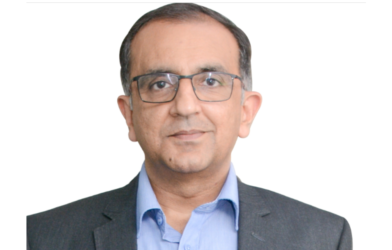
That’s why transparency has to be built into how a company operates, not treated as a customer service add-on. It has to show up in the paperwork, in the site visits, in how questions are answered, and in how problems are communicated when they arise. For buyers, that consistency, more than any single promise, is usually the clearest sign of whether a developer can actually be trusted with one of the biggest decisions of their lives- Rahul Agarwal, Founder & CEO, Avani Infratech.

Devendra Fadnavis, Chief Minister, Maharashtra
Urbanisation is inevitable. It needs to be managed well. As part of the redevelopment push, the Maharashtra government is targeting the completion of 10k homes under the Dharavi Redevelopment Project spread over 600 acres in central Mumbai.

Pranav Adani, ED, Adani Enterprises
Adani Group is currently planning and executing more than 600 msf of property development. This is more than 7 times the 80 msf of residential and commercial development that DLF , the country’s largest listed developer has either under development or planned for launch.

Pavitra Shankar, MD, Brigade Group
Our existing land bank provides around 5 years of visibility in terms of what can be launched and when. It does not mean we can stop business development. We need to continuously replenish the land bank by replacing what we launch each year.

Bhargav Das Gupta, VP-Market Solutions, Asian Development Bank
India’s next infra phase needs state, city-level financing. The challenge is not a shortage of capital, but ensuring a sufficient pipeline of bankable projects with predictable risk allocation and revenue streams.

V R Sharma, MD, Jindal Steel Limited
West-Asia war related disruptions have increased vessel and insurance costs. Freight to Europe has doubled to USD 80-90 and sometimes USD 100 a tonne. Other routes have risen from around USD 60 to USD 100-120. This has made Indian steel uncompetitive.

Anthony Capuano, President & CEO Marriott International
Diverse consumers and the range of price points make the country a terrific laboratory for brand and new products. In probably 3-4 years, India will be our second largest market.