Subtotal ₹0.00






Email :116
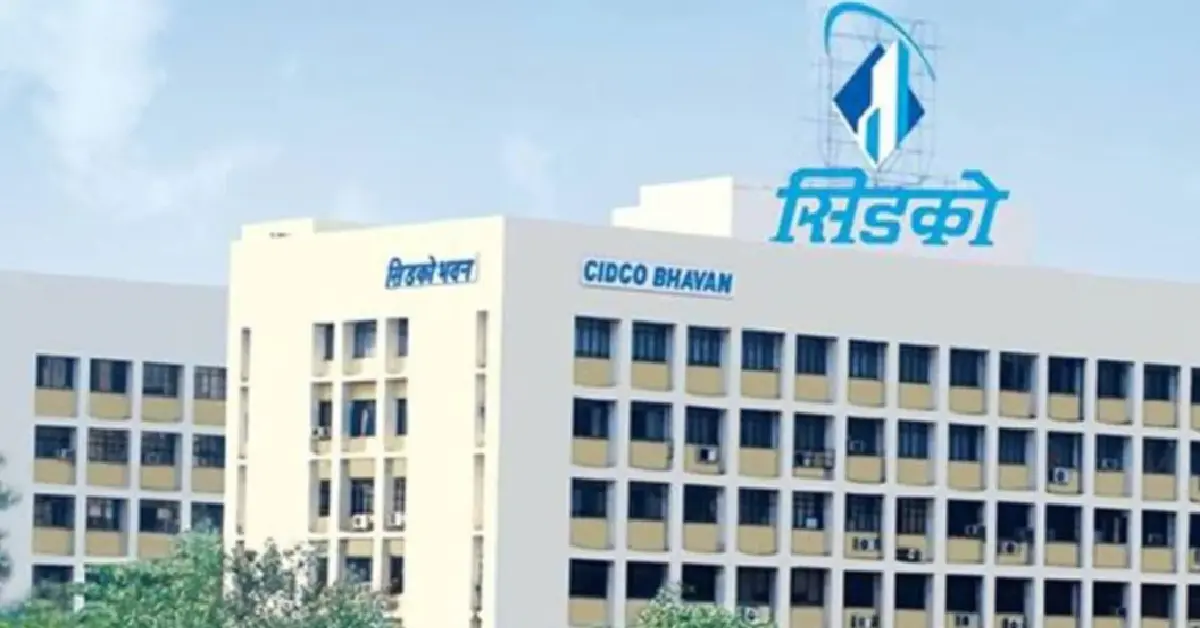
The City and Industrial Development Corporation (CIDCO) has proposed a ₹16,250-crore outlay for 2026–27, placing the Navi Mumbai International Airport at the centre of its growth strategy as it accelerates infrastructure development, regional connectivity, and housing expansion. Backed by improved fiscal stability, the plan underscores CIDCO’s ambition to transform Navi Mumbai into a globally competitive investment destination through integrated urban and transport-led development.
The proposed budget estimates receipts of ₹16,250 crore against expenditure of ₹16,150 crore, resulting in a projected surplus of ₹100 crore. In 2025-26, CIDCO reported revised receipts of ₹9,774.23 crore and expenditure of ₹9,770.26 crore, with a surplus of ₹3.97 crore, according to a report by the Hindustan Times.
“Our fiscal stability over the past year has given us the financial agility to act decisively,” said Vijay Singhal, vice chairman and managing director.
A defining development over the past year has been the commissioning of the NMIA. Singhal noted that the airport is the linchpin for the region’s broader economic strategy.
“The operationalization of the airport is just the beginning,” he explained. “By clustering specialized districts like the Aerocity, EduCity, MediCity, and the proposed International Corporate Park around this aviation hub, we are engineering Navi Mumbai’s evolution into a premier global investment destination.”
With the airport as the anchor, CIDCO is advancing a massive network of transport corridors. The 34.89-km Metro Line 8, which will connect NMIA with Mumbai’s existing airport, is projected to handle around 9.8 lakh passengers daily by 2031. Additional metro links under planning include Line 1A (Belapur–NMIA) and Line 2 (Pendhar–NMIA).
Road connectivity is also being reinforced through the 25.3-km Thane–NMIA elevated corridor, a ₹6,521 crore project being implemented on a public-private partnership basis. The corridor is expected to reduce travel time between Thane and the airport from around 90 minutes to 30 minutes.
CIDCO said it is currently executing 16 major infrastructure projects across Navi Mumbai, Panvel and Uran, which are expected to reshape the region’s economic landscape.
Among key proposals are a 155-hectare International Corporate Park at Kharghar and a 560-hectare Integrated Logistics Park between JNPA and NMIA, aimed at strengthening warehousing and supply chain ecosystems. The Africa–India International Development Zone is also planned as a business and cultural platform to boost international engagement.
Development is also being accelerated in the 225 sq km Navi Mumbai Airport Influence Notified Area (NAINA), supported by large-scale water infrastructure projects such as the Kondhane dam (350 MLD), Hetawane augmentation (150 to 270 MLD), and the proposed Balganga dam (350 MLD).
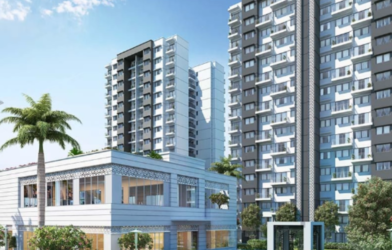
On the housing front, CIDCO plans to launch around 19,300 units in 2026–27, building on strong demand for the 16,876 units offered in the previous year.