Subtotal ₹0.00






Email :67
As India’s renewable energy landscape is poised for significant expansion in the coming years, aided by strong policy push , it is set to trigger USD 10-15 billion land investments by 2030, with industrial and warehousing segments emerging as key beneficiaries in real estate.
As of 2025, installed renewable energy capacity stood at around 251 GW, with solar and wind energy continuing to anchor the capacity mix. With non-fossil sources (renewables and nuclear energy) accounting for 51% of the existing installed capacity and rapid advancements in domestic manufacturing capabilities, India is well positioned to comfortably achieve its target of 500 GW non-fossil-based capacity by 2030. By 2025, renewable projects of around 146 GW were under various stages of construction and are expected to be completed in the next few years.
According to Colliers’ latest report, ‘The Green Shift: Renewable Prioritization Reshaping Indian Real Estate’, scale-up of renewable energy capacity presents significant opportunities for the real estate sector, especially in the areas of land aggregation & acquisition, industrial & warehousing space uptake by Original Equipment Manufacturers (OEM) players and services such as site surveys & feasibility studies, Engineering Procurement & Construction (EPC) solutions, Operations & Maintenance facilities (O&M), etc.Colliers estimates about 270-300 GW of solar and wind capacity additions by 2030.
India’s renewable energy capacity (2025)
| Source | Installed capacity (GW) | Share (%) | Under-construction capacity (GW) | Share (%) |
| Solar | 135.5 | 54% | 93.7 | 64% |
| Wind (Onshore) | 54.5 | 22% | 26.3 | 18% |
| Others | 60.5 | 24% | 25.8 | 18% |
| Total | 250.5 | 100% | 145.8 | 100% |
Source: Niti Ayog, IRENA, Colliers
Note: Others include energy related to Hydro, Biomass projects etc.
Renewable energy to unlock new real estate growth frontiers and opportunities
An estimated USD 110-120 billion investment is expected to flow into the renewable energy sector in the next few years, primarily for solar and wind projects. Typically, land aggregation & acquisition accounts for around 10–12% of total costs for solar and wind projects. For solar projects, majority of the land is aggregated and acquired either by private developers or central/state-level nodal authorities in case of relatively larger parks. For wind projects, land is primarily acquired for construction of electrical substations and other critical infrastructure, while the area around turbine sites is often secured through leasing arrangements. By 2030, the upcoming solar and wind projects, would translate into USD 10–15 billion opportunity in land aggregation & acquisition.
Solar & wind energy outlook (2026-2030F)
| Solar | Wind | Total | |
| Capacity Additions | ~270 GW | ~20 GW | ~270-300 GW |
| Land Requirement | ~650,000+ acres | ~15,000 acres | ~700,000 acres |
| Overall Investments | USD 95-105 Billion | USD 5-20 Billion | USD 110-120 Billion |
| Investments in Land (Part of overall investments) | USD 10-12 Billion | USD 1-2 Billion | USD 10-15 Billion |
Source: Colliers
In fact, upcoming solar & wind projects present multiple entry points for real estate players and construction companies. Private sector participation could potentially increase significantly in land aggregation & acquisition, EPC solutions, O&M facilities etc. in the next few years. In parallel, warehousing demand by renewable energy OEMs is set to grow further, aided by growth of ultra-mega projects and incentivization of domestic production.
Solar & wind energy expansion to require 7 lakh acres of land
With an estimated 270–300 GW of capacity additions anticipated in the coming years, nearly 7 lakh acres of land will be required for solar and wind projects, significantly increasing the demand for land parcels across key regions. This presents a significant opportunity for real estate players to capitalize on large-scale land aggregation and value creation across high-growth renewable energy segment.
“India’s renewable energy capacity stands at 251 GW, and with another 270-300 GW of expected solar and wind energy additions by 2030, the sector is set to enter its next phase of accelerated growth. This scale-up will create significant opportunities for the real estate sector, particularly in land and industrial & warehousing segment. By 2030, solar and wind projects alone could require nearly 7 lakh acres of land, unlocking USD 10–15 billion of opportunity in land aggregation & acquisition. Most importantly, over the next few years, renewable energy will not only accelerate India’s decarbonization journey but also drive development of growth corridors and investment destinations, catalyzing long-term sustainable growth across the country.” says Badal Yagnik, CEO & Managing Director at Colliers India.
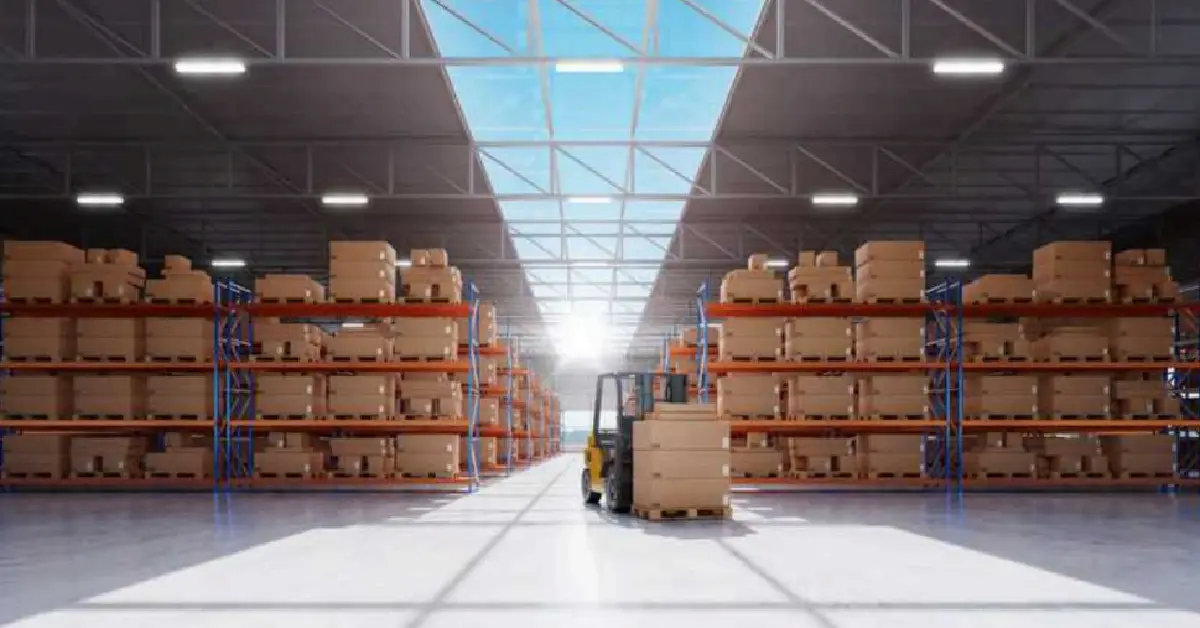
Renewable energy OEMs registered around 6.1 million sq ft of Grade A industrial & warehousing space uptake across the top eight cities during 2021-2025 period. Importantly, their share in overall industrial & warehousing demand rose from 3% in 2021 to 8% in 2025. In the coming years, as renewable projects expand, the OEM segment is likely to account for a significant share in overall demand for industrial & warehousing spaces in India.
“Over the last five years, annual leasing by renewable energy OEMs has surged nearly 4X times to around 3 million sq ft of industrial & warehousing space uptake in 2025. Chennai and Pune have emerged as the preferred cities, cumulatively accounting for almost two-thirds of the space uptake since 2021. By 2030, annual Grade A space uptake by these OEMs is likely to reach 4-7 million sq ft, accounting for 10-15% of the overall industrial & warehousing demand. This growth will be driven by rapid scaling up of domestic component manufacturing of solar PV modules, wind turbines, geothermal heating & cooling systems, battery storage solutions, semiconductors and other renewable energy components.” says Vimal Nadar, National Director & Head, Research, Colliers India.
Trends in industrial & warehousing space uptake by renewable energy OEMs
| Year | Leasing by renewable energy OEMs (million sq ft) | Share in overall leasing (%) |
| 2021 | 0.8 | 3% |
| 2022 | 0.2 | 1% |
| 2023 | 1.0 | 4% |
| 2024 | 1.1 | 4% |
| 2025 | 3.0 | 8% |
| 2026-2030F | ~4.0 – 7.0 | 10 – 15% |
Source: Colliers
Note: Data pertains to Grade A buildings of top eight cities including Ahmedabad, Bengaluru, Chennai, Delhi NCR, Hyderabad, Kolkata, Mumbai and Pune | Absorption does not include lease renewals, pre-commitments and deals where only a Letter of Intent has been signed
Going forward, the anticipated surge in renewable energy investments is set to drive demand beyond land, industrial sheds and warehouses, into a broader spectrum of real estate segments. Renewable energy hubs are also likely to witness increasing need for affordable housing, rental accommodation and industrial townships. Moreover, steady growth of manufacturing units and O&M centers will stimulate demand for office spaces, training facilities, and local service ecosystems across Tier-II & III cities of the country.