Subtotal ₹0.00






Email :61
For years, NCR’s growth remained largely concentrated around Delhi, Gurugram, and Noida. However, escalating property prices, rising urban congestion, and limited land availability within these established markets are now driving the next phase of expansion toward emerging Tier-2 corridors. Among them, Sonipat is emerging as one of the strongest beneficiaries of this outward urban shift. Backed by improving infrastructure connectivity, expanding industrial activity, and growing residential demand, the city is gradually evolving beyond its traditional identity as a peripheral satellite town. Instead, it is positioning itself as the next residential-industrial extension of Delhi — a city moving from adjacency-led relevance to independent growth momentum within NCR’s changing urban landscape.
The expansion of NCR into cities like Sonipat is not merely the result of urban overspill; it reflects a far more structured and inevitable regional transition. Over the years, consistently rising property values in Delhi and Gurugram, coupled with shrinking land availability across core urban pockets, have significantly altered the economics of both residential and commercial development.
At the same time, post-pandemic lifestyle priorities have accelerated demand for larger homes, lower-density environments, and more balanced living ecosystems. The growing acceptance of hybrid work models has further reduced the need for daily proximity to central business districts, allowing homebuyers to prioritise space, affordability, and long-term quality of life without completely disconnecting from Delhi. This shift is also reshaping developer and investor strategies. While families are exploring emerging corridors for better value and future livability, developers are actively looking toward scalable land parcels capable of supporting integrated communities and long-term expansion.
Simultaneously, investors are entering these evolving micro-markets early, viewing them as the next phase of NCR’s infrastructure-led growth story before large-scale price appreciation sets in. As per Square Yards too, land prices in India’s tier-2, tier-3 cities may surge 25-100% in the next 2-4 years amid the government’s infrastructure push and opening of new airports, as prices have already peaked in metro cities. Further, in high-growth peripheral micro markets of NCR, multi-year appreciation can exceed 80-100% as connectivity unlocks new development potential.
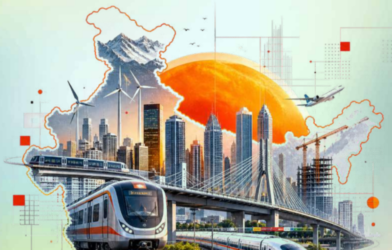
At the centre of Sonipat’s emergence lies a powerful infrastructure narrative that is fundamentally reshaping its connectivity, accessibility, and long-term urban relevance within NCR. Projects such as the Urban Extension Road-II (UER-II), the Kundli-Manesar-Palwal (KMP) Expressway, improved NH-44 connectivity, and the proposed Delhi-Panipat Regional Rapid Transit corridor are integrating Sonipat more closely with the capital’s economic and residential ecosystem.
Besides, discussions around metro expansion and stronger last-mile connectivity near Delhi border zones are reinforcing confidence around the city’s future mobility framework. More importantly, this transformation is not merely reducing physical travel time; it is shrinking psychological distance. Locations once perceived as peripheral are increasingly being viewed as practical extensions of NCR’s urban core.
The region’s growth story is also receiving a major boost from large-scale industrial investments, most notably Maruti Suzuki’s upcoming Rs 18,000-crore manufacturing facility in Kharkhoda. The project is expected to generate significant employment opportunities while catalysing demand across allied sectors such as auto ancillaries, logistics, retail, and housing. Unlike speculative growth cycles seen in certain emerging corridors in the past, such developments create the foundation for a more stable and long-term population ecosystem. This combination of infrastructure expansion and industrial momentum is strengthening Sonipat’s position as a sustainable urban growth market, encouraging developers and institutional investors to increasingly view the city as a long-horizon opportunity rather than a short-term speculative destination.
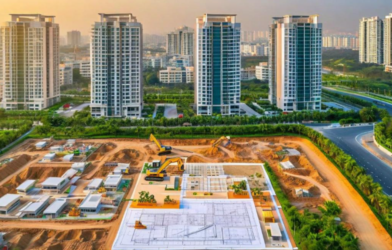
Moreover, improved infrastructure, expanding economic activity, and planned urban development are gradually repositioning Sonipat from a pass-through geography into an emerging real estate destination with independent residential appeal. Integrated townships, gated communities, and plotted developments are beginning to redefine the city’s urban fabric, while the parallel growth of educational institutions, healthcare infrastructure, and lifestyle-oriented amenities is strengthening its livability quotient.
This evolution is also changing the nature of demand entering the market. Beyond investors seeking early-stage appreciation, the city is increasingly attracting genuine end-users, particularly families and professionals looking for long-term value, larger living environments, and a more balanced urban lifestyle within the larger NCR ecosystem. A growing segment of buyers priced out of Gurugram and Central Delhi is now exploring emerging NCR corridors that offer a stronger balance between affordability, connectivity, and quality of life. Younger families, in particular, are increasingly prioritising larger living spaces, greener surroundings, and lower-density environments over compact urban living. As a result, plotted developments and integrated residential communities are witnessing rising interest among both end-users and long-horizon investors.
Therefore, the rise of Sonipat ultimately reflects a much larger transformation underway across NCR — one in which urban growth is no longer confined to traditional power centres such as Delhi, Gurugram, and Noida. As metropolitan regions continue to grapple with issues of congestion, affordability, and land scarcity, the next decade is likely to favour cities that can offer a balanced combination of connectivity, planned development, economic opportunity, and long-term livability. In many ways, Sonipat is increasingly positioning itself within that emerging urban conversation; not merely as an extension of Delhi, but as a growth story with its own independent momentum and future relevance.