Subtotal ₹0.00






Email :66
Rohana Sarah, Founder & CEO, Green World Design
Developers, home buyers and tenants are today increasingly looking for climate- responsive homes, paying extra attention to how a home behaves during freak weather and frequently changing weather conditions and how to adapt to ‘one day summer, next day monsoon living’. And in these unpredictable sharp seasonal swings, designing assumes special significance, ensuring that homes function comfortably throughout the year. A lot of urban home dwellers in India today are struggling with weather conditions for which the homes were never really designed for. In cities like Bangalore and Mumbai, it is increasingly common to experience intense afternoon heat followed by sudden evening rain that changes how the entire property gets used. In Delhi-NCR, the challenge is slightly different. Long dry heat spells, dust exposure and sharp temperature swings between seasons are starting to affect how comfortably homes function across the year.
We’ve seen these issues come up repeatedly across residential projects over the last few years, particularly in cities where construction has become denser and hard surfaces dominate the site. Certain sections of the home become fairly unusable – outdoor seating that works through winter becomes unusable in peak heat and stays wet too long after rain to recover quickly. Certain rooms hold humidity through the monsoon months regardless of mechanical cooling.
In many cases, the problem is not one major design mistake, but smaller planning decisions adding up over time. Heat gets trapped because too much paving is exposed directly to the sun. Water moves poorly because drainage and landscaping were planned separately. Glass-heavy façades increase indoor heat during afternoon hours, while tightly sealed apartments reduce natural air movement during monsoon periods.
In some residential communities, these issues start showing up within the first few monsoon cycles itself. Water retention near entry points increases maintenance effort, while excessive heat exposure across podium decks and paved walkways reduces outdoor usage. This is why developers are beginning to look at climate responsiveness differently now. Earlier, landscaping discussions often happened much later in the project cycle and focused mainly on aesthetics. Today, design teams are evaluating outdoor usability much earlier because it starts affecting the overall residential experience after handover.
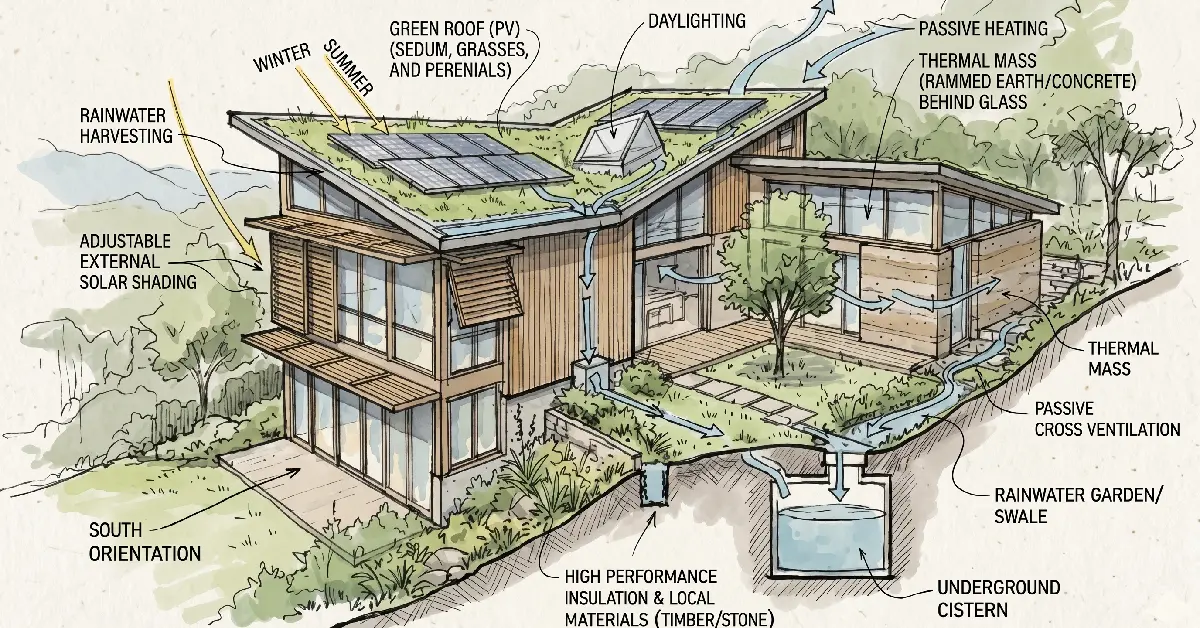
In premium residential projects, there is more attention now on shaded transition spaces, natural ventilation, soil absorption, native planting and surface materials that respond better to changing weather conditions. Even tree placement has become a more deliberate conversation in some projects because it directly affects heat exposure across walkways, balconies and community zones.
One detail we notice is how residents gravitate toward spaces that remain naturally comfortable. If an outdoor area stays shaded properly through the afternoon, people use it more. If pathways dry faster after rainfall, movement across the property improves noticeably. Ventilation is another area coming into focus. Homes that allow better air movement generally feel more comfortable during long humid stretches, even when temperatures are not very high. In many apartments today, cooling exists, but breathability does not.
Buyers and tenants are increasingly paying attention to how a home behaves across changing weather conditions. Developers are recognizing that climate-responsive planning has a direct relationship with long-term maintenance, usability and overall perception of quality within a residential asset. Homes that stay cooler naturally, dry faster after rainfall and allow better air movement tend to remain more comfortable through the year. Over time, that starts influencing maintenance requirements, outdoor usability and overall resident experience.