
Subtotal ₹0.00






Email :66
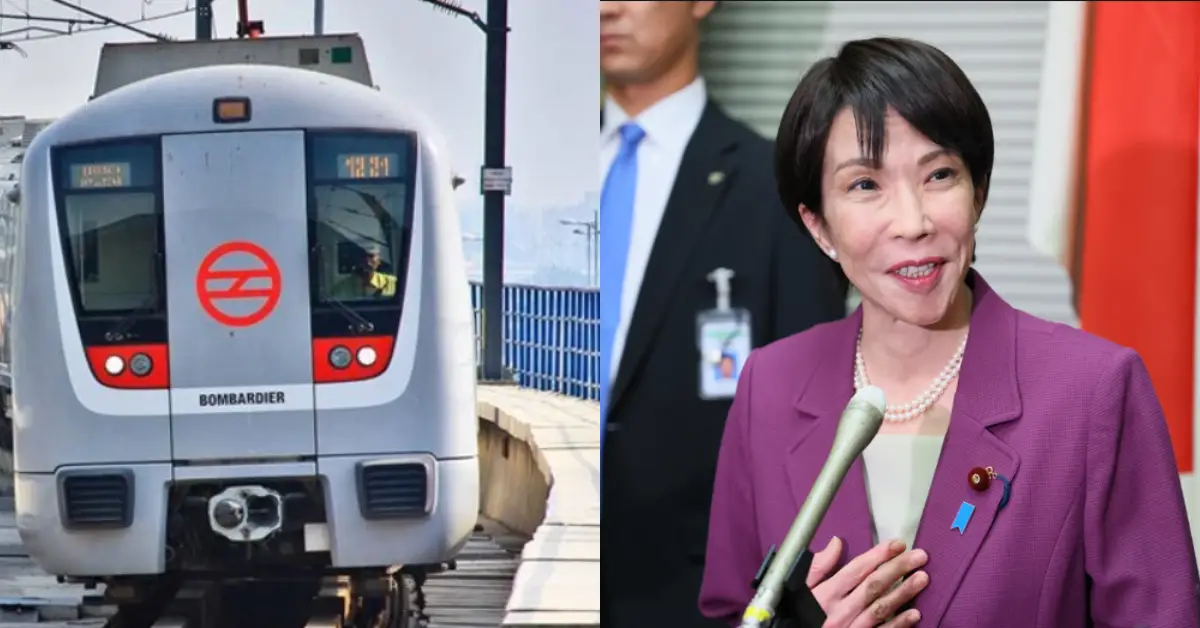
As Japan’s Prime Minister Sanae Takaichi arrives in India, the spotlight is turning to a rapidly-expanding partnership in India’s urban transformation. As Japanese capital from China’s slowing market is shifting to India, the world’s fastest-growing economy, Japanese investors are pouring billions, stepping up investments across real estate, infrastructure, smart cities, industrial townships and metro rail systems.
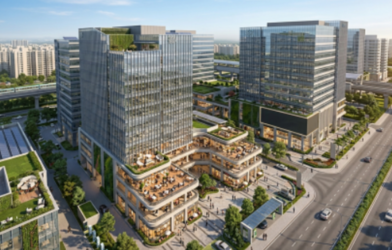
This deepening partnership is more evident in Delhi-NCR and Mumbai which have emerged as the key hubs for India-Japan collaboration. Japanese majors such as Mitsubishi Corporation, Sumitomo Corporation and Mitsui Fudosan have steadily increased their exposure to India’s real estate sector, largely through JVs and platform investments. Sumitomo Corporation has partnered Krishna Group in Delhi-NCR to form a JV- Krisumi Corporation for mega township developments and the Japanese giant is independently making massive multi-billion dollar investments in Mumbai’s booming commercial real estate. Sumitomo’s real estate arm -Sumitomo Realty is significantly expanding Mumbai’s prestigious Bandra-Kurla Complex (BKC) , aiming to deliver world-class Grade A office spaces.Mitsui Fudosan, a major Japanese developer has formed a major strategic partnership with RMZ Group to develop and manage institutional grade commercial office assets in major cities.
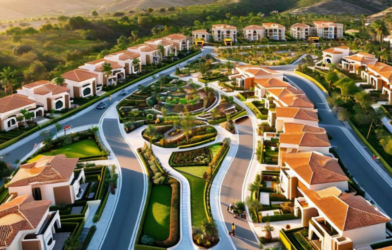
Krisumi Corporation in Delhi-NCR’s Gurgaon is coming up with a mega 65-acre integrated township -Krisumi City in Sector 36 A on Dwarka Expressway at an estimated cost of INR 7000 crore. This massive development totalling roughly 18msf , spread across phases, features 5000 modern luxury lifestyle apartments and is expected to be fully operational by 2032. In proximity to the upcoming Global City, Krisumi City with about 25% Japanese resident families, is fast evolving into a distinctive mini Japanese township.
Dedicated Japanese industrial zones continue to attract manufacturing giants, catalyzing township development, housing demand and social infrastructure in emerging regions. A cornerstone of India-Japan collaboration, Delhi-Mumbai Industrial Corridor is driving the development of smart industrial cities like Neemrana, integrating manufacturing hubs with urban infrastructure and logistics ecosystems. Japan-backed Western Dedicated Freight Corridor (DFC) , linking NCR to Mumbai , is transforming logistics efficiency, boosting warehousing demand and unlocking large-scale industrial and real estate development.
Japan Industrial Township (JIT) has come up in 8250 -acre integrated smart city- Reliance MET City near Gurgaon in Jhajjar, having automated operations for Japanese manufacturing giants like Panasonic, Denso,T-Suzuki, Sanko Gosei and Nihon Kohden,a global leader in the development, manufacturing and distribution of medical electronic equipment . Nine Japanese companies have signed MoUs worth INR 5000 crore for investing in an upcoming 1000 -acre Gurgaon Global City.
From Delhi to Mumbai, Chennai, Bangalore & Ahmedabad, Japan through JICA(Japan International Cooperation Agency) , has emerged as the largest external funding entity for Indian metro rail expansion, committing over USD 20 billion across projects.The underground operations of Colaba-Bandra SEEPZ Line 3, connecting to the terminal hub of upcoming Mumbai-Ahmedabad Bullet Train , is powered by Japan’s tech expertise.
Today, NCR Metro connectivity is regarded as a benchmark in urban mobility. Delhi Metro, a game changer , has not only improved mobility but also driven transit-oriented development, unlocking new real estate micro markets in NCR across Gurgaon, Noida and Ghaziabad. Now this model of infra connectivity – driven real estate is replicated in other cities.
On the infrastructure front, Japanese banks and financial institutions have partnered with India’s National Investment & Infrastructure Fund (NIIF) to finance core infrastructure including roads, energy and urban assets. Mumbai- Ahmedabad High Speed Rail (Bullet Train Project) is Japan’s infrastructure showcase in India, with JICA loan covering 80% of the project cost.
As Japanese companies make strides in India’s infrastructure, real estate and urban development landscape, they are creating new benchmarks of excellence. As Yuji Kato, Co-CEO & Director, Krisumi Corporation puts it, “Over the past decade, Krisumi Corporation has become a symbol of India- Japan collaboration, driven by a shared vision of excellence, with world class design, meticulous construction management and a curated lifestyle. Adds Ashok Kapur, Chairman, Krisumi Corporation,” Behind our brand Krisumi, is the trusted legacy of Sumitomo Corporation and our project reflects a strong emphasis on Japanese principles of architecture, design, lifestyle and ethics”.
Urban development experts opine that besides Japanese expertise, their capital is patient, process-driven and aligned with long-term value creation. As such it is well suited for India’s evolving real estate market which is rapidly institutionalising.
Steadily, this collaboration is now expanding into logistics and warehousing where Japanese investors are backing Grade A parks aligned with India’s manufacturing push and supply chain diversification. Mixed-use developments and premium hospitality assets along with branded residences and service apartments are the next frontiers. With rapid reforms and policy support in India, strong infra pipeline and improved ease of doing business, India-Japan collaboration may well transform Indian cities into economic hubs in the coming years as India aspires to be a developed nation by 2047.




A very informative and promising article to showcase Japanese Projects coming up close to our area in Gurgaon. I loved to have read Mr. Vinod Behal’s inside in to future of India 🇮🇳
Col S N Malhotra