Subtotal ₹0.00






…Vinod Behl
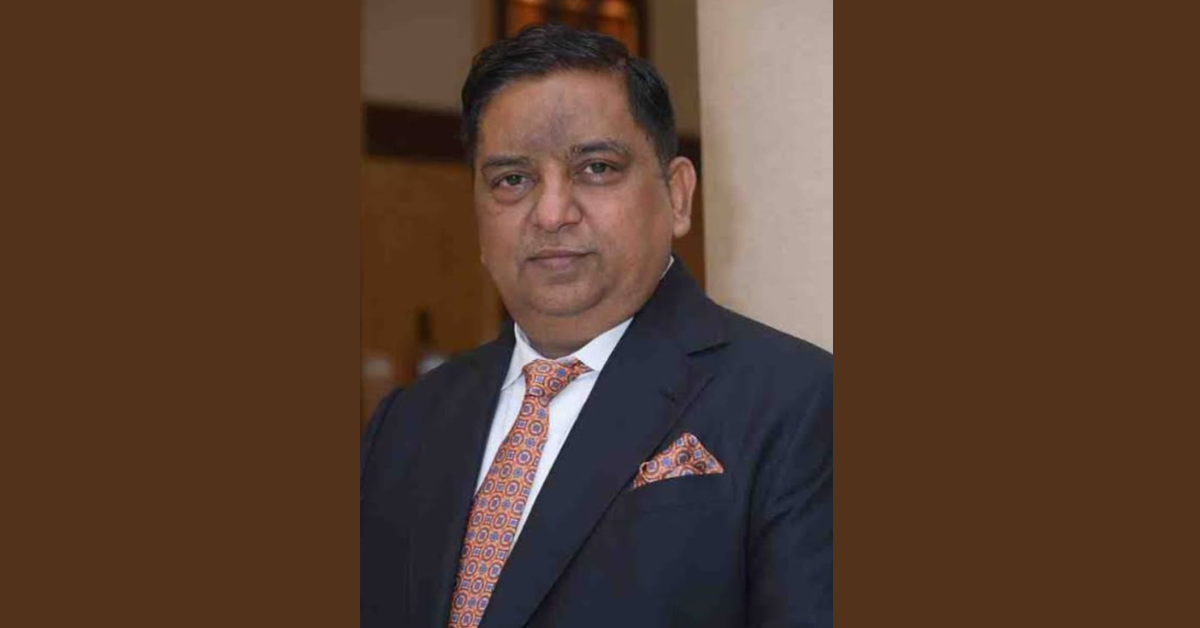
The approval to Delhi Master Plan 2047 (MPD 2047) and the creation of a separate department for Delhi-NCR under the Ministry of Housing & Urban Affairs (MoHUA) has opened up vast opportunities for the speedy and integrated real estate and infrastructure development. In this exclusive interview with Torbit Realty, Harshvardhan Bansal, President, Naredco Delhi and Chairman, CII Delhi State, provides an insight into the huge development potential that lies ahead in the region, the pitfalls to guard against and the policy initiatives required to ensure speedy and holistic development of Delhi-NCR. Excerpts
What transformative impact MPD 2047 will have on Delhi real estate especially as it seeks to boost vertical growth and provides policy push to redevelopment (including slum rehabilitation), land pooling, transit-oriented development and rental housing?
MPD 2047 has the potential to change Delhi’s real estate trajectory from one of a constrained, fragmented and largely brownfield growth to a more structured model based on development, redevelopment, transit linked urbanization.
Delhi can now see a framework of vertical growth, including group housing redevelopment, transit-oriented development, high density corridors and more efficient use of underutilized urban land.
Congruent to the option’s available world over, the policy push to rental housing can become a boon for students, migrant workers, working professionals and lower income households.
MoHUA recently created a separate department for capital development. How will this play out in speedy implementation of MPD for long-term sustainable growth of real estate?
We welcome this change by the government in forming a separate department. This department would handle all Delhi and NCR related responsibilities including DDA, DMRC, MCD, NDMC, RERA, NCR Planning, Land Acquisition and Development etc. It would prove to be a great move provided this department functions as an implementation command centre and not simply as another layer of administration.
Under MPD 2047, how do you look at the transformed role of DDA in pushing up Delhi’s real estate growth? Do you think a collaborative model with private developers is the way forward?
Yes, under MPD- 2047, DDA must evolve from being primarily a land-owning and housing delivery agency to a metropolitan development authority, infrastructure coordinator and act as a market enabler. Infect , DDA should be an enabler for private developers in the longer run and should act as an agency which coordinates all the infrastructure related activities in the metropolitan region.
Beyond the MPD 2047 framework, what policy changes /reforms are needed to unlock the full potential of land pooling, redevelopment, rental housing and TOD for fast tracking real estate growth in Delhi?
For land pooling, we need a shift in the way we have been dealing with it. We need to move away from a policy document to an implementable development programme. We need to emphasise on land record and title verification system, time bound consent and participation window, standard development agreements, a clear-cut approach to a threshold limit of participants in a land pooling scenario (ideally 51%) and a department to deal with the issues of the land pooling landlords. In this scenario, DDA should ideally build the road network for the land which had been pooled together earlier. This would not just build confidence in the entire system but would also act as an enabler for more people to come together and make the overall process faster and efficient.
For redevelopment, we need to have a practical consent, finance and rehabilitation framework having standardized development control regulations, digital title and membership verification, model agreements for resident societies, escrow protection for transit rent and rehabilitation besides fast – tracking approvals from authorities.
Rental housing needs an institutional operating model for its success. We would require faster registration and standard tenancy documentation, clear rules for maintenance, eviction and dispute resolution, property tax and GST rationalization where applicable. This move would only be beneficial if the land allocation is done at the right prices and there are faster approvals from the authorities.
As far as TOD is concerned, this needs to be looked in totality and not merely a tool for higher FAR around a station. The size of the plot, height of the building, FAR on a plot should be considered in totality and subjectively and not objectively. TOD reforms should cover unified parking and traffic management standards, last mile connectivity, walking and cycling networks, mixed – use regulations which permit employment, housing, retail and social infrastructure together. The restrictions on the size of the apartments should not be stringent and should have flexibility. In case the policy talks only about these smaller units under TOD, this would turn Delhi into an urban slum. In this case, the model should follow a simple mechanism i.e. first provide the infrastructure for the station and then follow it up with providing the relevant TOD densities in a measured manner.
The housing supply in Delhi-NCR is highly skewed in favour of premium and luxury housing. Going forward, how do you see the prospects of affordable housing? How can TOD integrate with affordable housing and rental housing models in Delhi?
We must look at the problem with an integrated view, i.e. the issue why affordable housing becomes unsustainable is attributable to a lot of factors including high land costs, high finance costs and escalating construction costs, approval delays adding to cost inflation while the top line remains the same. This problem needs to be tackled with a threefold strategy.
For economically weaker section, we require in-situ rehabilitation, subsidised ownership and social rental housing. It should ideally be done in the existing settlements, redevelopment zones and TOD areas. For working households and migrant workers, we should strongly consider rental housing as an option. It should be developed around employment corridors, industrial areas and transit nodes. For lower and middle-income families, we should go for small format ownership apartments with easy and subsidized finance options. It should be done around land pooling areas, TOD corridors and peripheral growth zones.
How important is real estate in Delhi’s broader economic growth? How do you see micro-markets trends emerging with regard to demand, supply and pricing perspective with the implementation of MPD 2026 together with infra upgrades?
Real Estate is not just a construction related industry but an entire ecosystem in itself. It supports employment, manufacturing, finance, professional services, retail, hospitality, education, healthcare, logistics and municipal revenues.
For Delhi, real estate contributes to growth in four broad ways- it creates physical capacity for housing and employment, it attracts institutional capital and private investment, it generates direct and indirect employment and enables infrastructure-led economic development.
The key change under MPD-2047 and new infrastructure investment will be the emergence of a more polycentric NCR, with demand distributed among Delhi, Gurugram, Noida, Ghaziabad, Sonipat, Greater Noida, Bahadurgarh and other connected centres.
MPD-2047 can become a turning point for Delhi, but only if implementation is treated as an economic and governance mission rather than a change in land-use nomenclature. The plan has opened the door to higher density, redevelopment, land pooling and transit-linked growth; the next task is to make those opportunities executable, financeable and socially inclusive.
For the real estate industry, the right message is not to build more at higher FAR. Rather, it is to build more intelligently, closer to transit, with infrastructure capacity, mixed-income housing, professional operations with a clear public benefit.
The government has been talking about Ease of Doing Business since 2016. Actually, this has not trickled down to the ground level. We still have to go a long way in getting to a stage where India becomes the first choice for anybody wanting to enter real estate or for that matter any sector.
Blurb: The key change under MPD 2047 and new infra investment, will be the emergence of a more polycentric NCR, with demand distribution among Delhi and connected NCR centres.