Subtotal ₹0.00







Email :141
Mayank Pathak, Founder & Managing Director, Translite Formwork & Scaffolding (TSL)
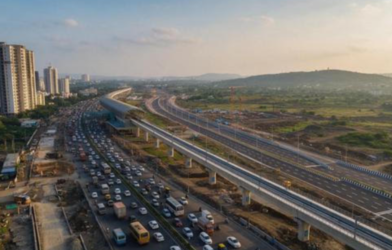
India’s metro expansion is no longer confined to large metropolitan centres. Tier-2 cities are now actively developing urban rail systems to address rising mobility needs, reduce congestion, and support long-term urban growth. Cities such as Indore, Patna, and Pune are seeing steady progress, with elevated corridors forming a significant portion of these networks.From an execution standpoint, this shift raises an important question. As metro construction moves into smaller and more densely evolving cities, do we have the supporting ecosystem required to build elevated structures efficiently and safely? The answer lies not only in planning and funding, but in how well the construction ecosystem responds to on-ground realities.
Elevated metro construction involves structurally demanding elements such as piers, pier caps, girders, and viaducts. These components require precision in alignment, load management, and sequencing. While these challenges exist across all cities, Tier-2 locations present an additional layer of complexity.Urban layouts in these cities are still evolving. Roads may not always be designed for heavy construction movement, traffic management systems may be less developed, and site access is often limited. Construction teams are required to work within these constraints while maintaining tight timelines.In such environments, execution efficiency depends heavily on how well temporary support systems and planning processes are integrated into the project.
In our experience, the supporting ecosystem around construction plays a defining role in project outcomes. This includes not just materials and equipment, but also planning frameworks, engineering inputs, and coordination across stakeholders.Temporary structures such as scaffolding and formwork are central to this ecosystem. They provide the access and stability required to build elevated structures safely. However, their effectiveness depends on how they are planned, designed, and deployed.When these systems are treated as afterthoughts, projects often face delays, rework, and safety challenges. When they are integrated into early-stage planning, execution becomes more controlled and predictable.
One of the key gaps we continue to observe is the disconnect between design intent and site execution. Elevated structures involve complex load conditions, and temporary systems must be designed accordingly.In our work, we have seen that early-stage planning, including scaffolding and formwork design along with load calculations, significantly improves execution outcomes. When access systems are aligned with construction sequences, it reduces the need for adjustments during the project.Engineering-led planning also improves coordination between teams. It creates a common reference point for contractors, site supervisors, and engineers, helping maintain consistency across different work fronts.
Construction in Tier-2 cities often involves changing site conditions. Work fronts shift, access points evolve, and project timelines remain tight. In such situations, modular systems offer a clear advantage. Systems such as Cuplock and Ringlock scaffolding, along with H Frame and Kwik Stage scaffolding for specific sectors, allow flexibility in configuration. Components can be assembled, dismantled, and reused across different sections of a project without requiring extensive modification. This adaptability reduces dependency on on-site improvisation, which is often a source of inefficiency and risk. Modular systems also support faster setup, helping maintain project momentum.
Another important factor in strengthening the supporting ecosystem is standardization. When components are manufactured with consistent specifications, installation becomes more predictable and easier to monitor. In scaffolding systems, standardized dimensions and connection points help ensure that structures behave uniformly under load. This consistency is particularly important in elevated construction, where even small variations can affect alignment and stability.From our perspective, standardization reduces variability across sites and supports more reliable execution, regardless of location.
Safety remains a critical consideration in metro construction, especially in cities where construction activity coexists with public movement. Elevated work introduces inherent risks, and temporary structures must provide stable and reliable platforms.We have seen that safety improves when it is built into system design rather than addressed only at the compliance stage. Consistent fabrication, proper planning, and disciplined assembly practices contribute significantly to safer working conditions. In Tier-2 cities, where infrastructure is still developing, maintaining safety standards requires additional focus on training and supervision.
Logistics is another area that directly affects project execution. Moving scaffolding components and formwork materials across dense urban sites requires careful planning. Limited storage space and traffic constraints make coordination essential.Modular systems help address these challenges by allowing efficient transportation and reuse. When materials can be redeployed across different work fronts, it reduces congestion and improves overall site flow. Coordination between supply, design, and site teams becomes critical in ensuring that materials are available when needed.
India’s construction ecosystem has evolved significantly to support metro expansion. There is greater awareness of engineering planning, modular systems, and safety practices than before. However, the level of consistency still varies across projects and locations. In Tier-2 cities, this variation becomes more visible due to differences in infrastructure readiness and site conditions. Strengthening the ecosystem will require continued focus on planning, standardization, and skill development.
The expansion of metro systems into Tier-2 cities is an important step in improving urban mobility across India. To support this growth, the construction ecosystem must continue to evolve alongside project complexity.In our view, the way forward lies in integrating engineering planning with execution, adopting modular systems more widely, and ensuring that standards are consistently applied across sites. These changes do not require new frameworks as much as disciplined implementation of existing principles.
Building elevated metro lines in dense urban environments is not just a question of engineering design. It is a question of how effectively the entire supporting ecosystem functions on the ground. As the industry continues to expand into new geographies, strengthening this ecosystem will be essential. Temporary structures such as scaffolding and formwork may not be visible once a project is complete, but they play a lasting role in determining how safely and efficiently it is built. From our perspective, improving these systems and aligning them with modern construction demands will be key to supporting India’s next phase of infrastructure growth.