Subtotal ₹0.00






Email :50
By Mohit Kalia
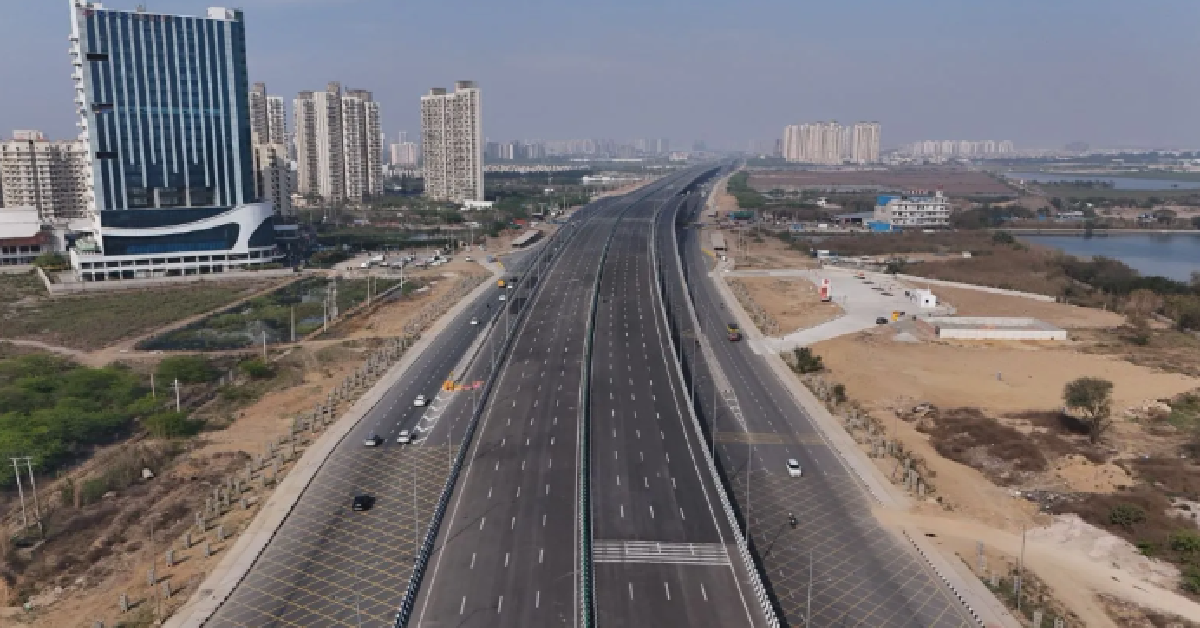
Not very long ago, almost every buyer evaluating Dwarka Expressway wanted reassurance about what the location would become. The road was still finding its shape, surrounding infrastructure was catching up, and much of the buying decision rested on the expectation that the corridor would eventually fulfil its promise. That hesitation has faded. Buyers are no longer asking what lies ahead as much as they are assessing whether a particular project deserves their commitment.
That is usually when a market begins to mature. Infrastructure deserves credit, but not because it automatically creates a luxury destination. It removes uncertainty. Once that uncertainty begins to disappear, buyer priorities change in ways that are easy to miss unless one has watched a market evolve over several years.
The difference is evident in the questions being asked. Investors have always focused on appreciation. Families looking for a long-term home look at a location differently. They want to know whether the neighbourhood will remain desirable ten years from now, whether the surrounding development will match the quality of the project, whether daily life will become easier rather than simply more valuable on paper. These are considerations that rarely dominate an emerging corridor. They become important only after confidence in the location has taken root.
Dwarka Expressway is increasingly reaching that stage. The market is reflecting the same shift. According to Cushman & Wakefield, Gurugram accounted for nearly three-fourths of Delhi NCR’s residential launches in the first quarter of 2025, with Dwarka Expressway emerging as the most active micro-market. Around 90% of the launches in the corridor during the quarter were positioned in the high-end segment, an indication that developers themselves now see sustained demand for premium and luxury housing rather than only investment-led buying.
A few years ago, buyers compared Dwarka Expressway with Golf Course Road, Golf Course Extension Road or New Gurgaon. Increasingly, they are comparing one luxury project on Dwarka Expressway with another. It may appear to be a small distinction, but it suggests the location has already earned a place on the shortlist. The decision is no longer about whether to buy on the corridor. It is about where on the corridor.
Markets rarely make that transition overnight. Another pattern has gradually become more noticeable. Brand reputation has begun carrying greater weight than before. In developing locations, buyers often accept a degree of execution risk because the attraction lies in future appreciation. As markets become more established, that calculation changes. Delivery record, long-term maintenance, planning quality and developer credibility begin influencing decisions as much as location itself.
Land is changing too. Large parcels capable of supporting low-density luxury communities are becoming increasingly difficult to assemble, while approvals take longer and design expectations continue to rise. Buyers willing to spend several crores are no longer impressed by scale alone. They expect thoughtful planning, generous open spaces and a neighbourhood that will retain its character long after possession.
Recent market activity reinforces that direction. ANAROCK’s first quarter 2026 assessment places Dwarka Expressway among NCR’s strongest-performing residential micro-markets, with quoted prices continuing to move upward alongside healthy demand for premium and luxury projects.
High-end residential markets do not emerge simply because better roads are built. They mature when buyers stop purchasing the future and begin choosing a place where they can imagine living for years. Looking at Dwarka Expressway today, that shift is becoming easier to recognise than it is to measure.
(The author is Sr. Vice President-Sales & Marketing, HCBS Developments Ltd. Views are personal)