Subtotal ₹0.00






Email :83
The recent announcement by Union Housing and Urban Affairs Minister Manohar Lal on the creation of four Namo Cities (or Namo Nodes) is likely to aid India’s drive to decentralise development in the national capital and decongest it. However, the larger plan may face the same fate as previous urbanisation initiatives without adequate coordination, say experts.
Under the Regional Plan 2041 for the National Capital Region (NCR), four semi-greenfield cities — to be called Namo Cities — are proposed to be developed as mixed-use transit-oriented development (TOD) hubs at selected existing and proposed stations on the Namo Bharat (Regional Rapid Transit System/RRTS) lines. The cities will be identified through a challenge mode among the NCR participating states.
“Anchored by the Namo Bharat RRTS and TOD, these greenfield self-sustaining magnet cities will decentralise growth beyond Delhi’s core, unlock peripheral land value, and improve labour mobility,” said Adil Zaidi, partner and leader, economic development advisory, strategy and transactions, EY.
The scheme will include a performance-linked incentive of ₹5,000 crore as a blend of grant, loan, and guarantee, including a ₹1,000 crore grant.
The National Capital Region Planning Board (NCRPB) funding is intended to catalyse the growth nodes. According to Zaidi, the move is vital for managing the projected population surge in the region while unlocking substantial private investment.
The announcement was made after the 42nd meeting of the NCRPB, which was deliberating on the Regional Plan 2041 for India’s largest urban agglomeration.
NCR spans 55,083 square kilometre across Delhi and 27 districts of Haryana, Uttar Pradesh (UP), and Rajasthan. It covers 230 urban settlements and 11,784 villages, and contributes 8 per cent of India’s gross domestic product.
However, this is not the first attempt to decongest Delhi through disaggregated urban centres across NCR, and experts say execution woes have in the past hindered many an ambition of the central government.
“Every previous NCR plan has said some version of this, and the gap between notification and ground reality has been wide. Regional Plan 2021’s highway corridor zones took years to filter into state master plans. Delhi’s land pooling policy is still largely stalled eight years after notification,” a report by property consultancy Knight Frank said.
The NCR Master Plan 2041 leaves TOD delineation and floor area ratio (FAR) benchmarking entirely to individual states, with no NCR-wide standard. FAR is the ratio of a building’s total built-up floor area to the total area of the plot it sits on, used by urban planners to control building density, ensure adequate open space, and prevent overcrowding.
“Haryana, given its track record on FAR liberalisation in Gurugram and Manesar, will almost certainly move faster than UP or Rajasthan. That asymmetry means the unified corridor economics that make TOD bankable at scale could fragment in practice,” the report added.
Calling the master plan a directional commitment with an execution discount, Knight Frank said its infrastructure thesis is structurally coherent but operationally fragile.
“It bets that formalised land plus connected transit equals private capital mobilisation, a sequence that has worked in single-jurisdiction Indian urban markets before but has never been tested at this scale across a four-state geography with no unified delivery authority,” the report added.
Experts also said that currently, Namo Bharat RRTS is operational only on one route (Delhi-Meerut), and there would need to be more clarity on the funding and plans for the other corridors.
The report said that the plan’s value to investors, developers and policymakers will be determined not by proposals approved at the NCRPB meeting, but by which state moves first, which corridor gets notified earliest, and whether the Centre steps in to bridge the coordination gap that four-state planning has never managed to close on its own.
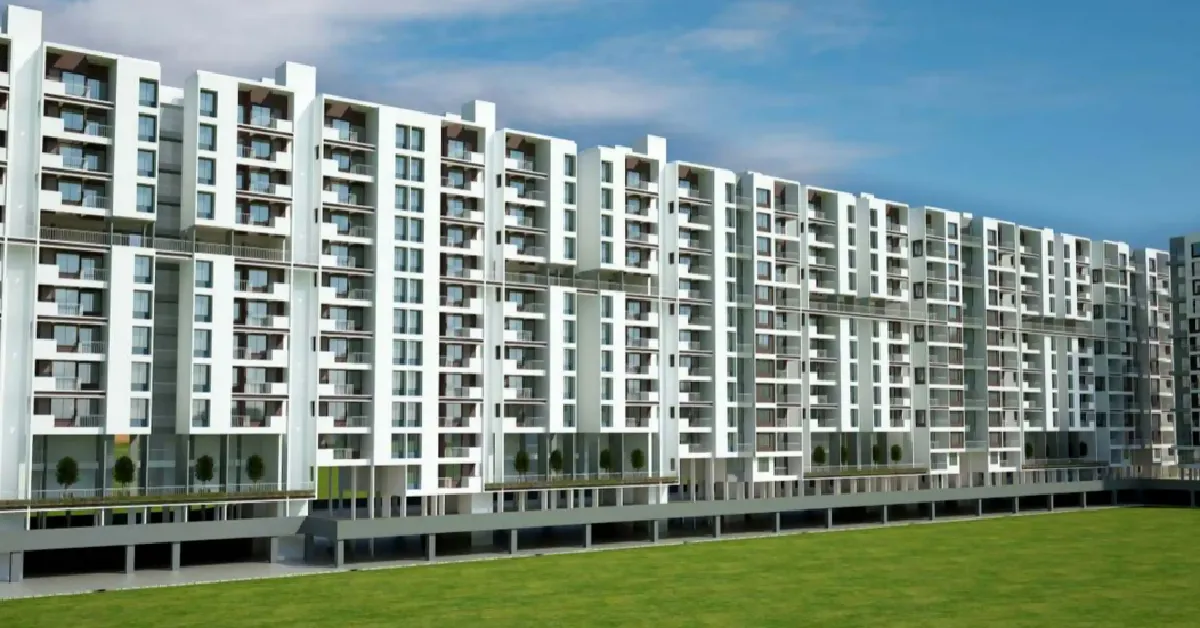
Meanwhile, developers said the proposed Namo Cities are expected to promote balanced urban growth across NCR. “From a real estate perspective, the development of new urban centres will create significant opportunities for residential, commercial and mixed-use projects in emerging locations such as Faridabad, Sonipat, and Panipat,” said Mohit Malhotra, founder and chief executive officer of NCR-based developer NeoLiv.
He added that improved infrastructure, employment opportunities, and enhanced social amenities are likely to attract both homebuyers and investors, driving higher real estate activity and contributing to long-term value creation.