Subtotal ₹0.00






Email :87
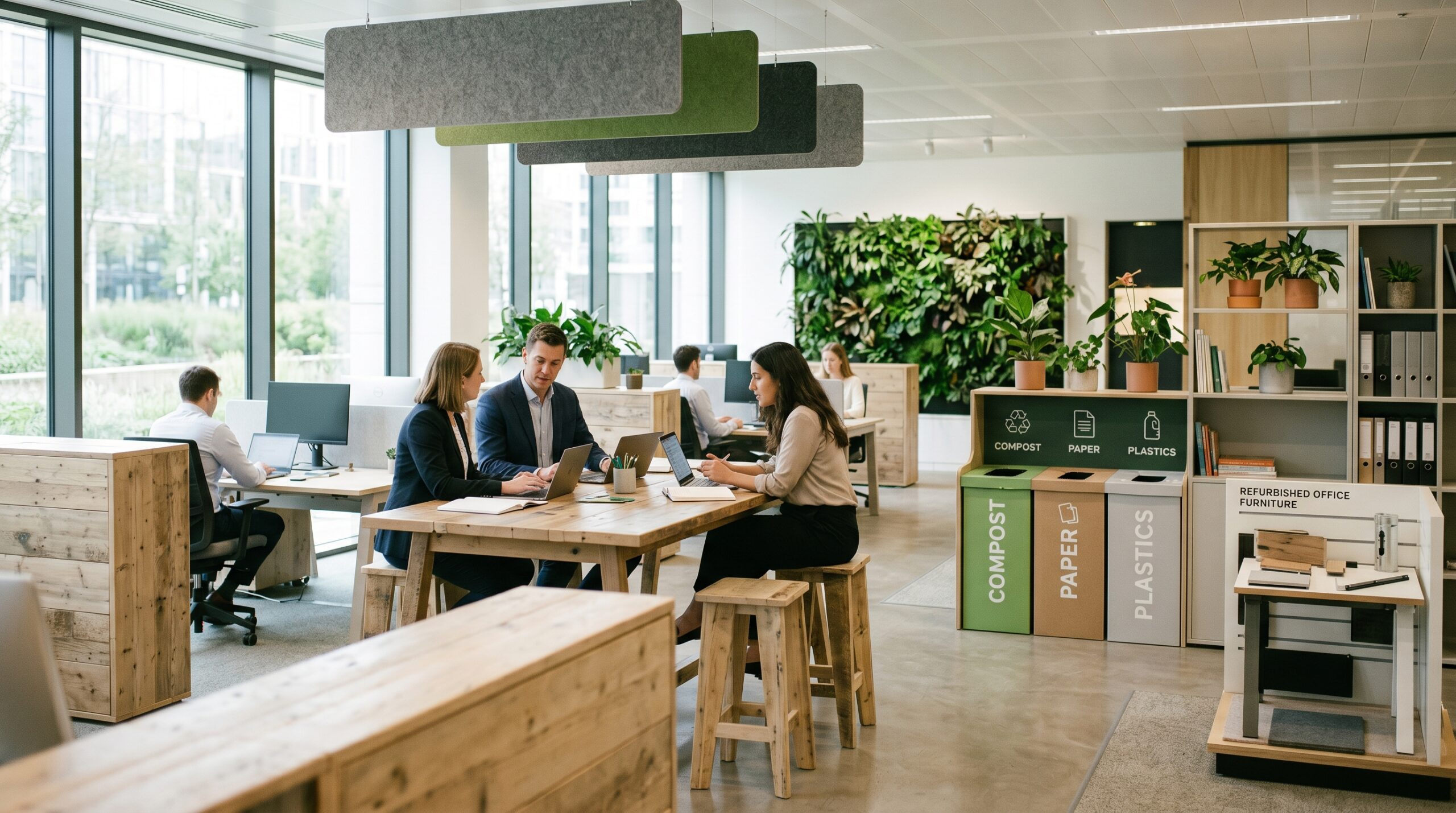
With office interiors often replaced every five to seven years, fit-outs have become one of the most resource and carbon-intensive elements of buildings. Circular fit-out approaches offer a timely solution by promoting reuse, reducing lifecycle costs and emissions and enabling more adaptable workspaces. For a fast-evolving market like India, embedding circularity is not just environmentally critical but a strategic lever for long-term value and resilience.
Building on the strategic need for circular fit-outs, adopting circular principles directly drives material efficiency and decarbonisation, turning sustainable designs into tangible business and environmental benefits. India has an opportunity to advance circular practices within interior fit-outs.by building on global learnings and adopting them to local market dynamics.
Global practices show that reuse-driven interiors reduce material consumption; adopting similar practices in India can reduce waste, lower embodied impacts and mitigate exposure to raw material volatility.
Design -for-disassembly reduces recurring refurbishment expenses and operational disruption, offering a practical pathway to more predictable fit-out cost cycles. Modular and reconfigurable systems enable rapid spatial changes without demolition, an approach increasingly relevant for India as workplaces shift towards hybrid models.
While low-carbon materials are central to advancing circular fit-outs, their adoption often raises questions around cost. It has been observed that many circular and low-carbon options offer strong value when viewed through a life cycle lens, especially due to durability and reuse potential. Based on industry expert insights, circular fitouts may entail 10-15% higher upfront capital expenditure but this is typically recovered within 5-10 years through material reuse, energy savings and reduced maintenance. Over the lifecycle, they deliver lower total costs, faster renovation cycles and extended asset life compared to linear models.
With a well-defined circular strategy, interior fit-outs can typically achieve around 25-55% reduction in embodied carbon emissions, depending on the project baseline, extent of material reuse and how early circularity is embedded in the design process.
While there is a strong potential for circular fit-outs, there are systemic, market, regulatory and behavioural barriers. Despite rising interest, scaling adoption for circular fit-outs remains challenging in India. These challenges include low awareness and limited understanding among stakeholders, high initial investments, perception barriers around reuse, logistical and supply chain constraints, weak regulatory and compliance framework, scarcity of circular materials.
These constraints pose practical challenges for organisations seeking to embed circularity at scale. Understanding these barriers is crucial to identifying where targeted action can accelerate wider market adoption. Rather than acting as a blocker, each challenge signals an opportunity for innovation, collaboration and policy support to unlock value across the fit-out ecosystem. Clear pathways are emerging to support more circular and resilient office interiors, offering an actionable roadmap for advancing circular practices in commercial fit-outs.
Going forward, with collaboration across developers, occupiers, designers and policymakers, there’s an opportunity to redefine workplace development, from a linear build-and-discard approach to a circular ecosystem that is cost- efficient, resilient and future-ready. (Savills India)