Subtotal ₹0.00







Email :105
By Ashish Sharma
Artificial Intelligence is steadily becoming a key driver of transformation in commercial real estate, particularly in Gurugram, where office developments are rapidly evolving to meet changing business and workplace expectations. Developers are increasingly adopting AI driven technologies to improve operational efficiency, enhance workplace experience, and create smarter commercial environments that are better aligned with the future of work.
The growing importance of AI reflects a broader shift in how commercial real estate is being planned and managed. Office developments today are no longer limited to providing physical workspaces. They are being designed as integrated ecosystems that combine technology, sustainability, employee well-being, and operational efficiency within a single environment. As these developments become larger and more complex, technology is playing an increasingly important role in ensuring seamless management and long-term asset performance.
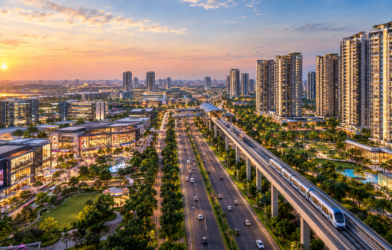
In Gurugram, this transformation is becoming more visible across premium office developments and large commercial campuses. The city continues to attract multinational companies, technology firms, and Global Capability Centres that require modern and efficient office environments. Occupiers today are prioritising workspaces that can support collaboration, flexibility, and employee comfort, encouraging developers to integrate intelligent infrastructure into their projects.
One of the most significant applications of AI in commercial real estate is building management. Modern office developments require constant monitoring of energy consumption, occupancy levels, security systems, and maintenance operations. AI enabled systems are helping developers automate these functions through predictive analytics and real time monitoring. Intelligent systems can identify maintenance requirements before equipment failures occur, optimise energy usage based on occupancy patterns, and improve the overall efficiency of commercial assets.
The increasing demand for smarter workplaces is also influencing how office spaces are designed and utilised. Developers are using AI powered workplace analytics to understand employee movement patterns, space utilisation, and occupancy trends within office campuses. These insights are helping property managers improve workplace layouts, optimise collaborative zones, and create more responsive work environments that align with changing employee expectations.
Sustainability has emerged as another important factor driving the adoption of AI in commercial real estate. Businesses today are placing greater emphasis on environmentally responsible office spaces with efficient energy management systems and sustainable infrastructure. AI powered technologies can significantly improve resource efficiency by managing cooling systems, lighting, ventilation, and power consumption more effectively. This not only reduces operational costs but also supports the growing demand for sustainable office developments.
The rise of integrated commercial ecosystems in Gurugram is further accelerating the need for intelligent infrastructure. Office developments are increasingly being planned alongside retail spaces, hospitality components, wellness facilities, and public areas, creating more dynamic and experience driven environments. Managing these interconnected spaces efficiently requires real time operational insights and automated systems, making AI an increasingly essential component of modern commercial projects.
Developers are also relying on AI driven analytics to improve investment planning and leasing strategies. Technology is enabling faster analysis of market trends, occupancy behaviour, tenant preferences, and infrastructure growth patterns. This allows developers to make more informed decisions while improving the long-term performance of commercial assets.
The growing integration of AI into commercial real estate reflects a larger transformation in workplace culture and urban development. Offices are no longer being viewed solely as spaces for business operations. They are evolving into intelligent ecosystems that prioritise efficiency, flexibility, sustainability, and employee experience.
As Gurugram’s commercial real estate market continues to expand, developers that can successfully integrate AI enabled technologies into their projects are likely to remain better positioned to meet evolving occupier expectations and strengthen the long-term value of their developments.
(The author is AVP Operations, Brahma Group. Views are personal)