Subtotal ₹0.00






Email :113
The landscape of Indian real estate is undergoing a structural transformation, shifting away from standalone developments toward integrated, high-yield mixed-use ecosystems. Driven by a need to maximize land utility and hedge against market volatility, developers are increasingly blending residential, commercial, retail, and hospitality segments into single, cohesive masterplans.
Industry experts say mixed-use projects integrating residential, commercial, retail, and hospitality segments are becoming an attractive choice for developers, as they generate both upfront sales proceeds and steady annuity-based income. These projects are also gaining popularity among institutional investors, who prefer diversified asset-class exposure, according to a report by Business Standard.
“From an investment and fiscal standpoint, mixed-use developments offer clear advantages. They enable superior land utilisation, create more resilient and diversified income streams, and improve cost efficiencies through shared infrastructure,” said Neeraj Balani, chief customer officer at Welspun One. He added that a phased development approach enables more efficient capital utilisation and generates stable long-term returns.
According to Anuj Puri, chairman of Anarock Group, mixed-use properties can deliver 20–25 per cent higher returns than single-use assets, while also protecting balance sheets from sector-specific downturns. Relaxed floor space index (FSI) norms in several suburban markets, particularly in Mumbai, are further enabling denser and more financially viable mixed-use formats.
Anarock data shows that eight major land deals covering 1,045 acres in 2025 were earmarked for mixed-use developments, out of 126 land transactions spanning 3,772 acres. By 2030, about 35–40 per cent of urban real estate supply in India is expected to be mixed-use, indicating a shift in development patterns.
The model’s appeal also lies in its ability to time revenue streams with project risk. Residential components generate early cash flow through sales, while commercial, retail, and hospitality segments provide long-term rental income, improving the resilience of ventures.
“Residential units provide early cash realisation, while commercial and retail components generate long-term, rental-linked returns, making these projects attractive to institutional and private investors alike,” said Arvind Nandan, managing director, research and consulting, Savills India. He added that such developments are increasingly being positioned along infrastructure-led and transit-oriented corridors, where scale and connectivity support long-term value creation.
Institutional capital is also driving this trend. Equity investments in India’s real estate sector reached $14.3 billion in 2025. A major share of capital deployed into land and development sites — accounting for over 46 per cent — was channelled into mixed-use, residential, and office projects, according to Anshuman Magazine, chairman and chief executive officer (India, Southeast Asia, the Middle East, and Africa) at CBRE.
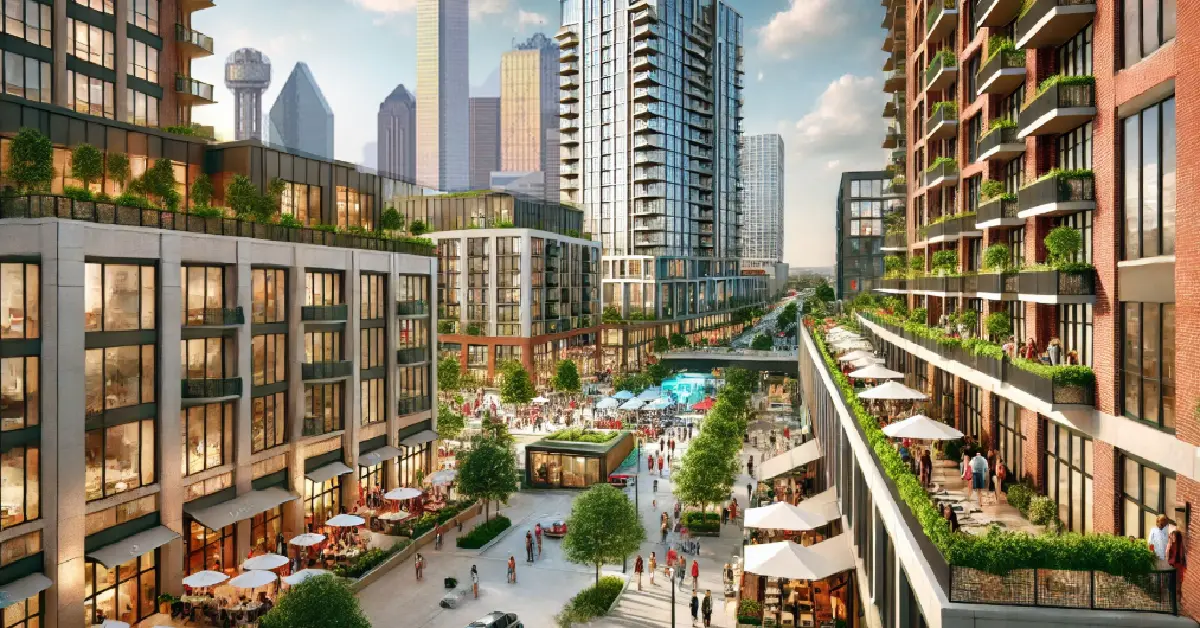
Mixed-use developments are also responding to a shift in consumer preference towards integrated “live-work-play” environments. Improved connectivity through metros and infrastructure corridors is enabling the creation of large, masterplanned communities.
Vimalendra Singh, chief business officer (residential) at Mahindra Lifespace Developers, said mixed-use formats represent a natural evolution of urban development, as buyers increasingly seek integrated ecosystems that combine living, working, and social infrastructure. Phased delivery, he added, supports steady absorption and long-term value creation.
Industry experts said the format is now expanding beyond the top seven cities into infrastructure-led Tier-II and Tier-III markets, supported by Metro expansion, expressway connectivity, and government initiatives such as Smart Cities and GatiShakti.
However, Percy Sorabji Chowdhry, executive director at Rustomjee Group, said the success of mixed-use developments depends heavily on planning and execution. Without strong design integration, efficient traffic flow, and robust long-term operational management, such projects risk congestion and inefficiencies — making execution discipline as critical as the initial vision.
“Given the rapid pace of urbanisation and more judicious capital allocation, we expect this trend to strengthen further and shape future-ready urban districts,” said Nandan.