Subtotal ₹0.00







Email :56
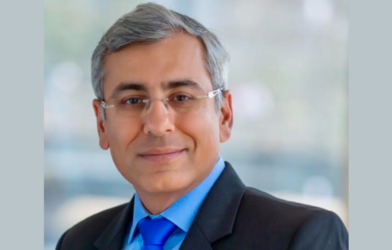
Deepak Parekh, Former Chairman, HDFC & Non-Executive Chairman, HDFC Asset Management Company
I have always maintained that India grows when India builds. We need more infrastructure, ports, airports, highways, railways and waterways. The infrastructure we build has to be built sustainably and has to enable even lower logistics costs for the country. India’s logistics costs have fallen from around 13-14% of GDP to around 8% of GDP today, but it needs to still go lower.
Second, housing has one of the strongest multiplier effects given its strong backward and forward linkages to several industries and remains one of the largest employment generators in the country. Yet, India faces a housing shortage estimated at 30 million units just over the next 5 years while the annual supply of homes is around 600,000 units. There is nothing more beneficial than building a property-owning democracy.
A recent UN report on urbanisation aptly said and I quote, “India does not have a housing shortage, it has a priorities shortage. India is building more than ever — but less and less of it is for the people who need it most.” The message is clear — we need more aspirational homes and homes for India’s rising middle class. What we have today is a huge skewness towards luxury housing.
Today, with more of manufacturing , technology and R&D needing to shift towards indigenisation , the challenge lies in how these growing requirements will be funded. The funding needs are immense and India will need to rely on both domestic and more foreign capital to fund its future growth.The key question is what will it take for India to build its financial architecture to meet the next era of growth.
There’s need to deepen debt markets . The government has done well to recently exempt interest and capital gains tax on government securities held by foreign investors. Yet, India needs to move out of its legacy policy frameworks – we need to be bold like adopting cross border securitisation transactions , having deeper credit default swap markets , more credit enhancements mechanisms, a thriving municipal bonds market and of course , the need for a more diversified investor base. India’s corporate bond markets need to double from 18% of GDP currently to meet the country’s investment needs
Currently, there is a global reallocation of capital happening , triggered by the AI boom and geo-political considerations. Foreign portfolio investors have been relentless sellers over the past one and half years of nearly US$ 50 billion. This I believe is a temporary phase. We know that India’s equity markets have been resilient due to domestic institutional investors – particularly the SIP inflows of mutual funds of around Rs 30,000 crore each month. What holds India in good stead is that its market capitalisation is well diversified. Further, the IPO pipeline is strong and India has demonstrated easy entry and exit for investors with attractive returns. This builds long term confidence. We just have to ride out this current phase.
Today, India sees much faster implementation and execution. The recent period has seen long overdue labour reforms . Energy reforms entail the thrust for renewables and now more focus has to shift to grid infrastructure, given India’s energy requirements are going to increase manifold. The government has implemented taxation reforms and ease of doing business reforms. The reforms that we are seeing being implemented today , will lay the foundation of India’s future growth.
The medium-to long-term macro fundamentals remain structurally intact. GDP growth is estimated at 6.5-7%, domestic consumption is strong , investment momentum has sustained (though still driven largely by the public sector) and the government has demonstrated the commitment to staying on the reforms express.
Lastly, India’s future growth will rest on the quality of governance of its institutions, both the public and private sector. The premium on good governance, transparency, abiding by the spirit of law is non-negotiable. Much work is still needed to unclog the long pending judicial cases now estimated at over 5 crore. Land acquisition needs to be simplified and taxation regimes need better clarity and consistency. The MSME segment which accounts for a third of India’s GDP has potential to unlock significant growth, but yet remains most vulnerable to economic shocks. Building in these protections is imperative for businesses to thrive and attract investments. Easing regulatory complexity, more tech adoption and skilling the work force will be the new levers for accelerated growth.