Subtotal ₹0.00






Email :58
India’s real estate sector is emerging as a critical engine of economic growth, with its role extending well beyond housing and construction to encompass employment, investment, manufacturing, logistics, technology and new-age economic activity, according to a joint report by ASSOCHAM and Knight Frank.
The report, ‘Building Viksit Bharat: Real Estate as a Catalyst for Growth’, highlights how changing consumer preferences, infrastructure development, institutional investment and the expansion of economic activity are reshaping India’s real estate landscape.
Real estate and ownership of dwellings have contributed approximately 7 per cent of India’s annual gross value added (GVA), on average, over the past decade, while construction accounted for 12 per cent of total employment in 2025. The sector is also becoming increasingly integrated with formal finance through RERA, GST, housing finance and institutional investment.
Residential Market Shifts From Volume To Value
One of the most significant changes identified by the report is the premiumisation of India’s residential market.
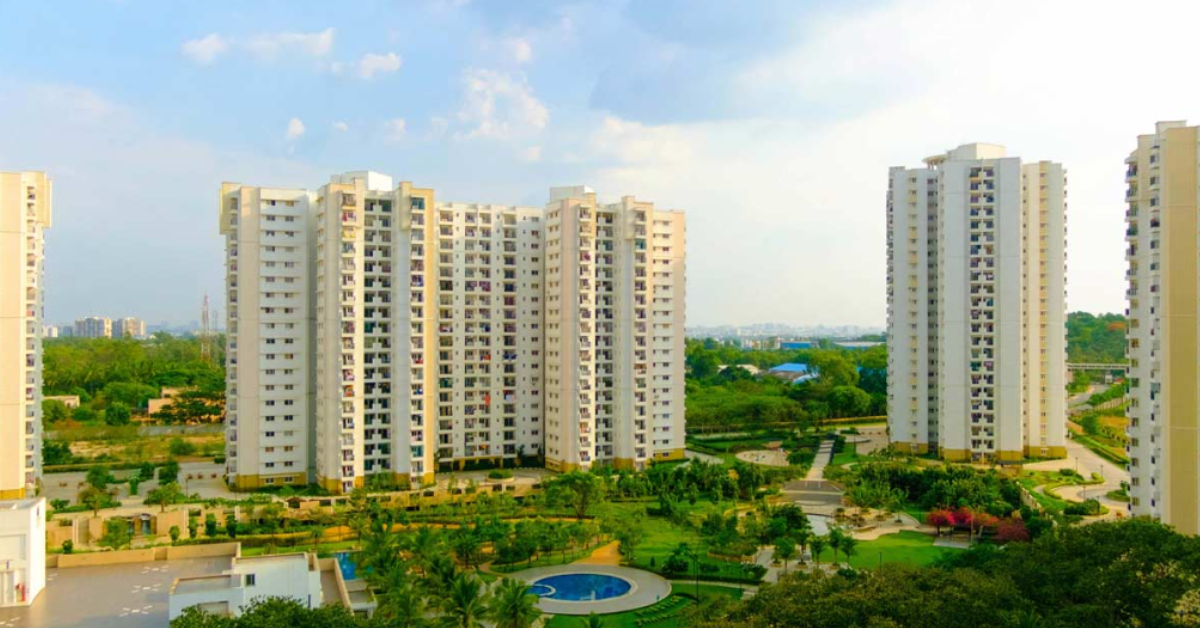
Across the eight major markets tracked by Knight Frank, the share of residential sales above INR 10 million rose sharply, reflecting a growing preference for higher-value homes. In NCR, in particular, the share of homes priced above INR 10 million increased from 18 per cent in 2018 to 84 per cent in H1 2026, while residential sales grew only 7 per cent between 2015 and 2025. Prices, however, increased 193 per cent, pointing to a pronounced shift from volume to value.
Ashish Agarwal, Director, AU Real Estate, said, “The NCR residential market is clearly moving towards a value-led growth phase, with homebuyers increasingly prioritising better quality, larger spaces, amenities and overall lifestyle. The ASSOCHAM – Knight Frank report’s finding that the share of NCR residential sales above INR 1 crore increased from 18 per cent in 2018 to 84 per cent in H1 2026 reflects this strong premiumisation trend. Improved connectivity and infrastructure are further strengthening the attractiveness of established and emerging residential corridors across Noida, Ghaziabad and the wider NCR. We believe the next phase of residential development will be defined by premium homes that combine thoughtful design, quality amenities, and seamless connectivity, rather than simply increasing housing volumes.”
The broader market is showing a similar shift. Homes priced at INR 10-50 million accounted for 49 per cent of residential sales in H1 2026, underlining the growing importance of premium housing in overall market activity.
Anil Godara, Managing Director, J Estates, said, “India’s residential market is witnessing a meaningful change in what buyers expect from their homes, with quality, space, amenities and lifestyle increasingly influencing purchase decisions. The report’s finding that higher-ticket INR 10-50 million homes accounted for 49 per cent of residential sales in H1 2026 reflects this broader premiumisation of housing demand. This trend also has implications for emerging residential formats such as senior living, where homebuyers and families are likely to place greater emphasis on professionally managed communities, accessibility, healthcare support and lifestyle amenities. The opportunity is to move beyond the traditional definition of housing and create communities designed around evolving life stages and long-term living needs.”
Infrastructure Is Reshaping Real Estate Geography
The report identifies infrastructure as one of the strongest forces shaping the next phase of India’s urban and real estate development.
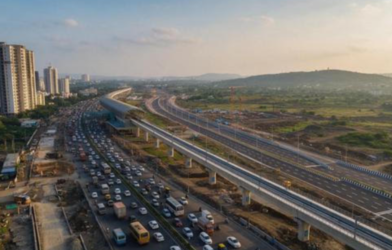
Infrastructure gross capital expenditure rose from INR 765 billion in FY15 to INR 6.6 trillion in FY25, while its share of total capital expenditure increased from 39 per cent to 63 per cent. New roads, metro networks, airports and industrial corridors are increasingly expanding the effective urban footprint and creating new opportunities for residential, commercial and industrial development.
The report, however, notes that infrastructure does not produce a uniform real estate response. Its impact depends on the maturity, economic depth, land availability and spatial structure of individual markets. In mature markets such as NCR and MMR, infrastructure increasingly integrates and redistributes activity within established metropolitan economies.
Deepak Sangwan, Chairman, Origen Realty, said, “Infrastructure, economic activity and evolving residential demand are reshaping India’s real estate landscape. The ASSOCHAM-Knight Frank report highlights how infrastructure is creating new growth centres, with Gurugram at the forefront. Established markets such as Sector 88A stand to benefit from stronger integration with Global City, Vision City and the Rewari-Pataudi Highway, further strengthened by the operationalisation of Dwarka Expressway. This convergence is creating opportunities for quality residential and commercial development, while enhanced connectivity and proximity to employment and business hubs reinforce the long-term value of established locations.”
Infrastructure Investment To Create New Growth Centres
India’s infrastructure expansion is also changing the relationship between established cities and emerging growth corridors.
Aayush Raj, Chief of Staff, Rodic Consultants, said, “India’s infrastructure story is increasingly becoming a story of economic transformation. It is encouraging to see sustained public investment, alongside growing private-sector participation, creating the scale and momentum needed to strengthen the country’s infrastructure ecosystem. As India works towards the Viksit Bharat vision, this continued investment in roads, railways, urban infrastructure and multimodal connectivity will be critical to unlocking new economic centres and taking India closer to becoming one of the world’s leading economies.
The report similarly calls for closer coordination between infrastructure and land-use planning, with spatial development plans around major transport projects incorporating land use, density, transit-oriented development, infrastructure capacity and housing and social infrastructure.
Real Estate’s Economic Role Is Broadening
The changing structure of demand is also expanding the economic significance of real estate.
The report notes that real estate now supports a broader ecosystem encompassing housing, businesses, manufacturing, logistics, GCCs and data centres. Between 2015 and H1 2026, around USD 59.8 billion in private equity capital was deployed across residential, office, retail and warehousing assets, reflecting the sector’s increasing institutionalisation.
Ashish Sharma, AVP Operations, Brahma Group, said, “India’s real estate sector is entering a phase where its contribution extends well beyond housing and construction to becoming a critical engine of economic growth and urban transformation. The latest ASSOCHAM–Knight Frank report reflects this momentum, with real estate and ownership of dwellings contributing around 7 per cent of annual GVA over the past decade and construction accounting for 12 per cent of employment in 2025.
He added, “Our experience in Gurugram reinforces this positive outlook. Infrastructure, connectivity and evolving consumer aspirations are creating stronger demand for well-planned, high-quality developments and shaping new growth corridors. As India moves towards Viksit Bharat, we believe the next phase of real estate will be defined by sustainable, future-ready urban environments that create lasting value for communities and investors.”
Office Market Becomes Economic Infrastructure
India’s office market has also evolved into a major component of the country’s economic infrastructure.
Office stock reached 1.05 billion sq ft in H1 2026, with Grade A assets accounting for around 55 per cent of the total. The report highlights the increasing role of Global Capability Centres (GCCs) and flexible workspace operators in driving office demand.
GCCs accounted for 43 per cent of office transactions in H1 2026, up from 25 per cent in 2022, while flexible workspace operators accounted for 24 per cent during the first half of 2026.
Robin Mangla, President, M3M India, said, “Real estate is increasingly becoming a critical enabler of India’s economic growth, with residential and commercial spaces evolving alongside changing demand. The report highlights that homes priced at ₹10 million and above accounted for 54 per cent of residential sales in H1 2026, reflecting the growing preference for higher-value housing. In commercial real estate, India’s office stock has reached 1.05 billion sq ft, while GCCs contributed 43 per cent of office transactions in H1 2026. For developers, this points towards an opportunity to create high-quality, future-ready developments across residential and commercial segments. The next phase of growth will be shaped by developments that align with evolving consumer needs and India’s expanding economic ecosystem.”
Institutional Capital Broadens Across Asset Classes
Institutional investment in Indian real estate is no longer concentrated in residential assets.
The report shows a gradual shift towards office, warehousing, retail and digital infrastructure. The institutionalisation of retail has also expanded geographically, with retail REITs increasingly holding assets beyond India’s eight major office markets. By June 2026, listed REITs accounted for 167 million sq ft of operational office stock and 11 million sq ft of retail stock, with another 36 million sq ft of office space under construction.
REIT penetration remains relatively low at around 16 per cent of national office stock, suggesting considerable room for further institutionalisation.
Warehousing is also beginning to develop a distinct institutional investment pathway, with InvIT structures enabling established warehouse portfolios to access long-term institutional and public-market capital.
Digital Infrastructure Creates New Demand
Data centres are becoming another important component of India’s real estate ecosystem as digital consumption and technology-driven economic activity expand.
Live data-centre capacity across seven major markets increased from 296 MW in 2016 to 1,622 MW in 2025, representing a 21 per cent compound annual growth rate and a 5.5-fold increase over the period.
Mumbai remains the largest data-centre market, while Chennai, Pune and Hyderabad have also recorded significant capacity growth. The expansion reflects the growing importance of digital infrastructure to India’s economic development.
Emerging Cities To Gain From Economic Specialisation
The report argues that India’s next phase of urbanisation will be driven less by the creation of entirely new cities and more by the expansion and diversification of the country’s existing urban network.
Bengaluru and Hyderabad demonstrate how expanding employment ecosystems can reinforce residential value creation, while Chennai shows that residential catchments can expand ahead of formal office-stock growth. Pune, meanwhile, has witnessed a more parallel expansion of employment and housing markets.
In mature markets such as NCR and MMR, infrastructure is increasingly redistributing economic and real estate activity within established metropolitan systems rather than simply adding new supply.
Faster Approvals And Better Planning Needed
As real estate assumes a larger role in India’s economic development, the ASSOCHAM-Knight Frank report calls for a more enabling regulatory environment.
It recommends faster and more predictable development approvals, greater coordination between infrastructure and land-use planning, stronger digital systems and more reliable data to improve planning and decision-making.
The report also emphasises the importance of sustainability, resilience and safety in the built environment, particularly as India’s urban population is projected to rise from around 40 per cent in 2025 to 44 per cent by 2047.
Digital Land Records And Sustainable Development
The report recommends greater consistency in regulatory processes, digitised and integrated land records, stronger property and RERA data systems and common minimum standards for property registration and transactions.
It also highlights land-value capture and integrated infrastructure-land-use planning as potential tools to ensure that the economic value created by infrastructure investment is better aligned with urban development.
With real estate increasingly linked to employment, infrastructure, technology and investment, the report positions the sector as a central component of India’s Viksit Bharat ambition. The next phase of growth, it suggests, will depend not merely on building more space, but on creating better-connected, sustainable and economically productive urban environments.