Subtotal ₹0.00







Email :73
Neelu Jain, Director, SNN Raj Corporation
A few years ago, most homebuying conversations in Bengaluru started the same way. People wanted to know which area would appreciate faster, where the next infrastructure announcement was coming, or how much rental upside a property could generate over time. The house itself almost came second.That has changed quite a bit now.
You still have buyers who track appreciation closely and Bengaluru remains one of the strongest
housing markets in the country from a long-term investment standpoint. But what has become quite visible over the last three to four years is that people are spending far more time thinking about how they will actually live inside a project. Not just inside the apartment, but Inside the ecosystem around it.
You notice this during site visits now. Buyers ask different questions. Earlier, they would focus heavily on
price movement and future value. Today, conversations drift towards openness, ventilation, walking spaces, children’s activity areas, sunlight, noise levels, even how crowded the overall community feels. That shift says a lot about where urban homebuying is headed.
Currently, in a city like Bengaluru, people are spending more time commuting, working hybrid schedules and hence carrying work stress back home. So the role of the home has expanded. It is no longer just where somebody sleeps at night. For many families, the home now doubles up as workspace, social space, recovery space, and weekend space all at once.Naturally,expectations from residential projects have changed along with that.
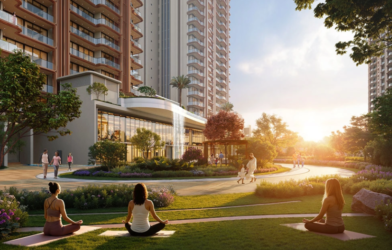
This is also one reason larger communities and lifestyle-led developments are seeing stronger traction today compared to purely investor-driven inventory. Buyers want environments where they can spend time beyond the four walls of the apartment. Open spaces, wellness amenities, sports infrastructure, community interaction, and lower-density planning are no longer treated as “luxury extras.” In many projects, they are becoming central to the buying decision itself. Interestingly, this trend is now showing up in market reports as well.. End-users who form a dominant segment across several micro-markets, evaluate homes very differently from short-term investors. Their decisions are tied much more closely to daily quality of life.
What is changing now is the definition of ROI itself. For one set of buyers, return on investment still means appreciation numbers.For another, it increasingly means whether the project improves everyday living in a meaningful way. Can children spend time outdoors safely ? Is there enough breathing space between towers ? Does the community feel calmer despite being inside a busy city ? These are some emotional decisions which are now becoming commercially important as well .
Even the idea of luxury looks very different today compared to what it was a decade ago. Earlier, luxury was often reduced to specifications and pin codes. Now buyers look at liveability much more seriously. A well-planned project with better light, thoughtful amenities, walkable spaces, and stronger community planning often creates more emotional pull than purely decorative luxury elements.
.
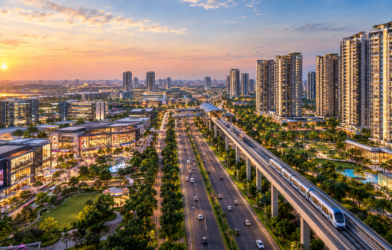
Another interesting shift is that buyers today are far more willing to compromise slightly on distance if the lifestyle proposition feels stronger. That kind of mindset barely existed in Bengaluru 10-12 years ago when proximity and ease of access to work dominated almost every home buying decision. Now, with improving infrastructure and growing connectivity with metro expansion , commuting patterns are slowly changing . People are slightly relaxed and more open to choosing projects that offer an overall better living experience, even if it means they need to sit slightly outside older city centres. In many ways, the housing demand and market is becoming more mature because of this.
The strongest projects today are not necessarily the ones selling the fastest on marketing hype alone. The projects that tend to hold long-term value are usually the ones that understand how urban lifestyles are evolving and respond to those changes honestly.Because at the end of the day, most people are not buying homes only as financial products;they are buying into the possibility of a better everyday life.