Subtotal ₹0.00






Email :36
-Sanjeev Kathuria, Founder & CEO, Torbit Consulting
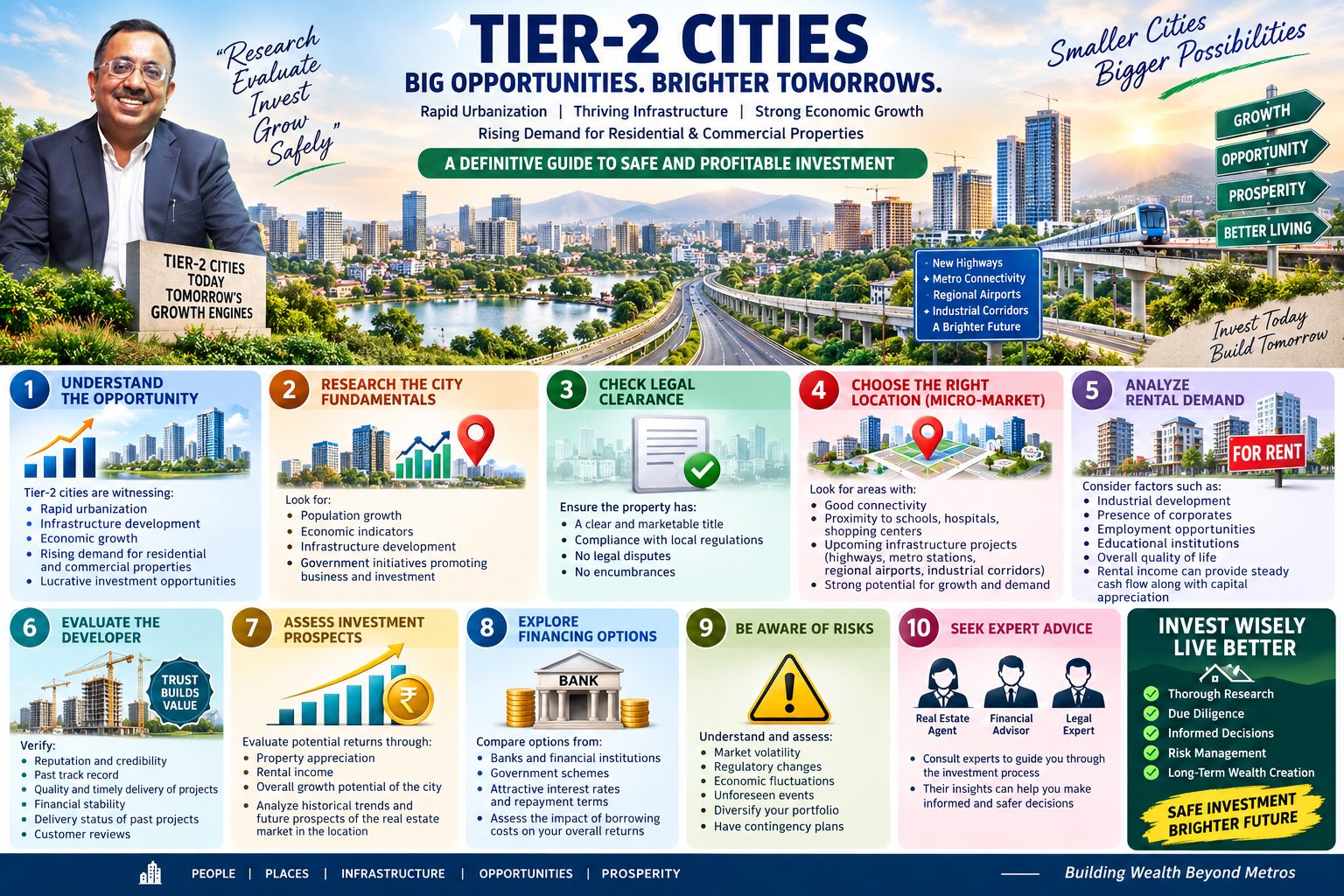
As Tier-2 cities are undergoing rapid urbanization, infrastructure development and economic growth, it is resulting in growing demand for residential and commercial properties, presenting lucrative investment opportunities. However, since real estate investments involve risks, it is pertinent to evaluate investment opportunity in any Tier-2 city by doing thorough research and due diligence. Here is a definitive guide to safe and profitable investment .
While conducting thorough research on a Tier-2 city of choice,one should look for factors such as population growth, economic indicators, infrastructure development, and government initiatives that promote business and investment. Carry out a thorough check to ensure that property has a clear and marketable title and it complies with all the local regulations . One must also ensure that there are no legal disputes or encumberances associated with the property shortlisted for investment.
As location assumes great significance for investment, one should study micro-markets to choose a location within the Tier- 2 city that shows potential for growth and demand. Remember ,areas with good connectivity, proximity to essential amenities like schools, hospitals, and shopping centers and upcoming infrastructure projects like highways, metro stations , regional airports, or industrial corridors will fetch you good returns.
If you are looking for a property for rental purposes, you should carefully analyze the demand for property in the selected location, considering factors such as industrial development, presence of corporates ,employment opportunities, educational institutions, and the overall quality of life. That will help you assess the rental potential in the area. Remember, rental income can provide a steady cash flow in addition to capital appreciation of the property.
For ensuring safe investment in a property, the reputation , credibility and the past track record of the developer holds importance. Verify the credibility and track record of the developer or builder. The developer should be enjoying good reputation for delivering quality projects on time. in order to avoid any delivery defaults, you must check the financial stability of the developer , delivery status of the past projects and customer reviews to assess the reliability of the particular developer.
In order to check the investment prospects of the property, evaluate potential returns on investment by considering factors such as property appreciation, rental income, and the overall growth potential of the Tier 2 city. Moreover, you should analyze the historical trends and future prospects of the real estate market in that particular location.
Once you have carried out all the checks regarding safe and profitable investment, go for assessing the available financing options for your investment. Explore various banks, financial institutions, and schemes that offer attractive interest rates and repayment terms to assess the impact of borrowing costs on your overall returns.
And last but not the least , you must keep in mind the risks associated with the investment by understanding and assessing factors such as market volatility, regulatory changes and economic fluctuations. Consider consulting a local real estate agent , financial advisor and a legal expert to guide you through the investment process towards safer investment. As unforeseen events can still adversely impact real estate investments. one must diversify one’s portfolio and have contingency plans to mitigate potential risks.