Subtotal ₹0.00






Email :145
India’s retail real estate sector maintained its growth momentum in Q2 2026, with gross leasing volume (GLV) reaching 2.4 million square feet (MSF) across the top eight cities, according to Cushman & Wakefield’s Q2 Retail Market Beat Report. This marks a 23.2% quarter-on-quarter (QoQ) and 17.6% year-on-year (YoY) increase, reflecting sustained occupier demand despite continued supply constraints.
Total leasing during H1 2026 reached 4.35 MSF, up 3.1% compared to H1 2025, highlighting the sector’s steady growth trajectory across key retail markets.
Even as no new Grade A mall supply was added during the second consecutive quarter, space uptake in malls remained strong as the leasing momentum was supported by continued absorption in projects completed during H2 2025, reflecting sustained retailer preference for organized retail formats.
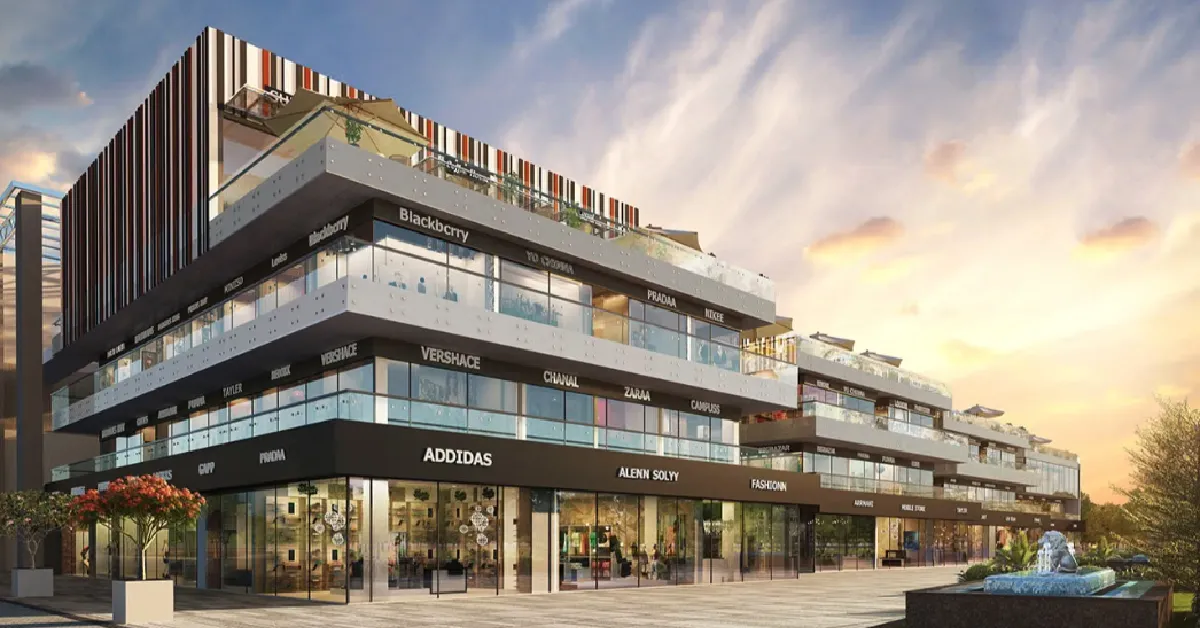
At the same time, the limited availability of premium mall space and rising rentals, led retailers to evaluate opportunities beyond Grade A assets, including select Grade B developments. Overall, malls accounted for 51.3% of total leasing (1.23 MSF), registering a 33.4% QoQ and 21.9% YoY growth.
Main Streets continued to attract healthy occupier interest, accounting for a 48.7% share (1.17 MSF) during the quarter. While their share moderated marginally, leasing volumes grew by 14.0% QoQ and 13.3% YoY, supported by continued demand for high-visibility, consumption-driven locations.
Domestic retailers maintained their dominant position, contributing 82.4% of total leasing (1.98 MSF), with most of their activity concentrated in Main Streets (~54%). International retailers, meanwhile, accounted for 17.6% (0.42 MSF), with nearly 76% of their leasing in malls, reflecting a clear preference for institutionally managed, high-quality retail environments offering curated consumer experiences.
At the city level, Delhi NCR, Mumbai and Hyderabad continued as the top contributors, together accounting for 64% of total leasing activity in the second quarter. Delhi NCR led with 0.67 MSF (28% share), followed by Mumbai at 0.50 MSF (21%) and Hyderabad at 0.37 MSF (15%). These were followed by Bengaluru (0.25 MSF), Pune (0.25 MSF), Chennai (0.20 MSF), Ahmedabad (0.11 MSF) and Kolkata (0.05 MSF).
Category-wise, Fashion continued to dominate leasing activity with a 28.2% share, followed by F&B at 17.2%. Entertainment (10.8%) and Accessories & Lifestyle (10.0%) also saw healthy traction, with these categories together contributing nearly two-thirds of total leasing.
The sustained demand, coupled with no new supply, resulted in further tightening of vacancies. Grade A mall vacancy declined to 5.0% in Q2 2026, marking a163 basis point(bps) YoY reduction, and reinforcing landlord-favourable conditions.
On the rental front, prime high-street rents recorded an average growth of 2.1% QoQ and 5.1% YoY, with appreciation remaining selective and location-specific. Key retail corridors such as Mumbai’s Linking Road (+22% YoY), Bengaluru’s Indiranagar 100 Feet road (+12% YoY), Chennai’s Anna Nagar 2nd Avenue (+11% YoY), Ahmedabad’s CG Road (+11% YoY) and Delhi NCR’s Khan Market (+9% YoY) witnessed notable rental growth on a YoY basis.
Looking ahead, supply constraints are likely to persist in the near term as retailer demand continues to outpace the availability of quality retail space across major markets. The robust supply pipeline of ~12.7 MSF slated for delivery between 2026 and 2028 is expected to gradually improve availability and support occupier expansion plans over the medium term. Of this, approximately 1.6 MSF is expected to be completed in H2 2026. Delhi NCR is expected to account for more than half of the upcoming supply, followed by Bengaluru, Chennai, Kolkata and Hyderabad.
Gautam Saraf, Executive Managing Director, Mumbai & New Business, Cushman & Wakefield, said, “India’s retail real estate market continues to demonstrate the strength of underlying consumer demand. Even in an environment where quality retail supply remains constrained, occupiers have shown a clear willingness to compete for well-located assets, whether in premium malls or established high streets. This has resulted in tighter vacancies, firmer rentals and broader leasing momentum across major cities.
Looking ahead, the gradual addition of new supply combined with sustained consumption growth is expected to improve market availability of quality retail space and create fresh expansion opportunities for retailers.”
*This is the overall demand captured by C&W across all malls and Main Streets. The demand spans across all retail asset classes, irrespective of the grading of the asset.