Subtotal ₹0.00






Email :71
Amid rising global uncertainties adversely impacting real estate demand and supply dynamics, residential real estate sentiment turned negative in the first quarter of 2026 and faces rough times.
The Knight Frank–NAREDCO Real Estate Sentiment Index for Q1 2026 (January–March 2026) reflects a notable departure from the sustained optimism in recent years in stakeholder sentiment. Amid rising global uncertainties that weigh on the sector’s outlook, the Current Sentiment Score declines sharply to 49 from 60 points in Q4 2025, slipping into pessimistic territory. The Future Sentiment Score though stands at a neutral 50 points, recorded a decline from 61 points in Q4 2025.
The moderation in sentiment is largely driven by global macroeconomic volatility. Elevated crude oil prices have intensified inflationary trends, impacting construction and logistics costs, affecting project viability. At the same time, tighter financial conditions have led stakeholders to adopt a cautious stance. Even while India’s economic fundamentals remain largely stable, geopolitical conditions are beginning to influence real estate demand and supply dynamics.
The residential segment is showing signs of recalibration following a prolonged growth cycle. Sales and new launches have moderated in the first quarter of 2026, reflecting both cyclical consolidation and cautious buyer sentiment. Demand is expected to further soften in the near term, even as property prices remain firm or continue rising. This divergence between demand moderation and price resilience highlights the structural cost challenges currently shaping the market.
In contrast, the office segment continues to demonstrate resilience and remains the bright spot for the sector. Leasing activity reached a record high during Q1 2026. Limited supply in key markets is supporting rental growth, with stakeholders expecting stable to improving leasing momentum in the near term.
Stakeholder sentiment has turned more guarded compared to the previous quarter. Non-developer stakeholders, including financial institutions and investors, demonstrated a sharp drop in confidence, with the future sentiment score declining to 50, from higher optimistic levels of 63 in Q4 2025. Developers have also moderated their outlook, with their future sentiment score easing to 51 from 58 in the previous quarter. These highlights rising risk sensitivity among capital providers, even as developers remain cautiously optimistic.
Industry leaders adopt a guarded stance amid global uncertainty
Score >50: Optimism Score =50: Neutral/Same Score <50: Pessimism
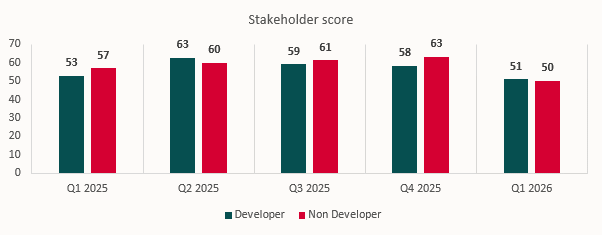
Note: Non-Developers include banks, financial institutions, PE funds and other industry stakeholders
Source: Knight Frank Research
Regionally, sentiment has softened across all zones compared to the previous quarter. The North and South regions slipped into pessimistic territory, while the West zone remained relatively resilient, staying above the neutral threshold, despite some demand moderation. Demand expectations in the residential market have weakened notably. With sentiment index being more negative than before, the market is adjusting after a growth phase.A similar moderation is visible on the supply side, as new project launches have slowed down. Overall, the Q1 2026 Sentiment Index highlights a transition phase for the Indian real estate sector. While global challenges are making stakeholders cautious, the core market strength remains intact. While the residential market is adjusting to a more sustainable trajectory, the office segment continues to anchor growth. The future sentiment depends on global factors, with energy markets and geopolitics being the key influencers. These factors will highly impact investment decisions and recovery speed across the sector.