Subtotal ₹0.00






Email :210
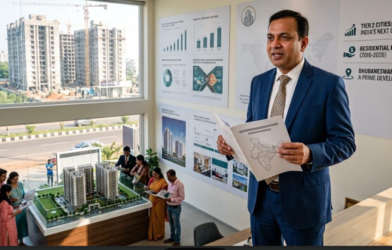
Knight Frank India has released a first-of-its-kind study mapping the structural rise of India’s Tier 2 retail economies and the growing penetration of international brands beyond the metros. The study reflects that India is now operating two parallel retail economies — a mature Tier 1 market weighed down by legacy retail stock, and a younger, cleaner, faster-growing Tier 2 market increasingly attracting global brands and institutional capital.
The study analyses 24 Tier 2 cities through the Knight Frank International Brand Penetration Ranking (KF-IBPR 2026) framework, built on four pillars — Brand Breadth, Brand Intensity, Market Readiness and Consumption Power. The findings reveal that smaller cities are now outperforming much larger urban centres in international retail penetration and mall quality.
Soon to be released, Bharat Internationalised – KF-IBPR 2026 is Knight Frank India’s Think India Think Retail series’ 10th edition. The study Knight Frank’s proprietary international brand database with government consumption datasets to analyse international retail penetration across 24 Tier 2 Indian cities.
Key Findings
Chandigarh ranks one in International Brand Penetration Rankings 2026. Despite having a population of only 1.3 mn, outperforming significantly larger cities on consumption power, Grade A retail quality and international brand density.
Mangaluru emerges as India’s most brand-dense Tier 2 city with over 102 international brand stores per mn people — nearly double Chandigarh’s figure.
Lucknow hosts the highest concentration of unique international brands in Tier 2 India, with 112 brands across 5.6 mn sq ft of shopping centre stock.
Surat, Jaipur and Nagpur, representing a combined population of approximately 16 million people and a sizeable consumption expenditure, international brand penetration is constrained not by space or consumption, but by the absence of Grade A retail infrastructure capable of housing it.
Tier 2 India now has cleaner and more institutional retail stock with 61% Grade A stock compared to 45% in Tier 1 cities.
Since 2020, Tier 2 India has added 5.9 mn sq ft of Grade A retail space, over three times the equivalent addition in Tier 1 cities.
American brands dominate Tier 2 retail internationalisation, accounting for 46% of all international stores and 91% of international food & beverage presence (dominated by QSR).
UAE-based retail groups account for nearly 79% of the department-store footprint across Tier 2 India.
Shishir Baijal, International Partner, Chairman and Managing Director, Knight Frank India, said, “India’s next phase of organised retail expansion will not be led by the metros alone. What we are witnessing is the emergence of a parallel retail economy across Tier 2 India — one that is younger, more aspirational, digitally connected and increasingly capable of supporting international brands at scale. The findings of Bharat Internationalised – KF-IBPR 2026 demonstrate that population size is no longer the defining metric for retail success. Cities such as Chandigarh and Mangaluru are outperforming significantly larger urban centres because of stronger consumption intensity, superior retail infrastructure and sharper brand absorption capabilities. India today possesses a retail expansion runway unmatched by any other major economy because it is simultaneously modernising two retail systems at different stages of maturity”
The most significant implication of this study lies in markets like Surat, Jaipur and Nagpur, where demand is already present, but quality retail infrastructure remains underdeveloped. These are not just emerging consumption stories — they are structurally underserved markets waiting for institutional Grade A development.
The Rise of ‘Two Retail Indias’
The study highlights a widening structural divergence between India’s Tier 1 and Tier 2 retail ecosystems.
While Tier 1 cities account for 98 million sq ft of India’s organised retail stock, they continue to grapple with ageing Grade C malls and elevated vacancy levels stemming from the first retail development cycle between 2004 and 2013. Tier 1 cities today account for 60 “ghost malls” operating at vacancy levels above 40%.
By contrast, Tier 2 India’s 36 million sq ft retail base has largely been developed post-2010 and increasingly post-2018, resulting in cleaner, institutionally designed retail environments with significantly lower vacancy and stronger operational efficiency.
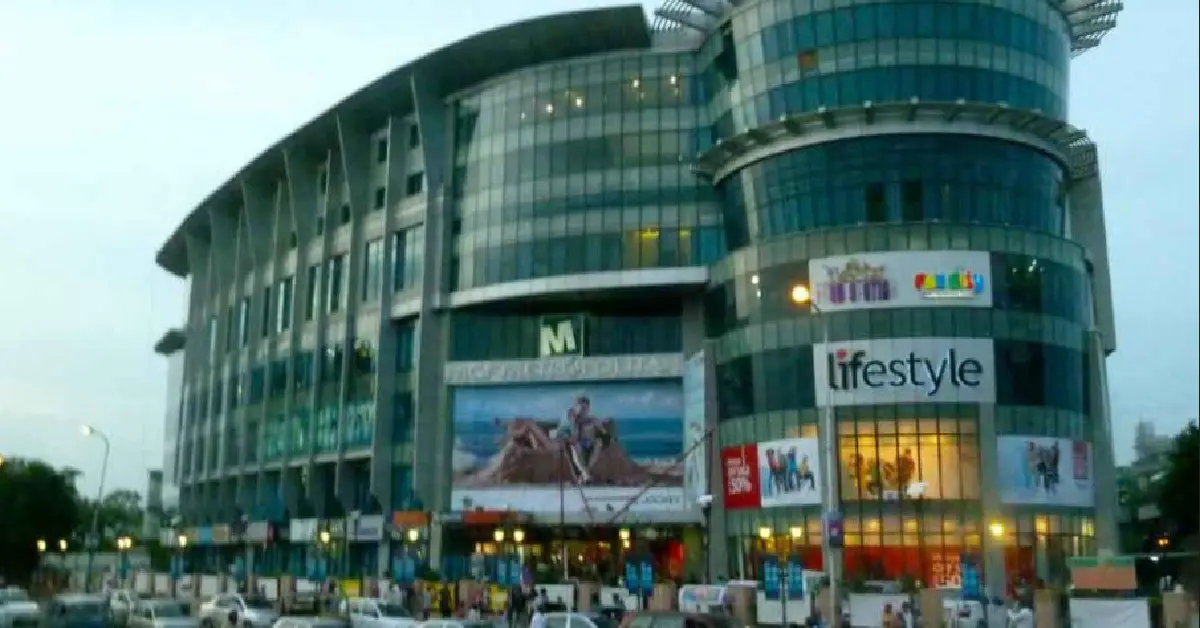
The study also identifies the “marquee asset effect,” where a single institutional-quality mall of 0.8–1 million sq ft can dramatically transform a city’s retail positioning in the International Brand Penetration Rankings. Evidently, five such developments since 2020 have already reshaped the rankings of multiple Tier 2 markets.
Consumption Power Is Replacing Population as the Core Retail Metric
The combination of consumption depth, Grade A retail infrastructure, digital adoption and aspirational spending behaviour is becoming the new determinant of retail market success. Urban monthly per capita consumption expenditure ranges from INR 13,425 in Chandigarh to INR 5,114 in Chhattisgarh, revealing a near three-fold consumption differential across India’s emerging urban markets. The study also notes that smartphone penetration, UPI adoption and digital content exposure have largely erased the historical “brand discovery gap” between metro and non-metro consumers, accelerating the internationalisation of Tier 2 retail markets.